





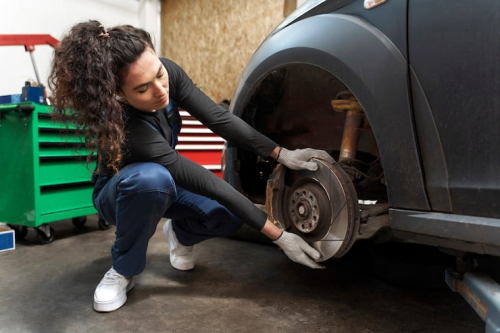
In the expansive suburbs of North Texas, where endless highways pulse with the rhythm of daily commuters, an understated evolution is transforming the automotive service landscape. Drivers from the vibrant core of Dallas to the welcoming communities of Frisco are increasingly turning to repair shops with a primary emphasis on brakes and tires. These essential components of vehicle upkeep have emerged as the cornerstone of service demands, mirroring the realities faced by motorists tackling the area’s jammed roadways and extended travels.
This surge in focus on routine upkeep across Garland, Dallas, “noreferrer external noopener”, Plano, Rockwall-Heath, Forney, Mesquite, McKinney, Grapevine, and Frisco represents a fundamental change in how both vehicle owners and dealerships manage car maintenance. A key driver behind this growth is the maturing fleet of vehicles nationwide, prompting more frequent interventions to combat deterioration. The U.S. automotive repair and maintenance service market, which stood at USD 183.4 billion in 2023, is forecasted to expand at a 10.1% compound annual growth rate from 2024 through 2032. This expansion is largely attributed to the increasing average age of cars in the United States, necessitating heightened servicing and fixes as components succumb to regular use. Older automobiles typically encounter more mechanical issues and demand greater upkeep compared to their newer counterparts, fueling market progression as owners seek to maximize their investments and prolong vehicle longevity.
What makes brakes and tires such critical focal points? Primarily, they bear the heaviest burden from the region’s characteristic stop-start traffic patterns. In locales like Garland and “noreferrer external noopener”, where interstates such as I-635 and US-75 experience perpetual bottlenecks, brake components degrade more rapidly than in quieter zones. Tires similarly endure intense strain from blistering summer asphalt and sporadic road imperfections. Service providers are witnessing a notable uptick in calls for evaluations, swaps, and calibrations, indicative of a wider movement toward anticipatory care to avert major breakdowns.
Delving deeper into the mechanics of wear, North Texas’s infrastructure plays a pivotal role. For instance, I-635 in Dallas handles an average daily traffic volume of up to 230,000 vehicles, ranking it among Texas’s most congested corridors according to recent assessments. This heavy usage accelerates brake pad erosion through frequent braking in dense flows. Congestion in the Dallas-Fort Worth area has risen by 12% since 2019, exacerbating vehicle stress and prompting more regular tire checks to maintain traction and safety. Such conditions underscore why preventive measures are gaining traction among local drivers.
Feeling stuck in the stressful car-buying process? At Jupiter Chevrolet in Garland, TX, we’ve reimagined how buying a car should feel. With transparent pricing, online deal-building tools, and the benefits of our Jupiter Advantage program, we ensure every step is straightforward and satisfying. Skip the hassle. From purchase, to certified service and parts, to collision repair and body shop. Our team puts your convenience, safety, and confidence first. Turn your dreams of finding your ideal Chevrolet into reality with us. Visit Jupiter Chevrolet today!
Local Trends Paint a Clear Picture
In hubs like Dallas and Plano, brake assessments lead the pack in service inquiries. Technicians observe that city commuters, contending with persistent jams, are growing more vigilant in examining pads and rotors to nip potential problems in the bud before they escalate into expensive overhauls. Concurrently, in Frisco and McKinney, tire-related work surges amid warmer months and festive periods. Households preparing for excursions insist on rotations, alignments, and new sets to guarantee secure journeys. Observations from Frisco highlight the popularity of combined tire-brake offerings, delivering both ease and economic benefits to suburban users.
Garland stands out as a nexus for expressway travelers, exhibiting distinct behaviors. The intense flow on I-635 has triggered a notable increase in tire balancing needs, stemming from irregular degradation caused by repeated speeding up and slowing down. Local outlets have responded by introducing expedited programs to accommodate hurried patrons. In Grapevine, facilities are harnessing the family-oriented market by advancing integrated packages that merge tire adjustments with brake inspections, resonating with those prioritizing streamlined operations.
Further bolstering this demand is the robust trajectory of the Texas Auto Parts Market, poised for a 5.3% compound annual growth rate spanning 2025 to 2034. Starting from a projected USD 1.3 billion valuation in 2025, it is expected to ascend to USD 2.1 billion by the decade’s end. This vigor stems from producers embracing intelligent production methods, artificial intelligence for streamlining operations, and Internet of Things integrations for superior logistics oversight, all enhancing productivity and output standards. Such advancements foster better synergy among automotive, tech, and building industries, ensuring a steady supply of high-caliber elements like brake systems and tires.
Moreover, the global automotive aftermarket is navigating fluctuations influenced by evolving trade dynamics and duties worldwide. A prominent development sees participants enhancing capabilities via sophisticated brake materials. These substitutes mirror the performance of factory originals and serve as viable alternatives in upkeep scenarios. Core offerings encompass tires, power sources, braking elements, purifiers, exterior panels, illumination and tech modules, rims, emission systems, and superchargers, all integral to vehicular restoration processes.
Recent policy shifts in Texas add another layer to these trends. The state has discontinued mandatory annual safety inspections for most non-commercial vehicles, replacing them with a nominal fee during registration. While this eases administrative burdens, it places greater responsibility on drivers to maintain brakes and tires voluntarily. Studies indicate minimal links between compulsory checks and accident reductions, yet experts warn that without prompts, some may postpone essential services, potentially heightening road hazards. In counties like those in North Texas, emissions testing persists, but the absence of broad inspections could indirectly boost demand for proactive brake and tire work as awareness of safety grows.
Challenges on the Road
Amid this escalating interest, hurdles remain. In areas such as Forney and Mesquite, budget-aware motorists frequently choose economical tire variants over high-end ones, posing a challenge for providers striving to uphold standards while aligning with fiscal constraints. Persistent logistical bottlenecks in Dallas and Plano sporadically constrain tire stocks, compelling operations to manage reserves adeptly against client expectations. In Rockwall-Heath, postponed upkeep emerges as a significant worry, with cost-averse individuals delaying interventions, resulting in aggravated complications and inflated expenses later.
Safety implications loom large. Deteriorated brakes and worn tires invite calamity, especially on the bustling arterials of North Texas. Reports from Mesquite indicate a rise in urgent fixes linked to overlooked care, serving as a stark caution against delay. Facilities are countering this by prioritizing awareness initiatives, encouraging timely evaluations to sidestep failures or mishaps.
Cost factors also play into these challenges. In the Dallas-Fort Worth vicinity, brake pad replacements average around USD 384, with ranges from USD 129 to over USD 1,000 based on vehicle specifics and service types. Nationally, a full brake job including pads and rotors typically runs USD 250 to USD 400 per axle, influenced by usage like towing or heavy loads. For tires, while specific Frisco figures are sparse, general affordability drives choices, with installations varying by provider but emphasizing value in competitive markets. These expenses can deter some, yet they underscore the investment in safety amid rising congestion.
Environmental factors compound wear. Texas’s extreme heat, rugged terrains, and alignment issues are prime culprits for tire degradation, necessitating vigilant monitoring to prevent blowouts or hydroplaning. With urban mobility reports highlighting persistent bottlenecks, vehicle miles traveled in Dallas and surrounding areas contribute to accelerated component fatigue, demanding robust maintenance strategies.
Opportunities for Dealerships
For establishments in Garland, Dallas, and adjacent locales, the influx of brake and tire requests presents a prime avenue for growth. These standard appointments yield consistent income, particularly when augmented with add-ons such as wheel straightening or lubricant refreshments. In “noreferrer external noopener” and McKinney, digital booking platforms are surging in use, enabling seamless reservations and sustaining operational capacity. Outlets are leveraging these interactions as entry points to larger transactions, where a simple rotation might evolve into deliberations over pre-owned certified options, amplified by targeted incentives.
The overarching U.S. automotive service market, pegged at USD 199.38 billion for 2025, is anticipated to climb to USD 266.56 billion by 2030, registering a 5.98% compound annual growth rate. With a dispersed competitive landscape, both standalone garages and franchised dealers are contending for shares. In North Texas, emphasis on rapid turnaround facilities and retention schemes positions them advantageously.
Employment trends in the sector further illuminate opportunities. Texas projects a 10% yearly job vacancy rate for automotive technicians, equating to over 62,000 positions, reflecting the burgeoning need for skilled labor in repairs. Initiatives like workforce grants, such as a nearly USD 314,000 allocation to expand training programs, address shortages amid a 3% job increase through 2033. This growth in the workforce supports enhanced service capabilities, ensuring dealerships can meet escalating demands efficiently.
The Road Ahead
As motorists in North Texas accumulate mileage exceeding national averages on thoroughfares and urban paths, brake and tire services will continue as the vital pulse of the local repair domain. Outlets in Garland, Dallas, Frisco, and environs are well-placed to exploit this momentum, augmenting express options and adopting tech for optimized interactions. Yet, the true potential resides in enlightenment efforts. Equipping owners with insights on forward-thinking care fosters confidence, mitigates dangers, and sustains mobility long-term.
The resonant purr of a meticulously serviced automobile along I-635 or US-75 transcends mere acoustics it’s evidence of the area’s dedication to secure transit and dynamic lifestyles. With the sector advancing, a certainty prevails: in North Texas, brakes and tires transcend mere elements; they form the bedrock of an energetic, mobile existence.
Frequently Asked Questions
Why are brake and tire services in such high demand in North Texas?
Brake and tire services dominate repair requests in North Texas due to the region’s heavy traffic congestion and challenging driving conditions. Major highways like I-635 handle up to 230,000 vehicles daily, causing accelerated brake pad wear from frequent stop-and-start traffic. Additionally, Texas’s extreme heat, rough road surfaces, and the aging vehicle fleet nationwide (driving the $183.4 billion U.S. automotive repair market) contribute to increased maintenance needs for these critical safety components.
How much do brake repairs typically cost in the Dallas-Fort Worth area?
In the Dallas-Fort Worth area, brake pad replacements average around $384, with costs ranging from $129 to over $1,000 depending on your vehicle type and service requirements. Nationally, a complete brake job including pads and rotors typically costs $250 to $400 per axle, with prices varying based on driving habits like towing or heavy-duty use. While these costs may seem significant, they represent a crucial investment in safety given North Texas’s congested roadways.
What impact did Texas ending mandatory vehicle inspections have on brake and tire maintenance?
As of January 2025, Texas discontinued mandatory annual safety inspections for most non-commercial vehicles, replacing them with a nominal registration fee. While this reduces administrative burdens, it places greater responsibility on drivers to voluntarily maintain their brakes and tires. Experts warn that without inspection prompts, some drivers may postpone essential services, potentially increasing road hazards. This change is expected to boost demand for proactive brake and tire services as safety-conscious drivers seek preventive maintenance.
Disclaimer: The above helpful resources content contains personal opinions and experiences. The information provided is for general knowledge and does not constitute professional advice.
You may also be interested in: Jupiter Chevrolet Blog | News, Updates, and Info – Jupiter Chevrolet
Feeling stuck in the stressful car-buying process? At Jupiter Chevrolet in Garland, TX, we’ve reimagined how buying a car should feel. With transparent pricing, online deal-building tools, and the benefits of our Jupiter Advantage program, we ensure every step is straightforward and satisfying. Skip the hassle. From purchase, to certified service and parts, to collision repair and body shop. Our team puts your convenience, safety, and confidence first. Turn your dreams of finding your ideal Chevrolet into reality with us. Visit Jupiter Chevrolet today!
Powered by flareAI.co
Connect with us


