




Quick Listen:
Picture this: You're navigating the relentless crawl of I-35E through Dallas at dusk, your Chevrolet Silverado's dashboard suddenly glowing with an insistent warning light. Instead of dread settling in, your phone buzzes a notification from the service center in nearby Garland, already pinpointing the culprit via remote diagnostics and quoting a fix time under an hour. This isn't a distant dream; it's the emerging reality for Chevrolet owners across the DFW Metroplex, where innovation in service centers is quietly upending the old rules of vehicle care. From the bustling repair bays of Mesquite to the precision tech hubs of Plano, these advancements are not just mending parts they're redefining reliability, loyalty, and the very essence of what it means to own a Chevy in one of America's fastest-growing regions.
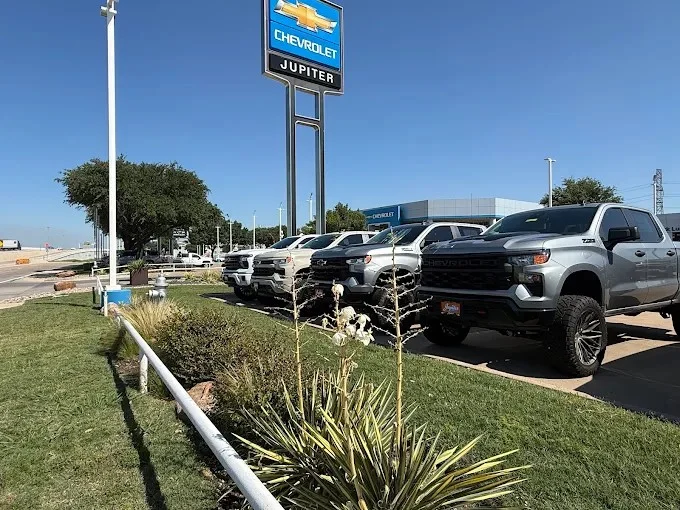
Feeling stuck in the stressful car-buying process? At Jupiter Chevrolet in Garland, TX, we've reimagined how buying a car should feel. With transparent pricing, online deal-building tools, and the benefits of our Jupiter Advantage program, we ensure every step is straightforward and satisfying. Skip the hassle. From purchase, to certified service and parts, to collision repair and body shop. Our team puts your convenience, safety, and confidence first. Turn your dreams of finding your ideal Chevrolet into reality with us. Visit Jupiter Chevrolet today!
How Service-Centre Innovation is Transforming Chevrolet Ownership Across the DFW Metroplex
From Dallas to McKinney, advanced diagnostics, digital integrations, and faster turnaround times are redefining the service experience for Chevrolet drivers in the region.
The rhythm of automotive life follows a predictable beat: Acquire the rugged truck for weekend escapes, the versatile SUV for family hauls, and then sustain it through meticulous upkeep to ensure those adventures endure. Nowhere is this cadence more amplified than in the Dallas-Fort Worth Metroplex, a dynamic expanse encompassing Garland, Dallas, Richardson, Plano, Rockwall-Heath, Forney, Mesquite, McKinney, and Grapevine. Here, with a population that surged to approximately 8 million by 2019 and continues its upward trajectory, the influx of vehicles on the road translates directly into heightened demands for maintenance, repairs, and parts. Yet, in an era where consumers wield apps for everything from grocery runs to global travel, Chevrolet service centers affiliated with trusted local networks are at the forefront, fusing state-of-the-art technology with time-honored dependability to meet these challenges head-on.
For industry professionals whether steering new vehicle sales, curating used inventories, managing collision repairs, or optimizing parts and service operations these shifts carry profound implications. Service has evolved from a mere afterthought into the linchpin of enduring customer relationships. A faltering navigation system or protracted wait for a routine alignment can erode the goodwill from even the most seamless Tahoe handover, faster than a snarl on the North Dallas Tollway. Consider the broader market dynamics: The U.S. automotive aftermarket reached an estimated $205.81 billion in 2022, with projections for a steady 4.1% compound annual growth rate through 2030. This expansion is propelled by the escalating imperative for prompt vehicle maintenance and component replacements, further intensified by rigorous emission standards and regulatory mandates from bodies like the U.S. Environmental Protection Agency. These frameworks not only enforce superior quality and safety in automotive parts but also spur innovations that enhance repair transparency through digital means, allowing owners to monitor costs and processes in real time.
In this high-stakes environment, where family-owned operations with over a century of service like those offering a lifetime powertrain warranty must compete against expansive corporate entities, embracing innovation becomes imperative. It's a strategic pivot that addresses common hesitations around inventory scale or pricing competitiveness, transforming potential drawbacks into demonstrations of agile, customer-centric excellence.
Emerging Trends & Recent Developments in the DFW Service Landscape
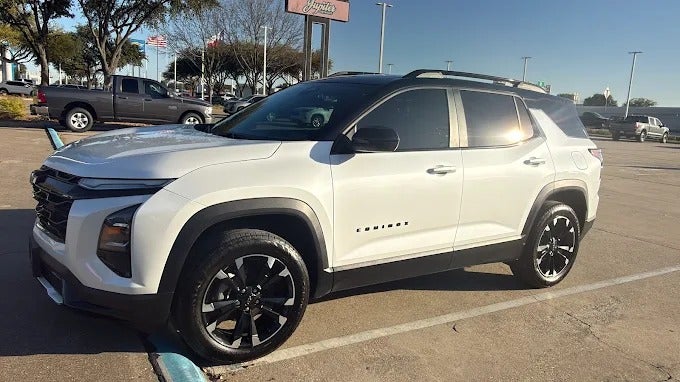
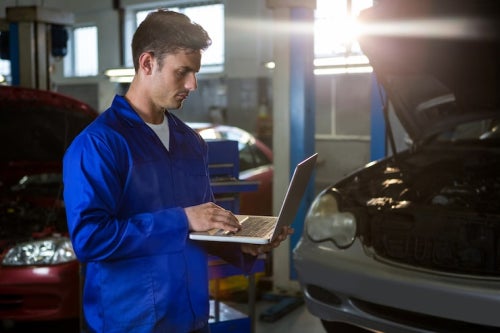
Venture across North Texas, and the air crackles with forward momentum. The DFW region has transcended mere expansion to emerge as a proving ground for interconnected automotive ecosystems. At the core of this transformation lies digital diagnostics, where service experts are supplanting traditional trial-and-error methods with real-time data feeds from a vehicle's embedded sensors. Over-the-air software updates, telematics notifications dispatched directly to owner's devices, and anticipatory algorithms that detect impending failures such as a weakening battery in a Forney-bound Equinox have become indispensable. This evolution aligns seamlessly with regional initiatives, including funding from the North Central Texas Council of Governments for autonomous vehicle infrastructure, extending even to progressive locales like McKinney.
Such technological surges demand swift adaptation from service providers. In Plano, nestled adjacent to Richardson's innovation corridor, DENSO Corporation recently inaugurated a $1.3 million research and development facility focused on connected vehicle solutions a beacon underscoring the urgency for Chevrolet centers to equip their teams with cutting-edge diagnostic tools capable of unraveling complexities in hybrid Equinox models or the burgeoning Silverado EV lineup. The rewards are tangible: Expedited resolutions, diminished callback rates, and cultivated loyalty that encourages upsells on performance enhancements. On a national scale, the U.S. automotive software sector generated $7,843.7 million in revenue during 2024, on track to double to $15,918.8 million by 2030, fueled by a robust 12.9% CAGR from 2025 onward. Advanced driver-assistance systems (ADAS) and safety applications dominated earnings in 2024, while autonomous driving segments promise the swiftest acceleration, encompassing innovations in infotainment, navigation, engine management, smart diagnostics, predictive maintenance, voice interfaces, connectivity, and beyond.
Beyond tech, the sheer volume of demand is reshaping the terrain. Rockwall County, encompassing the serene enclave of Heath, witnessed a staggering 33.9% population increase between 2010 and 2019, cascading into elevated vehicle densities along thoroughfares connecting to Dallas and Mesquite. Texas holds a prominent position among the top ten states for vehicle registrations, underpinning a thriving service economy. The U.S. automotive service market, valued at $199.38 billion in 2025, is forecasted to ascend to $266.56 billion by 2030, achieving this through a 5.98% CAGR amid low market concentration and diverse player dynamics. For Chevrolet enthusiasts traversing from Grapevine to McKinney, this growth heralds expanded avenues for warranty fulfillment, routine servicing, and accessory integrations, particularly as newer models integrate sophisticated ADAS features requiring specialized attention.
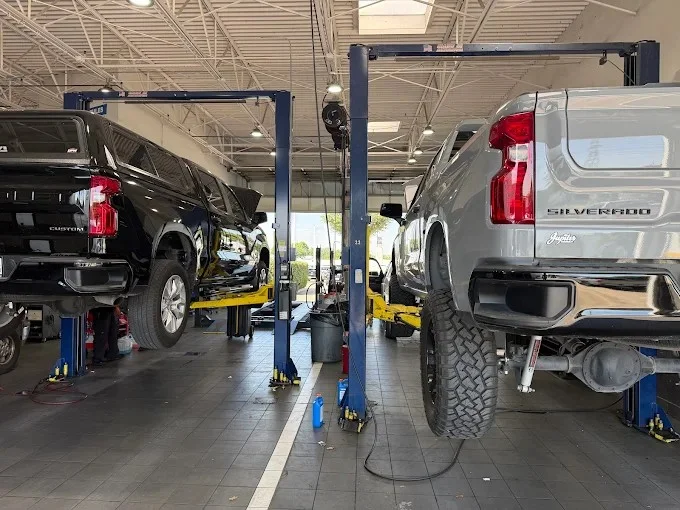
Workflows and parts management are undergoing equally rigorous refinement. Amid lingering global supply disruptions, DFW service centers are fortifying alliances with aftermarket vendors to expedite deliveries and minimize downtime. Optimized bay configurations now accommodate intricate calibrations for ADAS-equipped vehicles, while just-in-time inventory practices convert multi-day overhauls into efficient, same-day interventions. In a metroplex defined by extensive commuting daily migrations from Rockwall-Heath to Richardson, for instance this operational prowess is vital, ensuring that high-mileage fleets and personal rides remain operational without undue interruption.
Real-World Applications and Case Studies in the Region
Statistics illuminate paths, but lived examples illuminate them brighter. In Plano, the DENSO facility serves as more than a corporate milestone; it establishes a regional standard that Chevrolet service networks are emulating with fervor. Envision remote assessments enabling a morning drop-off of a Traverse in Richardson, followed by a midday retrieval complete with a digital video summary of interventions emailed to your inbox. Such protocols not only streamline operations but also dismantle barriers erected by prior subpar experiences, fostering advocacy among drivers who once approached service with apprehension.
Extending to Dallas and McKinney, analytical efforts leveraging location-based data are unveiling granular insights into regional driving behaviors. A comprehensive analysis of vehicular routing, drawing from extensive location-service datasets, has delineated congestion peaks and odometer thresholds ripe for preemptive action. Envision a service outlet in Garland proactively notifying Mesquite-based Equinox proprietors of imminent brake degradation, extending a curated package that incorporates complimentary alignments. This forward-leaning strategy cultivates recurring patronage organically, sidestepping overt promotion while amplifying satisfaction.
Owner testimonials resonate most potently in Garland and Dallas, where digital feedback mechanisms guide selections with the precision of satellite navigation. Enthusiasts commend establishments delivering unambiguous cost breakdowns and instantaneous progress notifications, supplanting antiquated opacity with verifiable candor. Amid the intense vehicular cadence of North Texas endless loops from Rockwall-Heath to Richardson these refinements forge unbreakable trust, mitigating concerns over limited stock variety or marginally elevated costs relative to mega-dealers. Innovation, it turns out, thrives not on sheer volume but on astute, empathetic execution.
Key Challenges, Limitations & Risks for Service-Centre Innovation
Progress seldom unfolds without friction. The DFW's voracious appetite for skilled labor renders recruitment of specialists in electric vehicle powertrains or intricate sensor suites akin to securing prime real estate at Frisco's The Star exceedingly arduous. Richardson's burgeoning tech ecosystem siphons talent toward software realms, often leaving Chevrolet bays understaffed for the diagnostics integral to contemporary models. Compounding this are fiscal barriers: Substantial outlays for prognostic software or networked apparatuses necessitate rapid returns, lest they burden already constrained facilities.
Logistical chokepoints persist, as international delays cascade into localized shortages in Forney's depots. Capacity constraints loom large in burgeoning suburbs like McKinney, where burgeoning clientele overwhelms slots during peak maintenance seasons, straining tempers amid oil-filter frenzies. Modern patrons, habituated to instantaneous digital gratification, defect swiftly to rivals if virtual interfaces falter be it erratic reservation portals or lapses in status transparency, propelling them toward the adjacent exit on Highway 75.
Nevertheless, these obstacles accentuate competitive moats. Outlets rooted in generational stewardship, such as those upholding a century of operations and lifetime powertrain safeguards, alchemize adversities into affirmations of resilience. Such assurances transcend mere policy, instilling poise that neutralizes anxieties over unforeseen expenditures in a price-conscious arena.
Opportunities, Efficiencies & Business Impacts
Inverting the lens reveals a vista of potential. Prognostic upkeep, informed by Metroplex mobility analytics, empowers Grapevine facilities to anticipate influxes and orchestrate bookings with surgical accuracy, potentially elevating operational capacity by upwards of 20%. Virtual augmentations like streamed video appraisals dispatched electronically or seamless Chevrolet app reservations elevate delight metrics, magnetizing pre-owned seekers drawn to meticulously documented certified vehicles.
Integrated offerings yield dividends: Conjoining a Colorado's rotor replacement with rugged floor liners subtly elevates parts revenue while cementing allegiance. Spanning the consortium from Mesquite's arterial veins to Plano's refined avenues unified digital interfaces equilibrate workloads, averting idle resources amid overflows elsewhere. Logistical adjacency to warehousing nodes facilitates sub-24-hour component arrivals, a critical asset in this transit-intensive domain.
The cascading effects are transformative: Bolstered profitability, tenacious clientele, and service excellence that propels fresh acquisitions. As the U.S. light-vehicle aftermarket gears toward $435 billion in 2025 per the latest joint forecast from the Auto Care Association, MEMA Aftermarket Suppliers, and S&P Global Market Intelligence, spanning through 2028 DFW Chevrolet enclaves harnessing these currents transcend mere endurance, propelling toward dominance through a harmonious blend of ingenuity and heritage-rooted warmth.
Moreover, digital retailing innovations are streamlining the continuum from inquiry to upkeep. Drawing from insights like those in the 2018 Cox Automotive Car Buyer Journey Study, where only 46% of buyers expressed satisfaction with dealership timelines, contemporary tools now compress these intervals via fortified website integrations. These platforms furnish streamlined, secure pathways from virtual exploration to physical handover, correlating heightened engagement with superior lead quality, hastened transactions, and amplified yields a synergy that extends service's reach into sales funnels.
A Memorable Conclusion
As twilight envelops the Trinity River's bend, etching silhouettes against Dallas's luminous horizon and seeping into McKinney's tranquil precincts, a singular verity crystallizes: Within the DFW Metroplex, Chevrolet service innovation transcends rhetoric it pulses as the core of proprietorship. From Garland's unyielding workshops to Grapevine's lustrous precincts, these bastions interlace digital prowess with ancestral fidelity, crafting a narrative that summons motorists recurrently, driven by affinity rather than obligation. Amid demographic booms sustaining insatiable need and apparatuses like interconnected diagnostics charting the course, the prudent course crystallizes: Channel resources strategically commencing with intuitive virtual engagements, ascending to foresighted orchestration. For venerable, kin-directed enterprises commemorating a hundred years, wielding lifetime warranties as shields against conglomerate tides, this juncture overflows with vista. In a territory where each kilometer resonates profoundly, the vanguard of innovation forges not mere restorations, but legacies one fluid intervention at a time.
Frequently Asked Questions
What are the latest innovations in Chevrolet service centers in the DFW Metroplex?
Chevrolet service centers in the DFW Metroplex, including Garland, Plano, and Mesquite, are adopting advanced digital diagnostics, over-the-air software updates, and telematics notifications to enhance vehicle maintenance. These technologies allow for real-time issue detection, faster repairs, and transparent communication with owners. For instance, predictive algorithms can identify potential issues like battery wear in a Chevrolet Equinox, ensuring quicker resolutions and improved reliability. This aligns with the region's push for connected vehicle solutions, as seen in Plano's DENSO research facility.
How do Chevrolet service centers in Dallas-Fort Worth improve customer satisfaction?
Chevrolet service centers in the DFW Metroplex prioritize customer satisfaction through transparent pricing, digital feedback mechanisms, and streamlined workflows like same-day repairs. Facilities in Dallas and McKinney use location-based analytics to anticipate maintenance needs, such as brake replacements, and provide clear cost breakdowns. Innovations like video summaries of repairs and app-based reservations enhance trust and convenience. These efforts foster loyalty among Chevrolet owners across areas like Richardson and Grapevine.
Why is vehicle maintenance important in the DFW Metroplex's growing automotive market?
With the DFW Metroplex's population nearing 8 million and a thriving automotive aftermarket valued at $199.38 billion in 2025, vehicle maintenance is critical to meet rising demand and stringent emission standards. Chevrolet service centers address this by using advanced diagnostics and just-in-time inventory to minimize downtime for high-mileage vehicles in areas like Rockwall-Heath and Forney. Regular upkeep ensures compliance with regulations and enhances vehicle longevity. This is especially vital for ADAS-equipped models requiring specialized care.
Disclaimer: The above helpful resources content contains personal opinions and experiences. The information provided is for general knowledge and does not constitute professional advice.
You may also be interested in: Why Transparent Online Deal-Building Is Now a Critical Expectation for Car Buyers
Feeling stuck in the stressful car-buying process? At Jupiter Chevrolet in Garland, TX, we've reimagined how buying a car should feel. With transparent pricing, online deal-building tools, and the benefits of our Jupiter Advantage program, we ensure every step is straightforward and satisfying. Skip the hassle. From purchase, to certified service and parts, to collision repair and body shop. Our team puts your convenience, safety, and confidence first. Turn your dreams of finding your ideal Chevrolet into reality with us. Visit Jupiter Chevrolet today!
Powered by flareAI.co