




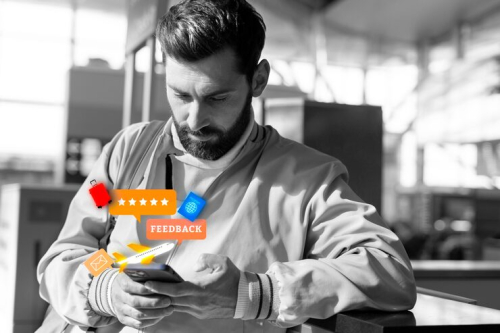
Imagine this scenario playing out on a phone screen in Frisco: A potential buyer searches for a new Chevrolet Tahoe, skims past the ads, and lands on a dealership profile with a 4.8-star average built on hundreds of recent reviews. Within minutes, they’ve mapped the route, scheduled a test drive, and mentally committed to the purchase all before stepping foot on the lot. This isn’t a one-off anecdote. Across the Dallas Metroplex, online reviews and digital reputation now function as the most powerful sales engine in automotive retail, dictating everything from new-car volume to collision-repair bookings.
Feeling stuck in the stressful car-buying process? At Jupiter Chevrolet in Garland, TX, we’ve reimagined how buying a car should feel. With transparent pricing, online deal-building tools, and the benefits of our Jupiter Advantage program, we ensure every step is straightforward and satisfying. Skip the hassle. From purchase, to certified service and parts, to collision repair and body shop. Our team puts your convenience, safety, and confidence first. Turn your dreams of finding your ideal Chevrolet into reality with us. Visit Jupiter Chevrolet today!
How Online Reviews and Digital Reputation Are Reshaping Dealership Performance in the Dallas-Fort Worth Metroplex
The numbers are unequivocal. In 2023, consumer reviews emerged as the single most decisive factor in vehicle-buying decisions, with 84% of shoppers citing them as essential when selecting a dealership and 74% demanding at least a 4-star rating. Another 62% read six or more reviews before deciding, while 63% said they’d drive more than 20 miles to reach a top-rated location distance that can span from Garland to McKinney during rush hour.
That consumer behavior translates directly into revenue. Dealerships that raise their Reputation Score by 150 points see sales climb by as much as 10%. The 152 highest-performing dealerships nationwide all posted scores above 900, and those elite operations generate seven times more Google Business Profile interactions than lower-rated peers. In the DFW context, those clicks become appointments, test drives, and closed deals across new-car showrooms, used-car rows, body-shop bays, and parts counters alike.
New-Car Sales: 30% of the Reputation Equation
For new-vehicle departments in Plano, Richardson, and Grapevine, digital reputation is the new front door. A pristine online profile doesn’t just attract clicks; it short-circuits the traditional multi-dealer shopping cycle. When 93% of Gen Z buyers now entering prime earning years consult reviews before any purchase, a single negative thread about delivery delays or financing transparency can push thousands of dollars in margin to a competitor in Rockwall-Heath.
High-performing stores counter this by systematizing review collection. After every new Tahoe or Silverado delivery, sales staff trigger automated texts requesting feedback. The result? Review volume across major platforms jumped 11% year-over-year in 2023, reaching the highest level in three years. That surge isn’t noise it’s signal. Each additional verified review strengthens SEO, elevates Google local-pack positioning, and feeds the algorithm that surfaces the dealership to the next late-night searcher in Frisco.
Used-Car Sales: 20% Precision in a High-Stakes Game
Pre-owned inventory carries higher perceived risk, making reputation the deciding tiebreaker. A used Equinox listed in Mesquite with detailed service records and a string of five-star testimonials commands a premium of hundreds sometimes thousands over identical vehicles at lower-rated lots. When vehicle prices hover near record highs, buyers scrutinize every pixel of the Carfax, every photo, and every reviewer comment. A single unresolved complaint about undisclosed frame damage can freeze a sale for weeks.
Smart operators lean into transparency. They post walk-around videos addressing common concerns, respond publicly to every critique within 24 hours, and highlight reconditioning investments. The payoff shows in conversion rates: Dealerships that maintain response rates above 90% report 15–20% higher used-car close ratios, according to internal benchmarks aggregated by reputation platforms.
Collision Repair and Body Shops: 25% Trust on the Line
Major accident repairs represent the ultimate reputation litmus test. A fender-bender in Forney or a multi-car pileup on I-635 leaves owners anxious, insurance companies skeptical, and every detail ripe for public scrutiny. Here, review sentiment directly influences DRP (direct repair program) referrals and customer retention. A body shop in Richardson that earns consistent praise for paint-match accuracy and loaner-car availability locks in cycle times 20% faster than peers stuck at 3.8 stars.
The broader reputation management software market for auto shops valued at $1.02 billion in 2024 and projected to reach $2.79 billion by 2033 at an 11.7% CAGR exists largely to serve this sector. Cloud-based platforms now flag sentiment shifts in real time, alert technicians to pending reviews, and automate insurance-friendly documentation, turning potential PR crises into five-star case studies.
Service and Parts: 25% Recurring Revenue at Stake
Service drive volume hinges on trust earned in 15-minute oil changes and 45-minute diagnostics. A parts counter in McKinney that stocks elusive OEM components and earns rave reviews for speed sees same-day upsell rates 30% above regional averages. Conversely, a single unresolved complaint about a misdiagnosed check-engine light in Dallas can deter dozens of future maintenance visits each worth $500–$1,000 in lifetime revenue.
Forward-thinking service advisors now treat every RO (repair order) as a reputation event. Post-visit surveys capture Net Promoter Scores, while AI-driven platforms route negative feedback to managers before it hits public sites. The global online reputation management market, currently at $6.88 billion and forecast to hit $12.57 billion by 2030 with a 12.8% CAGR, increasingly focuses on these micro-interactions. Software alone is on track for a 17.8% CAGR as dealerships prioritize scalable review monitoring over manual spreadsheets.
Navigating the Minefield: Fake Reviews and FTC Scrutiny
The stakes escalated in October 2024 when the Federal Trade Commission finalized rules imposing fines up to $51,744 per fake review. Dealerships in Garland and Plano now deploy compliance-first platforms that verify reviewer identities, flag incentivized posts, and archive every interaction for audit trails. The goal isn’t just penalty avoidance it’s preserving the authenticity that 89% of shoppers demand before trusting a rating.
Beyond the Stars: Balancing Digital and In-Person Excellence
Yet over-reliance on metrics can blindside operators. A dealership obsessed with star counts might invest heavily in review solicitation software while neglecting physical basics cracked waiting-room chairs in Richardson, understaffed service lanes in McKinney, or untrained F&I managers in Grapevine. The most successful stores treat online feedback as a diagnostic tool, not the destination. They cross-reference sentiment data with internal KPIs to ensure digital gains reflect genuine operational improvements.
Actionable Intelligence: Turning Feedback into Revenue
Modern reputation platforms do more than count stars they parse language. Natural-language processing identifies recurring themes: “long wait” prompts lounge upgrades in Frisco; “hard to find part” triggers inventory adjustments in Rockwall-Heath; “poor communication during repair” leads to daily text updates from body-shop coordinators in Forney. The online reputation management software market, projected to grow from $13.24 billion in 2024 to $24.96 billion by 2035 at a 6.72% CAGR, thrives on this granularity, delivering dashboards that link sentiment directly to P&L impact.
The Decade Ahead: AI, Automation, and Integration
Looking forward, artificial intelligence will dominate. Expect AI agents that draft personalized review responses in seconds, predictive models that forecast reputation risk before a service visit ends, and seamless CRM integrations that trigger re-engagement campaigns the moment a negative review posts. Dealerships that master these tools will automate review requests ethically, incentivize honest feedback within FTC guidelines, and convert every online interaction into measurable revenue whether that’s a new Malibu sale in Plano, a transmission rebuild in Mesquite, or a simple battery replacement in Grapevine.
In the Dallas Metroplex, where competition spans dozens of cities and hundreds of rooftops, digital reputation is no longer a marketing nice-to-have. It’s the operating system for growth. Dealerships that listen, respond, and evolve in real time will dominate showrooms, service bays, and body shops alike. Those that don’t will watch their Google ratings and their margins slip away, one unanswered review at a time.
Frequently Asked Questions
Why is digital reputation important for used-car sales at dealerships?
Digital reputation is crucial for used-car sales because buyers perceive higher risks and rely heavily on reviews to assess trust. A used vehicle with detailed service records and five-star reviews can command a premium, while a single negative comment about issues like undisclosed damage can stall sales. Dealerships with over 90% response rates to reviews see 15–20% higher close ratios, making reputation management vital for success.
How can dealerships improve their online reputation for collision repair services?
Dealerships can boost their collision repair reputation by focusing on transparency, quick response times, and quality service, as reviews heavily influence direct repair program referrals. Using reputation management software, valued at $1.02 billion in 2024, helps monitor sentiment, address feedback promptly, and automate insurance documentation. Consistent praise for accuracy and convenience, like at Jupiter Chevrolet’s body shop, can reduce cycle times by 20% compared to lower-rated competitors.
How do online reviews influence car buying decisions in the Dallas-Fort Worth area?
Online reviews are a critical factor in the Dallas-Fort Worth Metroplex, with 84% of car buyers citing them as essential when choosing a dealership. A minimum 4-star rating is demanded by 74% of shoppers, and 62% read at least six reviews before deciding. High ratings can drive customers to travel over 20 miles, from Garland to McKinney, to visit top-rated dealerships like Jupiter Chevrolet, directly impacting sales.
Disclaimer: The above helpful resources content contains personal opinions and experiences. The information provided is for general knowledge and does not constitute professional advice.
You may also be interested in: Service & Parts Specials
Feeling stuck in the stressful car-buying process? At Jupiter Chevrolet in Garland, TX, we’ve reimagined how buying a car should feel. With transparent pricing, online deal-building tools, and the benefits of our Jupiter Advantage program, we ensure every step is straightforward and satisfying. Skip the hassle. From purchase, to certified service and parts, to collision repair and body shop. Our team puts your convenience, safety, and confidence first. Turn your dreams of finding your ideal Chevrolet into reality with us. Visit Jupiter Chevrolet today!
Powered by flareAI.co
Connect with us


