






Quick Listen:
In today’s fast-paced driving environment, where split-second decisions can make all the difference, Chevrolet has significantly raised the bar with its 2026 model year lineup. Advanced safety technologies are no longer premium extras they form the backbone of the driving experience across nearly the entire range. From quiet suburban streets to demanding interstate merges, these systems actively scan surroundings, provide timely alerts, and when necessary intervene decisively to help prevent or mitigate collisions. At the heart of this effort stands Chevy Safety Assist, now standard equipment on the vast majority of 2026 Chevrolet vehicles.
Feeling stuck in the stressful car-buying process? At Jupiter Chevrolet in Garland, TX, we’ve reimagined how buying a car should feel. With transparent pricing, online deal-building tools, and the benefits of our Jupiter Advantage program, we ensure every step is straightforward and satisfying. Skip the hassle. From purchase, to certified service and parts, to collision repair and body shop. Our team puts your convenience, safety, and confidence first. Turn your dreams of finding your ideal Chevrolet into reality with us. Visit Jupiter Chevrolet today!
Chevy Safety Assist Standard Across the Lineup
Chevrolet’s philosophy is straightforward: essential safety should never be optional. That conviction is reflected in the decision to equip virtually every 2026 model sedans, crossovers, SUVs, and pickup trucks alike with the complete Chevy Safety Assist suite at no additional cost.
The package delivers six foundational technologies that work together to keep drivers aware and prepared:
- Automatic Emergency Braking monitors for impending frontal collisions with vehicles or stationary objects and can automatically apply brakes when a response is not detected in time.
- Forward Collision Alert issues early visual and audible warnings of potential front-end hazards.
- Front Pedestrian & Bicyclist Braking extends collision-mitigation capability to people on foot or on bicycles who enter the vehicle’s forward path.
- Lane Keep Assist with Lane Departure Warning gently steers the vehicle back toward the center of the lane if an unintentional drift occurs and provides clear alerts when departure is detected.
- Following Distance Indicator continuously displays the time gap to the vehicle ahead, helping drivers maintain a prudent following distance.
- IntelliBeam automatic high-beam control switches between high and low beams as conditions change, maximizing nighttime visibility without dazzling oncoming traffic.
Together these features create a consistent safety layer that operates unobtrusively in day-to-day driving. Owners frequently note that the constant background monitoring reduces stress, particularly during rush-hour commutes or unfamiliar routes.
Advanced Collision-Avoidance Technologies on Higher Trims
Chevrolet reserves its most sophisticated driver-assistance features for mid- and upper-level trims or available packages, giving buyers the flexibility to match capability to their needs.
Among the standouts is Blind Zone Steering Assist, which not only warns of vehicles in adjacent lanes but can also apply corrective steering input during a lane-change maneuver when a potential conflict is detected. At busy intersections, Intersection Automatic Emergency Braking helps reduce the severity of or possibly avoid lateral collisions with crossing traffic.
When reversing, drivers benefit from Rear Cross Traffic Braking and Rear Park Assist, systems that detect approaching vehicles or objects and can automatically brake to prevent contact. Complementing these active interventions are high-resolution cameras, including the available HD Surround Vision system that stitches together a virtual overhead view of the vehicle and its immediate surroundings.
Adaptive Cruise Control Highway Driving Redefined
Available Adaptive Cruise Control takes the monotony out of long-distance travel. The system maintains a driver-selected speed and following gap, smoothly accelerating and decelerating with traffic flow. On models equipped with the enhanced version, the feature operates in stop-and-go conditions, bringing the vehicle to a complete stop and then resuming forward motion when traffic ahead moves again a welcome relief in congested highway corridors.
Super Cruise Hands-Free Capability on Hundreds of Thousands of Miles
At the pinnacle of Chevrolet’s current driver-assistance offerings sits Super Cruise, the brand’s true hands-free technology. Available on carefully selected 2026 models including the Tahoe, Suburban, Silverado 1500, and certain electric variants Super Cruise enables attentive, hands-off driving on more than 585,000 mapped miles of divided highways across the United States and Canada.
The system combines high-definition map data, GPS precision, forward-facing cameras, radar sensors, and continuous driver attention monitoring to keep the vehicle centered, execute lane changes when appropriate, and manage highway entry and exit transitions. Recent software enhancements have improved integration with Google Maps, making it easier for the system to recognize compatible segments and transition smoothly into hands-free mode.
Owners who regularly travel long distances often describe Super Cruise as genuinely game-changing: fatigue drops noticeably, situational awareness actually improves, and the journey itself becomes more enjoyable all while the requirement to remain attentive and ready to intervene is never relaxed.
Additional Layers of Visibility and Protection
Chevrolet complements active safety systems with thoughtful passive and awareness-enhancing features. The available Head-Up Display projects critical information speed, navigation instructions, forward-collision alerts directly onto the windshield so eyes never have to leave the road. For households with younger drivers, Teen Driver technology allows parents to establish speed and audio limits while generating a detailed report card of driving behavior.
Advanced restraint systems, including multi-stage airbags and occupant-presence detection, work in concert with the active-safety suite to provide comprehensive crash protection when prevention is not possible. The result is a vehicle that anticipates hazards, warns clearly, intervenes intelligently, and should the worst occur protects occupants as effectively as current engineering allows.
Practical Impact in Real-World Driving
The true measure of these technologies lies in everyday scenarios. Imagine accelerating onto a fast-moving freeway while a vehicle occupies the adjacent blind spot: Blind Zone Steering Assist provides both an alert and gentle corrective steering. Or consider pulling out of a crowded parking lot in reverse: Rear Cross Traffic Braking can stop the vehicle before contact occurs. During nighttime travel on unlit rural roads, IntelliBeam automatically maximizes illumination without creating glare for others.
By embedding so many of these capabilities as standard equipment rather than confining them to top trims Chevrolet has democratized advanced safety. Families purchasing an affordable crossover, contractors relying on a full-size pickup, or retirees selecting a comfortable SUV all receive the same core protective technologies.
The Road Ahead Safety as the New Baseline
As traffic density increases, driver distraction remains a persistent challenge, and weather and road conditions continue to test human attention, Chevrolet’s 2026 lineup arrives with clear intent: equip every driver with modern tools that make safer decisions easier and more instinctive.
Standardizing Chevy Safety Assist across the portfolio while expanding access to transformative features such as Super Cruise signals that advanced driver assistance is no longer a luxury segment privilege it is rapidly becoming the expected foundation of new-vehicle design. For shoppers comparing models in 2026, the reassurance that thoughtful, capable safety engineering is already included can be one of the most compelling reasons to choose Chevrolet.
Frequently Asked Questions
What safety features come standard on 2026 Chevrolet vehicles?
All 2026 Chevrolet vehicles come standard with the Chevy Safety Assist suite, which includes six core technologies: Automatic Emergency Braking, Forward Collision Alert, Front Pedestrian & Bicyclist Braking, Lane Keep Assist with Lane Departure Warning, Following Distance Indicator, and IntelliBeam automatic high-beam control. These features are included at no extra cost across sedans, crossovers, SUVs, and pickup trucks.
Which 2026 Chevrolet models offer Super Cruise hands-free driving?
Super Cruise is available on select 2026 models including the Tahoe, Suburban, Silverado 1500, and certain electric variants. It enables hands-free driving on over 585,000 mapped highway miles across the U.S. and Canada, using HD maps, GPS, cameras, radar, and driver attention monitoring to manage lane centering, lane changes, and highway transitions.
Does the 2026 Chevrolet lineup include advanced parking and rear collision safety features?
Yes mid- and upper-level 2026 Chevrolet trims offer Rear Cross Traffic Braking and Rear Park Assist, which detect approaching vehicles or obstacles while reversing and can automatically apply the brakes to prevent contact. An available HD Surround Vision system also provides a stitched overhead camera view to assist with tight parking maneuvers.
Disclaimer: The above helpful resources content contains personal opinions and experiences. The information provided is for general knowledge and does not constitute professional advice.
You may also be interested in: Chevrolet Parts Stores Report High Demand for EV-Compatible Components
Feeling stuck in the stressful car-buying process? At Jupiter Chevrolet in Garland, TX, we’ve reimagined how buying a car should feel. With transparent pricing, online deal-building tools, and the benefits of our Jupiter Advantage program, we ensure every step is straightforward and satisfying. Skip the hassle. From purchase, to certified service and parts, to collision repair and body shop. Our team puts your convenience, safety, and confidence first. Turn your dreams of finding your ideal Chevrolet into reality with us. Visit Jupiter Chevrolet today!
Powered by flareAI.co

Quick Listen:
Walking onto a busy dealership lot today often feels overwhelming. Shoppers face endless rows of vehicles, each promising value, yet many hesitate over one central concern: what hidden problems might lurk beneath a seemingly attractive price? For a growing number of drivers, the real decision has moved beyond simply choosing new versus pre-owned. The critical question now centers on distinguishing between an ordinary used car and a certified pre-owned vehicle. Understanding those differences clearly can replace uncertainty with real confidence, allowing you to select transportation that genuinely matches your budget, lifestyle, and long-term expectations.
Feeling stuck in the stressful car-buying process? At Jupiter Chevrolet in Garland, TX, we’ve reimagined how buying a car should feel. With transparent pricing, online deal-building tools, and the benefits of our Jupiter Advantage program, we ensure every step is straightforward and satisfying. Skip the hassle. From purchase, to certified service and parts, to collision repair and body shop. Our team puts your convenience, safety, and confidence first. Turn your dreams of finding your ideal Chevrolet into reality with us. Visit Jupiter Chevrolet today!
Why Pre-Owned Vehicles Continue to Gain Popularity
More Americans than ever are deliberately choosing vehicles that already have some history rather than purchasing brand-new models at full sticker price. This trend reflects broader shifts toward financial flexibility and practical decision-making. Flexible ownership arrangements, including leasing, have become increasingly attractive because they let people enjoy modern vehicles without permanent commitment. Industry observers note that the appeal of such options continues to strengthen steadily as consumers prioritize variety and manageable monthly costs over long-term ownership.
Pre-owned cars occupy a valuable middle ground in this landscape. They deliver meaningful savings compared with new models while still providing relatively recent technology, safety features, and styling. The decision between a standard used vehicle and one bearing official certification ultimately determines how much additional reassurance and cost you accept in exchange for greater peace of mind.
Defining Characteristics of a Standard Used Car
A conventional used vehicle is any automobile that has previously belonged to someone else. It may arrive through a private sale, a dealer trade-in, an auction, or even a lease return. Mileage, age, maintenance history, and overall condition can differ dramatically from one example to the next. You might discover a carefully maintained three-year-old sedan with modest miles or a rugged ten-year-old pickup that remains mechanically sound despite visible wear.
Most standard used cars sell “as-is.” That means responsibility for future repairs rests entirely with the new owner unless a separate warranty is negotiated. The absence of formal guarantees frequently translates into significantly lower purchase prices and considerably more room for negotiation. Savvy buyers who perform diligent research or who bring along a trusted independent mechanic regularly uncover excellent values in this segment.
However, the lack of standardized oversight introduces genuine risk. Without rigorous pre-sale inspection protocols, issues ranging from worn suspension components to impending transmission trouble can surface shortly after purchase. For drivers comfortable arranging their own maintenance or those who maintain close relationships with reliable repair facilities, these vehicles frequently provide dependable daily transportation at a fraction of new-car cost.
How Certification Elevates the Pre-Owned Experience
Certified pre-owned (CPO) programs represent the manufacturer’s attempt to bridge the reliability gap between ordinary used cars and new vehicles. Participating brands establish strict eligibility criteria that typically limit acceptable models to recent years with relatively low mileage. Each qualifying vehicle then undergoes an extensive factory-supervised reconditioning process before being offered for sale.
The certification badge carries substantial weight because it confirms that company-trained technicians have systematically examined and, where necessary, repaired or replaced critical systems. Engine, transmission, brakes, electronics, safety equipment, and even cosmetic details receive close attention. The result is a pre-owned automobile restored to near-new mechanical and aesthetic standards while retaining a significantly lower price than a comparable new model.
Contrasting Inspection Standards
Inspection depth marks one of the clearest distinctions between the two categories. Many standard used cars receive only a cursory visual evaluation and a brief test drive before being placed on the lot. By comparison, certified pre-owned vehicles typically face multi-point inspections covering well over one hundred individual components. Technicians document findings, replace worn or marginal parts, update software, address any recalls, and perform comprehensive detailing inside and out.
This meticulous approach delivers noticeable improvements in long-term dependability and owner satisfaction. Families who rely on their transportation for school runs, work commutes, and weekend travel particularly appreciate knowing that major systems have already been vetted and refreshed to exacting specifications.
Warranty Coverage and Roadside Support
Warranty protection represents another decisive difference. Most ordinary used cars carry only whatever portion if any remains of the original factory warranty. Certified pre-owned programs almost always include a manufacturer-backed extended warranty that begins after any remaining original coverage expires. These plans frequently extend for several additional years or tens of thousands of miles.
Many CPO packages also bundle valuable perks such as 24/7 roadside assistance, rental-car reimbursement during covered repairs, and trip-interruption benefits. For drivers who value predictability and dislike unexpected repair expenses, these protections often justify the modest price premium associated with certification.
Pricing Dynamics and Ownership Costs
Purchase price differences usually prove substantial. Standard used vehicles command lower initial costs because they lack certification expenses, standardized inspections, and extended warranty obligations. Buyers willing to accept greater uncertainty frequently secure better negotiated prices in this segment.
Certified pre-owned models naturally carry higher window stickers reflecting the investment manufacturers and dealers make in reconditioning and backing each vehicle. Financing terms sometimes favor CPO cars as well, since lenders typically view them as lower-risk propositions. When calculating total cost of ownership, however, many shoppers discover that the additional upfront expense of a certified vehicle can be partially or fully offset through reduced repair frequency, included maintenance, and stronger resale value down the road.
Weighing Advantages and Trade-Offs
- Standard used vehicles generally provide the lowest acquisition cost, broadest model availability across age ranges, and maximum negotiation leverage, though they demand more careful due diligence and accept higher potential repair exposure.
- Certified pre-owned vehicles deliver documented multi-point inspections, extended manufacturer warranties, roadside assistance packages, and greater overall confidence, at the expense of higher purchase prices and more restricted model eligibility.
- Both categories can deliver years of faithful service when shoppers review vehicle history reports thoroughly and insist on comprehensive pre-purchase inspections.
Your personal tolerance for uncertainty largely determines which path feels most appropriate. Those who enjoy the challenge of finding bargains and managing their own maintenance often gravitate toward standard used cars. Drivers who place greater value on factory-backed assurance and minimal unplanned service visits tend to prefer certified pre-owned options.
Importance of Vehicle History Transparency
No matter which route you choose, obtaining and carefully reviewing a detailed vehicle history report remains non-negotiable. Reputable services compile information about prior accidents, title status, odometer readings, and service records. Certified programs normally mandate clean titles and accurate mileage documentation, adding an extra safeguard. Still, personally examining these reports and asking pointed questions about any discrepancies builds the strongest foundation for an informed purchase.
Transparent dealerships now routinely make this information readily accessible either on-site or through their websites. Welcoming sellers encourage rather than discourage these inquiries because they understand that informed buyers ultimately become more satisfied, loyal customers.
Matching the Vehicle to Your Real-World Needs
Consider how you actually use a car. Long-distance commuters and parents transporting children often find the added reliability and warranty coverage of a certified pre-owned model worth the extra investment. Weekend enthusiasts or budget-conscious drivers who drive relatively few miles each year may discover that a carefully selected standard used vehicle better aligns with their priorities, leaving more resources available for other goals.
Future intentions matter too. If you plan to keep your next vehicle for five years or longer, the protections built into most CPO programs frequently prove financially advantageous. If you typically trade every two to three years, the lower entry price of a standard used model may deliver greater overall value. The surest way to clarify preferences involves scheduling back-to-back test drives of both certified and non-certified examples in your target price range. Once you experience how each feels on familiar roads, the right choice often becomes surprisingly obvious.
Making Your Decision with Confidence
Purchasing a pre-owned vehicle need not feel daunting when approached methodically. Whether you ultimately select a standard used car for its affordability and variety or choose a certified pre-owned model for its structured reassurance, success depends on aligning the purchase with your specific circumstances financial constraints, risk tolerance, driving habits, and ownership timeline. Invest time in research, insist on transparency, and never hesitate to seek professional mechanical opinions when needed. A little diligence at the outset almost always translates into years of worry-free driving and genuine satisfaction with the vehicle you bring home.
The journey becomes far more enjoyable when you move forward armed with clear understanding rather than lingering doubts. Choose thoughtfully, then enjoy the road ahead with the confidence that comes from an informed, deliberate decision.
Frequently Asked Questions
Is buying a certified pre-owned car worth the extra cost?
For many buyers, the added cost of a CPO vehicle is offset by long-term savings and reduced stress. CPO programs include extended manufacturer warranties, 24/7 roadside assistance, and rental-car reimbursement during covered repairs protections that can prevent costly surprises down the road. Buyers who drive frequently, have families depending on reliable transportation, or plan to keep their vehicle five or more years typically find the CPO price premium well justified compared to the potential repair exposure of a standard used car.
What should I check before buying a used or certified pre-owned vehicle?
Regardless of whether you choose a standard used car or a CPO vehicle, always request and carefully review a detailed vehicle history report from a reputable service it should cover prior accidents, title status, odometer readings, and maintenance records. For standard used cars, having an independent mechanic perform a pre-purchase inspection is especially important since they lack standardized vetting. CPO vehicles must typically have clean titles and verified mileage as part of their certification requirements, adding an extra layer of transparency to the buying process.
What is the difference between a used car and a certified pre-owned (CPO) vehicle?
A standard used car is any previously owned vehicle sold with little to no formal inspection process, often “as-is” with no warranty making it a more affordable but higher-risk option. A certified pre-owned vehicle, by contrast, has passed a rigorous manufacturer-supervised multi-point inspection (typically covering 100+ components), been reconditioned to near-new standards, and comes backed by an extended factory warranty. While CPO vehicles cost more upfront, they offer significantly greater peace of mind for buyers who want documented reliability without paying new-car prices.
Disclaimer: The above helpful resources content contains personal opinions and experiences. The information provided is for general knowledge and does not constitute professional advice.
You may also be interested in: The Benefits of Online Car Buying Tools and Transparent Pricing
Feeling stuck in the stressful car-buying process? At Jupiter Chevrolet in Garland, TX, we’ve reimagined how buying a car should feel. With transparent pricing, online deal-building tools, and the benefits of our Jupiter Advantage program, we ensure every step is straightforward and satisfying. Skip the hassle. From purchase, to certified service and parts, to collision repair and body shop. Our team puts your convenience, safety, and confidence first. Turn your dreams of finding your ideal Chevrolet into reality with us. Visit Jupiter Chevrolet today!
Powered by flareAI.co

Quick Listen:
In 2026, the used car market continues to feel unpredictable, with fluctuating prices and buyers seeking reliability without paying full new-car premiums. That’s where a Certified Pre-Owned Chevrolet stands out as a genuinely smart choice. These vehicles are carefully selected, put through rigorous inspection, and backed by factory-level support that sets them apart from ordinary used cars. For drivers wanting a dependable Chevy without starting from scratch, the certified route offers outstanding value especially as new-vehicle prices remain high and pre-owned options evolve.
Feeling stuck in the stressful car-buying process? At Jupiter Chevrolet in Garland, TX, we’ve reimagined how buying a car should feel. With transparent pricing, online deal-building tools, and the benefits of our Jupiter Advantage program, we ensure every step is straightforward and satisfying. Skip the hassle. From purchase, to certified service and parts, to collision repair and body shop. Our team puts your convenience, safety, and confidence first. Turn your dreams of finding your ideal Chevrolet into reality with us. Visit Jupiter Chevrolet today!
What Makes Certified Pre-Owned Chevrolets Stand Out in 2026
The real advantage lies in the combination of peace of mind and practical benefits. Unlike a standard used car bought from a private seller or non-certified lot, a Chevrolet certified pre-owned model has already cleared a demanding qualification process. Eligible vehicles are typically recent models with reasonable mileage, then subjected to an extensive multi-point inspection covering mechanical systems, safety components, electronics, and cosmetic details. Any concerns are resolved using genuine Chevrolet parts before the vehicle reaches the sales floor.
This careful vetting eliminates many of the uncertainties that make used-car buying feel risky. You end up with a thoroughly prepared vehicle ready to deliver the familiar Chevrolet driving experience free from the hidden issues that can surface with a regular pre-owned purchase.
Factory-Backed Warranty Protection That Delivers Real Confidence
One of the strongest reasons to consider a certified pre-owned Chevrolet is the meaningful warranty coverage that goes well beyond what most used cars provide. These vehicles come with a 12-month/12,000-mile bumper-to-bumper limited warranty and a 6-year/100,000-mile powertrain limited warranty from the original in-service date, both with no deductible in most cases. This protection is straight from the manufacturer, not an aftermarket add-on.
Buyers also receive 24/7 roadside assistance and courtesy transportation during covered service periods. In a year when an unexpected repair can quickly strain budgets, this safety net provides genuine reassurance and helps keep ownership predictable.
Smart Financial Benefits While Keeping Modern Features
New Chevrolets experience their sharpest depreciation right after leaving the dealership. A certified pre-owned model has already absorbed much of that initial drop, letting you enjoy a late-model vehicle often just a few years old at a noticeably lower price, while it remains in excellent condition with contemporary features intact.
You won’t sacrifice the latest advancements either. Many certified pre-owned Chevrolets include sophisticated advanced driver assistance systems (ADAS) that enhance safety and comfort. These technologies, such as automatic emergency braking and adaptive cruise control, use cameras, sensors, and intelligent algorithms to monitor surroundings and respond in real time. The growing demand for such features reflects broader industry trends, making certified models feel thoroughly up to date without the full new-car cost.
Competitive financing options are frequently available through Chevrolet dealers, and the included warranty helps reduce the chance of large unexpected expenses. When you factor in lower overall ownership costs, the financial case for certified pre-owned becomes compelling.
The Rigorous Inspection and Reconditioning Process
At the heart of the certified program is a comprehensive inspection often described as a 172-point check performed by Chevrolet-trained technicians. This detailed evaluation examines brakes, suspension, engine and transmission performance, electrical systems, interior condition, tires, and more. Vehicles must meet strict standards; anything falling short is repaired or replaced with approved components.
The result is a vehicle far less likely to carry forward deferred maintenance from a previous owner. This level of scrutiny far exceeds what private sellers or many independent lots can offer. For families, commuters, or anyone who depends on their car daily, that thorough preparation translates into fewer surprises and greater long-term reliability.
How Recent Market Changes Shape Your Options
The used-vehicle landscape in 2026 reflects ongoing industry shifts. General Motors has streamlined its certified used programs under the CarBravo platform, expanding choices while maintaining strong buyer protections for Chevrolet models. This evolution allows more flexibility without compromising the core emphasis on quality and coverage that Chevrolet loyalists expect.
The change actually increases appeal for many shoppers. More vehicles can qualify for certification-style benefits, yet the factory-backed approach continues to stand out for those who value familiar Chevrolet dependability. Whether upgrading from an older model or considering your first Chevy, the certified route provides a balanced option between new and ordinary used.
Advanced Safety Features You Can Count On
Modern Chevrolets increasingly come equipped with advanced driver assistance technologies designed to make driving safer and less stressful. Features such as lane departure warnings, automatic emergency braking, adaptive cruise control, and parking assistance rely on sophisticated combinations of cameras, sensors, and artificial intelligence to interpret real-time road conditions and help prevent incidents.
These systems have become key selling points as safety regulations tighten and consumer awareness grows. In a certified pre-owned Chevrolet, you often inherit these capabilities in vehicles that have already proven themselves on the road, gaining modern protection at a more accessible price point.
Addressing Common Buyer Questions
- Does certified pre-owned truly differ from a well-maintained regular used car? Yes the combination of the detailed factory inspection, extended manufacturer warranty, and roadside support creates a significantly higher level of assurance than relying solely on a seller’s claims.
- Is inventory still plentiful in 2026? Chevrolet dealers continue to offer a solid selection of certified models, ranging from efficient compact cars and versatile SUVs to capable trucks. Low-mileage, late-model examples remain widely available through lease returns and trade-ins.
- What if I need service later? Coverage is honored at participating Chevrolet dealers, with trained technicians and genuine parts ensuring consistent quality.
Why Certified Pre-Owned Chevrolet Feels Like the Right Decision Now
Choosing a certified pre-owned Chevrolet in 2026 ultimately means enjoying the best of both worlds: the refinement, technology, and safety of a modern vehicle combined with the affordability and value of pre-owned ownership, all supported by manufacturer confidence.
It is not about chasing the absolute newest design it is about making a thoughtful, practical choice that safeguards your budget and your time behind the wheel. If you are shopping for a reliable Chevrolet that performs without unnecessary drama, a certified pre-owned model deserves serious consideration. Take one for a drive, experience the difference firsthand, and discover why so many informed buyers view it as one of the smartest moves they can make this year.
Frequently Asked Questions
What warranty coverage comes with a Certified Pre-Owned Chevrolet in 2026?
Certified Pre-Owned Chevrolets come with a 12-month/12,000-mile bumper-to-bumper limited warranty and a 6-year/100,000-mile powertrain limited warranty from the original in-service date, typically with no deductible. This manufacturer-backed coverage also includes 24/7 roadside assistance and courtesy transportation during covered service periods providing significantly more protection than a standard used car purchase.
How is a Certified Pre-Owned Chevrolet different from a regular used car?
Unlike a standard used car, a Certified Pre-Owned Chevrolet must pass a rigorous 172-point inspection performed by Chevrolet-trained technicians, covering everything from brakes and suspension to electronics and interior condition. Any issues found are repaired using genuine Chevrolet parts before the vehicle reaches the sales floor, eliminating the hidden problems that often come with non-certified pre-owned purchases.
Is buying a Certified Pre-Owned Chevrolet a good financial decision in 2026?
Yes CPO Chevrolets offer strong value because they’ve already absorbed the steepest depreciation that occurs right after a new car leaves the dealership, meaning you get a late-model vehicle in excellent condition at a noticeably lower price. Many models still include modern safety technologies like automatic emergency braking and adaptive cruise control, and competitive financing options through Chevrolet dealers help keep overall ownership costs predictable and manageable.
Disclaimer: The above helpful resources content contains personal opinions and experiences. The information provided is for general knowledge and does not constitute professional advice.
You may also be interested in: Why Jupiter Chevrolet’s Collision Repair Center is Trusted by Garland Drivers
Feeling stuck in the stressful car-buying process? At Jupiter Chevrolet in Garland, TX, we’ve reimagined how buying a car should feel. With transparent pricing, online deal-building tools, and the benefits of our Jupiter Advantage program, we ensure every step is straightforward and satisfying. Skip the hassle. From purchase, to certified service and parts, to collision repair and body shop. Our team puts your convenience, safety, and confidence first. Turn your dreams of finding your ideal Chevrolet into reality with us. Visit Jupiter Chevrolet today!
Powered by flareAI.co

Quick Listen:
The shift toward buying cars online continues to accelerate, fueled by growing consumer demand for seamless digital experiences and innovations such as virtual showrooms, AI-guided tools, and home delivery options. Chevrolet has positioned itself at the forefront of this transformation by expanding its all-electric lineup, allowing prospective buyers to research, compare, configure, and even initiate purchases from their devices with unprecedented ease.
In an era when range, pricing, and everyday usability heavily influence purchasing decisions, Chevrolet’s 2026 electric vehicles combine the brand’s signature qualities robust build, generous interior space, and practical capability with the efficiency, refinement, and instant response that define modern electric driving.
Feeling stuck in the stressful car-buying process? At Jupiter Chevrolet in Garland, TX, we’ve reimagined how buying a car should feel. With transparent pricing, online deal-building tools, and the benefits of our Jupiter Advantage program, we ensure every step is straightforward and satisfying. Skip the hassle. From purchase, to certified service and parts, to collision repair and body shop. Our team puts your convenience, safety, and confidence first. Turn your dreams of finding your ideal Chevrolet into reality with us. Visit Jupiter Chevrolet today!
Chevrolet’s Strategic Move Into Full Electrification
Chevrolet has methodically expanded its battery-electric portfolio, evolving from initial offerings to a well-rounded selection that addresses varied customer needs from urban commuters to those requiring serious towing and hauling capability. The 2026 models arrive as public acceptance of electric vehicles continues to broaden, supported by denser charging networks and more competitive pricing across segments.
Central to this lineup is GM’s Ultium battery architecture, a flexible platform that enables engineers to optimize range, performance, and interior packaging for each model. The outcome is a family of vehicles that remain unmistakably Chevrolet in character while delivering the smooth, quiet operation and dramatically lower operating costs typical of electric powertrains.
Equinox EV Practicality and Value for Daily Driving
Positioned as the most approachable entry point, the 2026 Chevrolet Equinox EV emphasizes real-world usability without unnecessary complexity. With a starting price hovering around $35,000, it provides an EPA-estimated driving range of more than 300 miles in front-wheel-drive configuration sufficient to cover most commutes, school runs, and weekend getaways on a single charge.
The interior delivers family-friendly proportions, offering generous passenger space and up to 57.2 cubic feet of cargo capacity with rear seats folded. A large 17.7-inch central touchscreen anchors the cabin, while a suite of driver-assistance technologies appears across LT and RS trim levels, making the transition to electric ownership feel straightforward and reassuring.
What sets the Equinox EV apart is its thoughtful balance: low enough running costs for budget-conscious households, enough interior flexibility for growing families, and a price point that competes effectively in one of the most contested segments of the market.
Blazer EV Bold Design Meets Engaging Dynamics
Buyers seeking greater visual impact and a more dynamic personality find it in the 2026 Blazer EV. This midsize electric SUV combines striking exterior proportions with responsive handling characteristics that distinguish it from more utilitarian competitors.
Depending on configuration, EPA-estimated range approaches 334 miles, providing confidence for extended highway trips or multi-stop days. The cabin prioritizes both comfort and connectivity, featuring expansive digital instrumentation and available semi-autonomous driving aids that reduce fatigue on longer journeys.
The Blazer EV speaks directly to drivers who refuse to sacrifice style or driving enjoyment when moving to electric power. Its sharp creases, athletic stance, and swift acceleration create a presence that stands out whether navigating downtown traffic or cruising open roads.
Silverado EV Heavy-Duty Capability, Electric Efficiency
Leading the portfolio in terms of capability is the 2026 Chevrolet Silverado EV, a full-size pickup that reimagines work-ready utility for the electric era. Base models begin in the mid-$50,000 range, with premium trims including the rugged Trail Boss carrying higher MSRPs that reflect added features and performance.
Top configurations deliver EPA-estimated ranges nearing 478 miles along with substantial towing and payload ratings suitable for trailers, boats, or job-site equipment. The Silverado EV preserves the practical strengths of its gas-powered siblings large bed dimensions, durable interior materials, and purpose-built storage solutions while introducing instantaneous torque delivery and near-silent operation that transform the driving experience.
Specialized variants such as the Trail Boss expand its appeal to owners who regularly leave pavement, while advanced infotainment and connectivity features ensure the cabin remains productive and comfortable during extended use.
Meeting Diverse Needs in a Changing Market
Rather than forcing buyers into a narrow mold, Chevrolet’s 2026 electric lineup offers genuine choice. The Equinox EV serves budget-minded urban and suburban drivers, the Blazer EV appeals to those who value design and driving engagement, and the Silverado EV satisfies customers whose lifestyles demand serious utility.
This variety mirrors larger industry trends: more people are searching for vehicles that match their specific routines whether the goal is eliminating gas station visits, lowering long-term ownership costs, reducing environmental impact, or simply enjoying a quieter, smoother ride.
Real-World Ownership Considerations
Concerns about driving range have diminished significantly thanks to these vehicle’s competitive estimates and the continued expansion of reliable public charging infrastructure. For most owners, overnight home charging covers daily needs, while DC fast chargers make occasional long-distance travel practical and convenient.
Total cost of ownership often proves favorable. Electricity is typically less expensive per mile than gasoline, brake wear decreases due to regenerative systems, and electric drivetrains contain far fewer moving parts than internal-combustion engines. Where available, federal, state, or utility incentives can further improve the financial equation.
Nothing illustrates the difference quite like time behind the wheel: the immediate surge of acceleration from a standstill, the intuitive energy recapture when lifting off the accelerator, and the peaceful cabin free of engine vibration and exhaust noise.
The Road Ahead for Chevrolet Buyers
Chevrolet’s 2026 electric vehicles arrive at a pivotal moment in the evolution of personal transportation. These models go beyond simply being battery-powered; they deliver the durability, space, and trustworthiness the bowtie badge has long represented now paired with zero tailpipe emissions and modern performance advantages.
Whether you are actively planning to electrify your next vehicle or merely exploring what’s possible, the current Chevrolet EV portfolio provides a compelling preview of the future. That future is arriving faster than many expected and it continues to carry the familiar Chevrolet emblem.
Frequently Asked Questions
What electric vehicles is Chevrolet offering in 2026?
Chevrolet’s 2026 electric lineup includes three main models: the Equinox EV, the Blazer EV, and the Silverado EV. The Equinox EV is the most affordable entry point at around $35,000, the Blazer EV targets drivers who want bold styling and dynamic performance, and the Silverado EV is a full-size pickup built for heavy-duty capability. All three are built on GM’s flexible Ultium battery platform.
How far can the 2026 Chevrolet electric vehicles travel on a single charge?
Range varies by model: the Equinox EV offers an EPA-estimated 300+ miles in front-wheel-drive configuration, the Blazer EV reaches up to approximately 334 miles, and the top-tier Silverado EV leads the lineup with an estimated range nearing 478 miles. These figures make all three models practical for daily commuting as well as longer road trips, especially as public DC fast-charging infrastructure continues to expand.
Is owning a 2026 Chevrolet EV more cost-effective than a gas-powered vehicle?
In many cases, yes. Electricity typically costs less per mile than gasoline, and electric drivetrains have significantly fewer moving parts, reducing long-term maintenance expenses. Regenerative braking also extends brake life compared to traditional vehicles. When combined with available federal, state, or utility incentives, the total cost of ownership for a 2026 Chevrolet EV can be quite competitive.
Disclaimer: The above helpful resources content contains personal opinions and experiences. The information provided is for general knowledge and does not constitute professional advice.
You may also be interested in: How to Maximize Your Trade-In Value at Jupiter Chevrolet
Feeling stuck in the stressful car-buying process? At Jupiter Chevrolet in Garland, TX, we’ve reimagined how buying a car should feel. With transparent pricing, online deal-building tools, and the benefits of our Jupiter Advantage program, we ensure every step is straightforward and satisfying. Skip the hassle. From purchase, to certified service and parts, to collision repair and body shop. Our team puts your convenience, safety, and confidence first. Turn your dreams of finding your ideal Chevrolet into reality with us. Visit Jupiter Chevrolet today!
Powered by flareAI.co
Quick Listen:
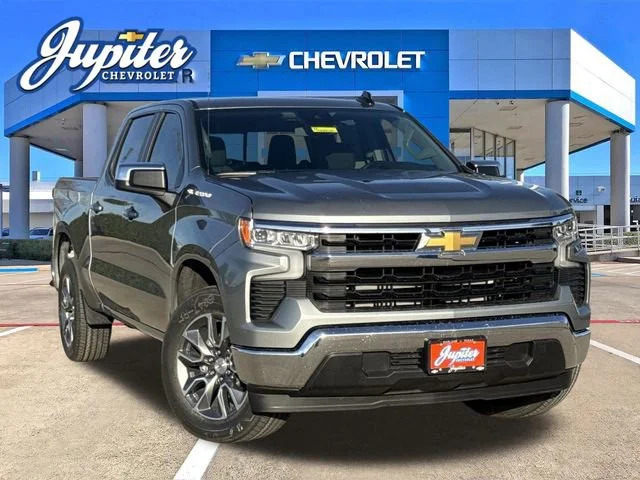
The 2026 Chevrolet Silverado 1500 arrives with understated assurance, favoring thoughtful evolution over dramatic reinvention. Chevrolet has resisted the temptation of a complete overhaul, choosing instead to polish an already capable full-size pickup that millions of Americans rely on for work, recreation, and everything in between. Fresh styling details, broader availability of advanced driver-assistance features, and targeted convenience upgrades make this year’s model feel noticeably more refined without sacrificing the truck’s core strengths in capability and durability.
Feeling stuck in the stressful car-buying process? At Jupiter Chevrolet in Garland, TX, we’ve reimagined how buying a car should feel. With transparent pricing, online deal-building tools, and the benefits of our Jupiter Advantage program, we ensure every step is straightforward and satisfying. Skip the hassle. From purchase, to certified service and parts, to collision repair and body shop. Our team puts your convenience, safety, and confidence first. Turn your dreams of finding your ideal Chevrolet into reality with us. Visit Jupiter Chevrolet today!
Engine Lineup Built for Every Kind of Duty
Chevrolet continues to offer four distinct powertrain options in the 2026 Silverado 1500, ensuring buyers can match performance to their specific needs whether that means efficient daily driving, heavy towing, or a balance of both.
The base TurboMax 2.7-liter turbocharged inline-four remains the standard choice, delivering 310 horsepower and an impressive 430 lb.-ft. of torque the highest standard torque in its class. Mated to a smooth eight-speed automatic transmission, it provides eager response around town and respectable efficiency when unloaded, making it a surprisingly versatile everyday engine.
Traditionalists still have two naturally aspirated V8s to choose from. The 5.3-liter EcoTec3 produces 355 horsepower and 383 lb.-ft. of torque, while the range-topping 6.2-liter V8 generates 420 horsepower and 460 lb.-ft. Both benefit from Dynamic Fuel Management technology that optimizes efficiency during light-load cruising. For 2026, select 6.2-liter models (including RST, Trail Boss, LTZ, High Country, and standard on ZR2) gain an optional sport exhaust calibration that delivers a deeper, more engaging exhaust note when Sport mode is engaged adding character without becoming intrusive.
Leading the efficiency conversation is the available Duramax 3.0-liter inline-six turbo-diesel, which combines 305 horsepower with a class-leading 495 lb.-ft. of torque and exceptional highway fuel economy often approaching 28 mpg in real-world conditions. Paired with a ten-speed automatic, it excels at maintaining momentum under load and offers composed performance on long highway grades.
Across configurations, maximum towing capacity reaches up to 13,300 pounds and payload approaches 2,260 pounds, numbers that remain competitive and feel even more usable thanks to improved calibration and driver aids.
Meaningful Updates That Matter for 2026
Rather than sweeping changes, Chevrolet focused on practical enhancements and greater personalization for the new model year. Fresh exterior color options White Sands and Polar White Tricoat join the existing lineup, giving buyers more ways to stand out. The popular Realtree camouflage Appearance Package now moves to dealer-installed status, expanding accessibility for outdoor enthusiasts and hunters.
Perhaps the most significant interior upgrade is the expanded availability of Super Cruise hands-free driving technology, now offered on LT, RST, LT Trail Boss, LTZ, ZR2, and High Country trims. This allows relaxed, eyes-off driving on compatible highways even when towing provided the route supports the system.
Over-the-air software updates keep the infotainment system current without requiring a service visit, while the Trailering app and up to 14 available camera views make connecting trailers and maneuvering in tight spaces far less stressful. A new RST Select package introduces 20-inch gloss-black wheels, all-terrain tires, black assist steps, and additional dark accents creating a sharp, aggressive look around the efficient TurboMax engine.
On the ZR2, premium features such as head-up display, adaptive cruise control, rear camera mirror, and the versatile Multi-Flex tailgate become standard equipment, further elevating the off-road flagship.
Trail-Ready Trims That Balance On- and Off-Road Performance
The Z71-equipped Trail Boss and the more extreme ZR2 continue to set benchmarks for off-road capability in the half-ton segment. A factory two-inch suspension lift, skid plates, locking rear differential, and (on ZR2) Multimatic DSSV spool-valve dampers deliver serious trail performance. The ZR2 adds 33-inch mud-terrain tires, front and rear electronic locking differentials, and reinforced underbody protection yet it still rides with surprising composure on pavement.
Modern Cabin With Thoughtful Technology
Inside, the Silverado feels contemporary and driver-focused. A large 13.4-inch touchscreen serves as the centerpiece, complemented by a 12.3-inch digital instrument cluster. Google built-in integration provides seamless access to navigation, voice assistance, and compatible apps, while wireless Apple CarPlay and Android Auto cover additional smartphone needs.
Higher trims offer perforated leather upholstery, open-pore wood trim (High Country), and a generous 15-inch head-up display (standard on ZR2). Standard Chevy Safety Assist includes automatic emergency braking, forward collision alert, lane keep assist with lane departure warning, and more. Trailer-specific blind-zone monitoring and other available aids further enhance confidence when hauling.
Towing and Payload: Tools Designed for Real Work
Chevrolet understands that many Silverado owners use their trucks for actual work. Advanced towing technologies including Trailer Side Blind Zone Alert, multiple in-bed camera angles, and the comprehensive Trailering app help drivers manage large loads with greater ease. The innovative Multi-Flex tailgate provides six different configurations for improved loading flexibility, while the Durabed offers class-leading cargo volume and 12 fixed tie-down points.
Whether pulling a boat to the lake, transporting equipment to a job site, or hauling weekend toys, the Silverado combines substantial capability with thoughtful usability features that reduce stress and increase confidence.
How the 2026 Silverado Fits in Today’s Truck Market
In a fiercely competitive full-size pickup segment, the 2026 Silverado 1500 distinguishes itself through consistent refinement rather than headline-grabbing redesigns. Its broad engine lineup caters to diverse needs, the growing availability of hands-free driving technology reduces fatigue on long hauls, and the range of off-road trims ensures adventure remains accessible. It may not always be the loudest voice in the room, but it consistently delivers honest, dependable performance for people who rely on their trucks every day.
For buyers seeking a full-size pickup that combines proven capability, modern convenience, and real-world usability without unnecessary theatrics, the latest Silverado remains a compelling choice. A thorough test drive will likely confirm what many owners already know: this truck gets the job done quietly, competently, and with surprising sophistication.
The U.S. automotive service market critical for maintaining trucks like the Silverado continues its steady upward trajectory as vehicles become more technologically advanced and require increasingly specialized care and parts support.
Ultimately, the 2026 Chevrolet Silverado 1500 proves that meaningful progress often comes from quiet, deliberate improvement rather than constant upheaval. It’s a truck built to serve, not to shout and that focus keeps it relevant year after year.
Frequently Asked Questions
What engines are available in the 2026 Chevrolet Silverado 1500?
The 2026 Silverado 1500 offers four powertrain options: a 2.7-liter TurboMax four-cylinder (310 hp, 430 lb.-ft. of torque), a 5.3-liter V8 (355 hp), a 6.2-liter V8 (420 hp), and a 3.0-liter Duramax turbo-diesel (305 hp, 495 lb.-ft. of torque). The diesel is the standout for fuel efficiency, achieving close to 28 mpg on the highway. Maximum towing across configurations reaches up to 13,300 pounds.
What’s new in the 2026 Chevrolet Silverado 1500 compared to previous model years?
Key updates for 2026 include expanded availability of Super Cruise hands-free driving technology across more trims (LT, RST, LTZ, ZR2, and High Country), two new exterior color options (White Sands and Polar White Tricoat), and an optional sport exhaust calibration for select 6.2-liter V8 models. A new RST Select package adds gloss-black 20-inch wheels and all-terrain tires, while ZR2 models now get head-up display, adaptive cruise control, and the Multi-Flex tailgate as standard equipment.
How capable is the 2026 Silverado 1500 for off-roading?
The 2026 Silverado offers two dedicated off-road trims the Z71-equipped Trail Boss and the more capable ZR2. Both feature a factory two-inch suspension lift, skid plates, and a locking rear differential, while the ZR2 adds Multimatic DSSV dampers, 33-inch mud-terrain tires, and front and rear electronic locking differentials for serious trail performance. Despite its rugged hardware, the ZR2 still delivers a composed, comfortable ride on paved roads.
Disclaimer: The above helpful resources content contains personal opinions and experiences. The information provided is for general knowledge and does not constitute professional advice.
You may also be interested in: The Ultimate Guide to Financing Your Next Chevrolet at Jupiter Chevrolet
Feeling stuck in the stressful car-buying process? At Jupiter Chevrolet in Garland, TX, we’ve reimagined how buying a car should feel. With transparent pricing, online deal-building tools, and the benefits of our Jupiter Advantage program, we ensure every step is straightforward and satisfying. Skip the hassle. From purchase, to certified service and parts, to collision repair and body shop. Our team puts your convenience, safety, and confidence first. Turn your dreams of finding your ideal Chevrolet into reality with us. Visit Jupiter Chevrolet today!
Powered by flareAI.co
Picture this: you’re cruising along the tollway near Plano after a long week when your dashboard lights up with a warning you’d rather ignore. Or maybe you’re halfway to Mesquite when a tire gives out on a rainy evening. Moments like these test any driver’s patience, but for Chevrolet owners in the Dallas area, there’s a built-in safety net designed to turn panic into progress. Here’s how Chevrolet’s roadside assistance program works and why it’s one of the most practical, often-overlooked benefits of owning a Chevrolet.
The Basics: Help That Travels With You
Chevrolet’s roadside assistance isn’t a flashy add-on or a complicated subscription. It’s straightforward help available 24 hours a day, seven days a week. Whether you’re driving a new Silverado 1500 or a used Chevrolet from our lot here in Garland, the program covers the common roadside situations every driver eventually faces.
The service connects you directly to trained professionals who coordinate everything from a jump-start to a tow, no negotiating with strangers on the side of the road, no guessing which shop will treat you right. For families in Richardson or commuters crossing Frisco, that reliability matters, especially during the unpredictable weather that moves through Dallas-Fort Worth.
What the Program Covers
The coverage is practical and addresses the breakdowns that happen most often:
- Towing to the closest Chevrolet dealer – Direct transport when you can’t drive yourself, from any legal roadway.
- Flat tire change – Using the spare already in your vehicle.
- Battery jump-start – Quick power when the battery or alternator gives out.
- Vehicle unlock service – No charge for key fabrication if you’re locked out.
- Emergency fuel delivery – Enough gas to reach the next station.
The program works whether or not you have an active OnStar or Chevrolet Connected Services plan, though it pairs well with both.
How Long Does Coverage Last?
Most new Chevrolet vehicles include five years or 60,000 miles of roadside assistance, whichever comes first, aligning with the Powertrain Limited Warranty. Diesel and fleet vehicles typically extend to 5 years or 100,000 miles. Chevrolet’s electric and hybrid vehicles carry an 8-year/100,000-mile warranty covering the high-voltage battery and related propulsion components.
Used-car buyers aren’t left out either. If your Chevrolet is still within its original coverage window, roadside assistance transfers with the vehicle. Our team can help you confirm exactly how much coverage remains on a specific used model.
Getting Help: Phone, App, or the Blue Button
Reaching assistance is straightforward. Call 1-800-243-8872 (1-800-CHEV-USA) and a live advisor takes it from there. EV drivers have a dedicated line at 1-888-811-1926. The myChevrolet app also lets you request help directly, and if your vehicle has the right infotainment system, you can request assistance from the screen itself.
OnStar subscribers get an added layer of convenience: pressing the blue OnStar button inside the vehicle connects you to an advisor who already has your location and vehicle details. The OnStar Guardian app offers the same functionality from a phone.
Why This Matters for Dallas-Area Drivers
Living and driving around Dallas, Richardson, and Mesquite means dealing with sudden Texas thunderstorms and heavy rush-hour traffic. Chevrolet’s program gives you national coverage with a local option, a tow straight to a dealership that knows your vehicle.
Jupiter Chevrolet has served Garland and the surrounding area as a family-owned dealership since 1925, making us the oldest Chevrolet dealership in Dallas County. When a roadside event sends your vehicle to our service center, you’re working with technicians who use genuine Chevrolet parts and factory training, not a distant call center. Our lifetime powertrain warranty on qualifying vehicles adds another layer of protection alongside the factory roadside program.
Frequently Asked Questions
What does Chevrolet’s roadside assistance program cover?
Chevrolet’s roadside assistance covers five core services: towing to the nearest authorized Chevrolet dealer, flat tire changes using your spare, battery jump-starts, vehicle unlock service with no key fabrication charge, and emergency fuel delivery. The program is available 24/7 for both new and used Chevrolet vehicles still within the original coverage window.
How long does Chevrolet roadside assistance coverage last on a new vehicle?
Most new Chevrolet vehicles include five years or 60,000 miles of roadside assistance, whichever comes first, aligning with the Powertrain Limited Warranty. Diesel and fleet vehicles typically extend to 100,000 miles. Electric and hybrid vehicles carry extended coverage for battery and propulsion components under an 8-year/100,000-mile warranty.
How do I contact Chevrolet roadside assistance when I need help?
Call 1-800-243-8872 (1-800-CHEV-USA) anytime, day or night. EV drivers have a dedicated line at 1-888-811-1926. You can also request help through the myChevrolet app, your vehicle’s infotainment screen, or, for OnStar subscribers, by pressing the blue OnStar button for instant, location-aware support.
Disclaimer: This content is provided for general informational purposes. Coverage terms vary by vehicle model year and trim; confirm specific details for your vehicle with your owner’s manual or our service team.
Jupiter Chevrolet: Family-Owned Service Since 1925
Jupiter Chevrolet is located at 11611 LBJ Freeway in Garland and serves the Dallas metro, including Plano, Frisco, McKinney, Richardson, and Mesquite. As Dallas County’s oldest Chevrolet dealership, our service team is ready to help confirm your vehicle’s roadside assistance coverage, schedule maintenance, or handle collision repair through our certified body shop.

The excitement of pulling away from the dealership in a fresh Chevrolet engine humming smoothly, that signature new-car aroma still strong ranks among the most satisfying moments for drivers. For residents across Garland, Dallas, Richardson, Plano, Frisco, Mesquite, and other nearby North Texas communities, this high often meets an immediate reality check: Have all the critical details truly been vetted before committing to the drive home?
Rushing through the final handover frequently leads to overlooked issues that surface later as inconvenient surprises or costly fixes. No matter if it’s a brand-new Trailblazer fresh from the factory or a carefully selected pre-owned Tahoe, investing time in a structured review ensures long-term satisfaction and reliability. This comprehensive guide outlines the essential steps, informed by best practices emphasized at established local dealerships such as Jupiter Chevrolet in Garland, so buyers across the region can depart with genuine assurance.
Feeling stuck in the stressful car-buying process? At Jupiter Chevrolet in Garland, TX, we’ve reimagined how buying a car should feel. With transparent pricing, online deal-building tools, and the benefits of our Jupiter Advantage program, we ensure every step is straightforward and satisfying. Skip the hassle. From purchase, to certified service and parts, to collision repair and body shop. Our team puts your convenience, safety, and confidence first. Turn your dreams of finding your ideal Chevrolet into reality with us. Visit Jupiter Chevrolet today!
Pre-Delivery Inspection: Thorough Scrutiny Before Acceptance
Handover day demands vigilance from the outset. Begin externally with a meticulous circle around the vehicle under good lighting. Examine paint for uniformity, checking for swirl marks, orange peel, or inconsistencies that might indicate prior touch-ups. Inspect body panels for alignment gaps, dents, or scratches absent during earlier viewings. Verify that trim pieces sit flush and securely attached.
Lift the hood to confirm all fluid reservoirs sit at proper levels engine oil, transmission fluid (if applicable), coolant, brake fluid, and windshield washer fluid. Ensure caps are tight and no leaks appear. Tires warrant special focus: confirm matching brand and tread depth across all four, adequate inflation per the door-jamb placard, and the presence of a functional spare tire, jack, and tools.
Move to electrical systems. Activate headlights (both low and high beams), fog lights if equipped, taillights, brake lights, reverse lights, turn signals, and emergency flashers. Test interior lighting, including dome, map, and trunk lights. Inside the cabin, methodically check functionality: power windows and locks, adjustable seats and mirrors, climate control (heat, A/C, defrost), infotainment touchscreen, Apple CarPlay/Android Auto connectivity, USB ports, and wireless charging if available. Don’t skip the horn, wipers (with fluid spray), and washer operation.
The test drive seals the evaluation. Select a varied route replicating real-world conditions accelerate onto highways to assess transmission shifts and cruising stability, navigate stop-and-go streets to gauge brake response and pedal feel, and include sharp corners plus uneven pavement to evaluate steering precision, suspension composure, and any interior rattles or vibrations. Watch the instrument cluster closely for unexpected warning indicators and listen for anomalous engine, exhaust, or driveline sounds.
Local dealerships serving Garland and surrounding areas streamline this process, often accommodating online test-drive scheduling to fit busy schedules in Plano or McKinney without added pressure.
Documentation Review: Securing the Foundation for Ownership
With the vehicle feeling solid on the road, shift attention to paperwork. Match the title’s vehicle identification number (VIN) exactly to the one stamped on the dashboard, door jamb, and engine block. Verify personal details appear accurately, and confirm registration forms comply with Texas DMV rules for the relevant county Dallas, Collin, Rockwall, or Denton along with any temporary permit or tag issuance.
Warranty coverage merits careful reading. Standard Chevrolet factory protections provide a baseline, but enhanced plans deliver extended security. Jupiter Chevrolet distinguishes itself by including a Lifetime Powertrain Warranty, safeguarding the engine, transmission, and drivetrain components for the duration of ownership (subject to adherence to recommended maintenance intervals). This stands apart from conventional limited warranties, offering substantial protection against expensive repairs as mileage accumulates.
Financing agreements require equal scrutiny. Confirm the annual percentage rate, loan term, monthly installment, total finance charges, and overall amount financed align with prior discussions. Examine any ancillary products extended service contracts, GAP coverage, tire-and-wheel protection for clarity on benefits, costs, and cancellation terms. Raise discrepancies immediately before final signatures.
Modern Conveniences: Leveraging Technology Throughout the Process
Today’s car-buying experience extends far beyond the showroom floor. Prospective buyers increasingly utilize digital platforms to configure vehicles, compare models, simulate payments, and secure transparent pricing from home. These tools prove especially practical for time-constrained drivers commuting between Richardson and Frisco or managing family logistics in Forney.
Social media channels further enrich the journey. Dealerships post live inventory alerts, feature customer delivery videos, highlight service tips, and showcase facility operations across Instagram, Facebook, YouTube, and TikTok. Such openness helps prospective buyers form realistic expectations and fosters confidence well ahead of an in-person visit, particularly when weighing options against larger corporate competitors.
Addressing Typical Hesitations Head-On
Smaller local inventories sometimes limit immediate availability compared to high-volume outlets, potentially requiring special orders for precise configurations or colors. Previous encounters at other dealerships whether involving aggressive negotiations or service delays can create lingering skepticism. Pricing strategies that appear less aggressive than market leaders occasionally raise questions about value.
Family-owned businesses mitigate these concerns through personalized engagement and accountability. Jupiter Chevrolet, proudly family-operated for over 100 years in the Garland community, emphasizes enduring relationships rather than sheer transaction volume. This legacy supports dependable follow-through across sales, routine servicing, parts availability, and collision repair capabilities.
The significance of reliable repair infrastructure becomes clearer against industry data. The U.S. automotive collision repair market generated USD 37,143.4 million in 2024 and is expected to reach USD 38,950.3 million by 2030, reflecting steady demand driven by everyday driving realities in suburban areas like those around Dallas. Light-duty vehicles continue dominating this segment, mirroring the profiles of most personal vehicles on North Texas roads. Proximity to a certified collision center ensures efficient, high-quality restoration when needed, preserving vehicle value and safety.
Technological progress in repair processes reinforces this value. Specialized software for estimating and managing collision repairs grows rapidly, fueled by AI integration, cloud-based platforms, connected vehicle data, and ADAS complexity trends that enable faster, more precise outcomes for customers.
The Enduring Advantage of Choosing Local
Opting for a dealership embedded in the Garland area delivers practical benefits: convenient access to maintenance, genuine parts, and body shop services without extended travel. Community-rooted operations cultivate trust and responsiveness you remain a valued neighbor, not merely a sales figure. Combine that with standout offerings like lifetime powertrain protection and a century-long family commitment, and the rationale for supporting local becomes compelling.
Ultimately, purchasing a vehicle transcends specifications and styling it’s about launching ownership with clarity and preparedness. Take the time to inspect diligently, verify documents thoroughly, and ask pointed questions. Those deliberate actions transform the drive home from a moment of uncertainty into the confident start of dependable, enjoyable motoring.
For an experience built on transparency and customer priority from digital deal tools to attentive handovers visit Jupiter Chevrolet in Garland. Their approach helps drivers throughout Dallas, Richardson, Plano, Rockwall-Heath, Mesquite, McKinney, Grapevine, Frisco, and beyond leave fully satisfied and ready for the road ahead.
Frequently Asked Questions
What should I check during a pre-delivery inspection before driving home in my new car?
Before accepting your new vehicle, perform a thorough exterior inspection for paint inconsistencies, panel alignment, and any dents or scratches. Check all fluid levels under the hood, verify tire condition and inflation, and test all electrical systems including lights, windows, locks, and infotainment features. Always take a comprehensive test drive on varied roads to assess acceleration, braking, steering, and listen for any unusual sounds or warning indicators.
What important documents should I review when buying a car from a dealership?
Carefully verify that the VIN on the title matches the vehicle’s dashboard, door jamb, and engine block, and confirm all personal details are accurate. Review your warranty coverage thoroughly some dealerships like Jupiter Chevrolet offer lifetime powertrain warranties that provide extended protection beyond standard factory coverage. Double-check your financing agreement including the APR, loan term, monthly payment, and any additional products like GAP coverage or extended service contracts before signing.
Why should I buy from a local car dealership instead of a larger chain?
Local dealerships provide convenient access to maintenance, genuine parts, and collision repair services without extended travel, which is especially valuable given that the U.S. collision repair market reflects steady demand from everyday driving needs. Family-owned operations like those serving the Garland and North Texas area emphasize long-term relationships over transaction volume, offering personalized service and accountability throughout your ownership experience. Community-rooted dealerships treat you as a valued neighbor rather than just a sales figure, ensuring responsive follow-through for all your vehicle needs.
Disclaimer: The above helpful resources content contains personal opinions and experiences. The information provided is for general knowledge and does not constitute professional advice.
You may also be interested in: Available Plans/Help Protect Your Investment
Feeling stuck in the stressful car-buying process? At Jupiter Chevrolet in Garland, TX, we’ve reimagined how buying a car should feel. With transparent pricing, online deal-building tools, and the benefits of our Jupiter Advantage program, we ensure every step is straightforward and satisfying. Skip the hassle. From purchase, to certified service and parts, to collision repair and body shop. Our team puts your convenience, safety, and confidence first. Turn your dreams of finding your ideal Chevrolet into reality with us. Visit Jupiter Chevrolet today!
Powered by flareAI.co

The process of purchasing and taking delivery of a vehicle in North Texas can seem seamless at first glance select a model, finalize financing, and drive away. Yet insurance requirements frequently introduce an essential layer of complexity, directly influencing when ownership transfers and when you can legally operate the car. In bustling areas like Garland, Dallas, Richardson, Plano, Frisco, Mesquite, McKinney, Rockwall-Heath, Forney, and Grapevine, where daily commutes involve heavy traffic and occasional incidents, Texas law mandates proof of adequate coverage before keys change hands. Grasping these rules helps buyers avoid unnecessary delays and ensures a confident transition to ownership.
Feeling stuck in the stressful car-buying process? At Jupiter Chevrolet in Garland, TX, we’ve reimagined how buying a car should feel. With transparent pricing, online deal-building tools, and the benefits of our Jupiter Advantage program, we ensure every step is straightforward and satisfying. Skip the hassle. From purchase, to certified service and parts, to collision repair and body shop. Our team puts your convenience, safety, and confidence first. Turn your dreams of finding your ideal Chevrolet into reality with us. Visit Jupiter Chevrolet today!
The Fundamental Role of Insurance in Vehicle Ownership and Delivery
Texas treats insurance as a core component of financial responsibility for operating a motor vehicle. State statutes require drivers to demonstrate the ability to cover potential liabilities, primarily through liability insurance, before registering or driving a newly acquired car. Dealerships in the Dallas metro region, including those serving Garland and surrounding communities, withhold delivery until buyers provide verification of compliant coverage. This practice safeguards the new owner against immediate exposure, protects the seller from lingering risks after the sale, and contributes to overall road safety amid the interconnected highways linking Richardson to Plano or Mesquite to Forney.
Currently, Texas mandates minimum liability coverage of 30/60/25: $30,000 per person for bodily injury, up to $60,000 per accident for bodily injury regardless of the number of individuals affected, and $25,000 for property damage. Policies frequently incorporate options for uninsured or underinsured motorist protection and personal injury coverage, which buyers may decline only in writing. When financing plays a role, lenders almost always require collision and comprehensive coverage to protect the vehicle’s value. Failure to meet these thresholds halts the delivery process, sometimes extending waits by hours or even days as buyers coordinate with their insurance providers.
Recent and Ongoing Changes to Insurance Standards
Texas insurance regulations continue to adapt in response to escalating costs associated with accidents, medical care, and vehicle repairs, particularly in rapidly expanding suburbs like McKinney, Rockwall-Heath, and Grapevine. A significant legislative update, effective for policies issued, delivered, or renewed on or after January 1, 2026, raises the minimum liability requirements to 50/100/40: $50,000 per person for bodily injury or death, $100,000 total per accident for bodily injury or death, and $40,000 for property damage. This adjustment, enacted through measures like HB 4178, applies prospectively existing policies remain under the prior limits until renewal, providing a transition period for drivers and insurers alike.
Advanced driver assistance systems (ADAS) also intersect with these evolving expectations. Technologies such as automatic emergency braking, lane departure warnings, adaptive cruise control, and parking assistance powered by sensors, cameras, and AI improve safety and comfort. The global ADAS market reached approximately USD 31.0 billion to USD 34.65 billion in 2024, with projections varying from USD 66.56 billion by 2030 (CAGR 12.2%) to USD 66.7 billion by 2033 (CAGR 8.46%) or even USD 122232.55 million by 2035 (CAGR 12.48%). North America holds a substantial share, underscoring growing adoption in vehicles sold locally, which can influence insurance considerations through potential premium adjustments for enhanced safety features.
Practical Illustrations of Insurance’s Impact
Consider a Richardson resident finalizing a new vehicle purchase. After online inventory review and deal structuring, delivery day arrives yet the submitted insurance documentation reflects outdated limits or omits the new VIN. The transaction pauses until the buyer contacts their provider to update the policy. Conversely, a prepared Mesquite customer arrives with coverage already adjusted; verification proceeds smoothly, enabling immediate departure.
Family-operated dealerships like Jupiter Chevrolet in Garland prioritize guiding buyers through these steps. Staff clarify that many insurers extend temporary coverage to newly purchased vehicles typically 20 to 30 days while urging prompt notification to prevent lapses. For used car acquisitions or trades, teams assist in confirming transitional protection. Customers frequently note how this attentive support transforms potential setbacks into assured outcomes, allowing them to leave with full confidence in their coverage.
Common Obstacles and How to Overcome Them
Insurance-related issues persist as frequent sources of friction. A policy missing required collision coverage for a financed vehicle can stop delivery outright. Sudden premium increases when adding a new car often surprise buyers who delay agent contact. In a market dominated by larger corporate dealers emphasizing aggressive pricing, family-owned locations sometimes contend with views of constrained inventory or pricing flexibility yet they distinguish themselves through individualized assistance on regulatory details like these.
Prolonged waits for policy confirmations or post-delivery registration hurdles that demand immediate proof can escalate stress, potentially leading to fines. Proactive measures mitigate most problems: obtaining insurance quotes early, clarifying lender stipulations, and securing coverage extensions ahead of time.
Enhancing Efficiency in the Buying and Coverage Process
Forward-thinking dealerships convert these challenges into opportunities for better service. Partnerships with insurance providers enable rapid quotes or integrated options, simplifying the path from financing to coverage activation. Digital tools permit early deal previews and highlight insurance prerequisites. Jupiter Chevrolet, catering to Garland and nearby Dallas, Richardson, Mesquite, and additional areas, focuses on customer-centric convenience through transparent pricing, online test-drive scheduling, and comprehensive support that integrates insurance guidance seamlessly. Programs like Jupiter Advantage, combined with a lifetime powertrain warranty, deliver lasting reassurance, reinforced by more than 100 years as a family-owned business dedicated to trustworthy handling of every detail.
Buyers benefit significantly from strategic choices. Opting for coverage exceeding minimums, or incorporating comprehensive protection against regional risks like hail and theft, provides robust safeguards. Planning ahead typically yields more favorable rates and eliminates last-minute complications.
Ensuring a Confident Start to Vehicle Ownership
Insurance obligations serve not as barriers but as vital protections fostering safer travel across Garland, Dallas, and neighboring communities. With the 2026 minimum increase now in effect for new and renewed policies, alongside advancing verification technologies and ADAS integration in modern vehicles, the overall experience stands to become more streamlined provided buyers prepare adequately. Consult your insurer prior to shopping, cross-check requirements with the dealership, and select coverage aligned with your driving habits and assets.
Seeking a transparent, efficient purchase where insurance and every other element receives careful attention? Visit Jupiter Chevrolet in Garland today. The experienced team stands ready to guide you toward your preferred Chevrolet, ensuring it’s properly insured, promptly delivered, and set for reliable performance on North Texas roads.
Frequently Asked Questions
Can I take delivery of my new car without insurance in Texas?
No, Texas law requires proof of adequate insurance coverage before a dealership can release a new vehicle to you. Dealerships use electronic verification systems like TexasSure to confirm you have at least the minimum liability coverage (currently 30/60/25 for existing policies, or 50/100/40 for policies issued or renewed after January 1, 2026) before handing over the keys. Without verified insurance, delivery will be delayed until you provide proper documentation from your insurance provider.
What are the new Texas minimum insurance requirements for 2026?
For policies issued, delivered, or renewed on or after January 1, 2026, Texas raised the minimum liability requirements to 50/100/40: $50,000 per person for bodily injury or death, $100,000 total per accident for bodily injury or death, and $40,000 for property damage. This represents an increase from the previous 30/60/25 minimums. Existing policies maintain the prior limits until their renewal date, providing a transition period for drivers.
How can I avoid insurance delays when buying a car in the Dallas-Garland area?
Contact your insurance provider before your delivery appointment to add the new vehicle to your policy with the correct VIN and ensure coverage meets both state minimums and any lender requirements (such as collision and comprehensive coverage for financed vehicles). Most insurers offer 20-30 days of temporary coverage for newly purchased vehicles, but proactive notification prevents lapses and ensures smooth verification through the dealership’s electronic systems, allowing you to drive away immediately.
Disclaimer: The above helpful resources content contains personal opinions and experiences. The information provided is for general knowledge and does not constitute professional advice.
You may also be interested in: CHEVY SPECIAL OFFERS | Jupiter Chevrolet in Garland TX
Feeling stuck in the stressful car-buying process? At Jupiter Chevrolet in Garland, TX, we’ve reimagined how buying a car should feel. With transparent pricing, online deal-building tools, and the benefits of our Jupiter Advantage program, we ensure every step is straightforward and satisfying. Skip the hassle. From purchase, to certified service and parts, to collision repair and body shop. Our team puts your convenience, safety, and confidence first. Turn your dreams of finding your ideal Chevrolet into reality with us. Visit Jupiter Chevrolet today!
Powered by flareAI.co

The car-buying journey often builds to a single, decisive moment: the purchase agreement. In the North Texas region from Garland and Dallas to Plano, Frisco, Richardson, Mesquite, McKinney, Rockwall-Heath, Forney, and Grapevine buyers face a dynamic market where SUVs remain a top choice for families, commuters, and those needing versatile transportation. With demand for these vehicles showing sustained strength, rushing through the final paperwork can lead to costly oversights. A careful review protects your investment and ensures the experience matches the excitement of driving home a new or quality used Chevrolet.
Read the rest of this entry »
The current date is February 09, 2026, placing us early in a year where U.S. new-vehicle sales face moderated expectations. Industry forecasts, including those from Cox Automotive, project total new-vehicle sales around 15.8 million units for 2026, reflecting a roughly 2.4% decline from 2025 estimates driven by affordability pressures, higher interest rates, and the lingering effects of expired incentives in certain segments. In the Dallas-Fort Worth metroplex, this national softening amplifies the role of trade-in equity, as local buyers in communities like Garland, Plano, and Frisco rely more heavily on the value of their current vehicle to make new purchases feasible.
Read the rest of this entry »Connect with us


