





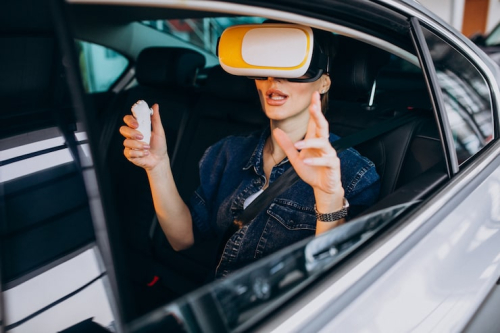
In the fast-expanding suburbs north of Dallas, traffic along the George Bush Turnpike often stretches routine drives into lengthy commitments. Yet for car shoppers in Frisco, Plano, and beyond, a quieter transformation is taking place right on their devices. Picture zooming in on the fine leather stitching of a Chevrolet Tahoe’s interior, rotating through the spacious cargo hold, or examining engine details all from home, without battling I-635 congestion. Virtual vehicle tours immersive 360-degree views, guided walk-through videos, and interactive experiences have evolved far beyond novelty status. They now serve as the primary gateway for buyers throughout Garland, Dallas, Richardson, Plano, Rockwall-Heath, Forney, Mesquite, McKinney, Grapevine, and Frisco.
Feeling stuck in the stressful car-buying process? At Jupiter Chevrolet in Garland, TX, we’ve reimagined how buying a car should feel. With transparent pricing, online deal-building tools, and the benefits of our Jupiter Advantage program, we ensure every step is straightforward and satisfying. Skip the hassle. From purchase, to certified service and parts, to collision repair and body shop. Our team puts your convenience, safety, and confidence first. Turn your dreams of finding your ideal Chevrolet into reality with us. Visit Jupiter Chevrolet today!
How Virtual Vehicle Tours Are Gaining Popularity Across North Texas Dealerships
This evolution aligns seamlessly with North Texas realities: widespread high-speed internet coverage paired with commutes that routinely consume hours. Shoppers prioritize efficiency alongside price. Across the Dallas-Fort Worth metro area, industry observations indicate that more than 80 percent of consumers initiate their vehicle search digitally, dedicating substantial time to research before visiting any lot.
Dealerships have adapted accordingly, deploying features that deliver the showroom experience directly to buyers: interactive 360-degree photography enabling full-sunlight rotations of trucks and SUVs, professionally narrated walk-around videos, and live video consultations for immediate answers. In tech-forward communities such as Plano, Frisco, and McKinney bolstered by Collin County’s expanding, mobile-savvy households these additions markedly boost engagement. Vehicle listings incorporating video content consistently register higher interaction levels.
A compelling local case emerges at Jupiter Chevrolet in Garland, where a virtual test drive initiative incorporating VR and AR components has driven notable increases in inquiries. Customers engaging with the virtual option convert to in-person visits at a 17% higher rate compared to those limited to static images.
Digital-First Habits Take Root in the Garland–Dallas Corridor
What began as a temporary pandemic solution has solidified into standard practice. In the Dallas–Plano metro region, reliable broadband empowers shoppers to handle detailed comparisons evaluating trim packages, exploring infotainment interfaces, assessing cargo configurations long before navigating highways like the Dallas North Tollway. Area dealerships have embraced this preference, providing on-demand video tours and customized recordings designed for hesitant buyers in Plano or Grapevine who prefer avoiding cross-town drives.
Population surges across the region accelerate the momentum. According to the North Central Texas Council of Governments (NCTCOG), the broader region approached significant growth milestones recently, with Collin County adding nearly 76,000 residents in one recent year, Dallas County gaining over 45,000, and suburbs like McKinney seeing annual increases exceeding 11,000 people while Forney posted gains above 5 percent. Frisco maintains consistent upward trends. These demographic shifts translate into greater demand for family-oriented SUVs and trucks precisely the vehicles that shine in virtual previews showcasing third-row seating, towing features, and interior versatility.
Broader industry data reinforces the local observations. The global automotive virtual showroom market, valued at USD 5.70 billion in 2024, is projected to reach USD 6.51 billion in 2025 and climb to USD 12.70 billion by 2030, expanding at a CAGR of 12.5% from 2025 to 2030. Growth stems from rising vehicle sales worldwide, technological leaps in 3D graphics, AR, and VR, plus higher disposable incomes fueling interest in electric and luxury models. AI-driven personalization further streamlines recommendations and sales.
Similarly, the automotive AR and VR market stood at 6.589 USD Billion in 2024, expected to grow to 7.972 USD Billion in 2025 and reach 53.6 USD Billion by 2035 at a CAGR of 20.99%. North America commands the largest share, reflecting strong demand for innovative features, while augmented reality systems lead and virtual reality components grow fastest due to their immersive nature.
The dedicated VR segment in automotive applications, valued at USD 2.64 billion in 2024 and projected to expand from USD 3.46 billion that year to USD 22.79 billion by 2032 at a CAGR of 30.95%, underscores its role in both design prototyping and customer-facing virtual showrooms and test-drives.
Where the Technology Hits Its Limits
Despite impressive capabilities, virtual tours fall short of replicating certain realities. Screens cannot convey how a suspension handles Dallas-area potholes or how quietly a cabin withstands regional winds. Skepticism persists particularly among used and certified pre-owned buyers, who insist on auditory cues like engine sound, tactile interior assessments, or real-world brake testing.
Smaller operations in places like Rockwall-Heath or Forney occasionally face barriers: investment in premium imaging gear, staff training needs, and occasional connectivity inconsistencies in outer suburbs. Cybersecurity concerns also loom as platforms expand, with risks of data breaches potentially undermining trust.
Nevertheless, these limitations have not curbed momentum. Dealers frequently note that virtual tour participants arrive more prepared, posing targeted questions and using showroom time more effectively. Weekend crowds thin in Dallas and Frisco, while metro-wide inventory gains visibility allowing a Mesquite shopper to identify an ideal model in McKinney or Grapevine without repeated trips.
Looking Ahead in the Garland–Frisco Markets
The path forward favors hybrid approaches: virtual exploration to spark interest, followed by in-person validation and closing. As technologies advance incorporating greater AI personalization and tighter integration with digital financing dealerships prioritizing high-quality, locally attuned virtual content will maintain a competitive advantage in this dynamic corridor.
North Texas consumers, squeezed by time constraints yet equipped with powerful digital access, show no inclination to revert. The traditional showroom retains importance, but its role has expanded and blurred. In a continually growing region, previewing a vehicle from home has transitioned from convenience to expectation. For buyers spanning Garland to Frisco, the next era of automotive retail is unfolding one interactive 360-degree view at a time.
Frequently Asked Questions
How are virtual vehicle tours changing car shopping in the Dallas-Fort Worth area?
Virtual vehicle tours allow buyers throughout Garland, Plano, Frisco, and surrounding North Texas communities to explore vehicles through 360-degree views, walk-around videos, and live consultations all from home. These digital tools help shoppers avoid heavy traffic on routes like I-635 and the George Bush Turnpike while conducting detailed research before visiting dealerships. Dealerships report that customers who engage with virtual tours convert to in-person visits at significantly higher rates and arrive better prepared with specific questions.
What are the benefits of using virtual tours when buying a car in North Texas?
Virtual tours enable shoppers in McKinney, Richardson, Mesquite, and other Dallas-area cities to examine vehicle details like interior stitching, cargo space, and infotainment systems without commuting across the metro. They provide efficient comparison shopping for busy families, allow access to wider inventory across multiple locations, and help buyers narrow choices before test-driving. This digital-first approach saves time while offering the convenience of exploring vehicles on-demand from any device.
Do virtual vehicle tours replace the need for in-person test drives?
Virtual tours complement rather than replace in-person visits at dealerships. While 360-degree views and videos effectively showcase vehicle features, trim packages, and interior layouts, they cannot replicate the tactile experience of testing suspension on local roads, hearing engine sounds, or feeling cabin quality. Most successful car purchases in the Frisco-Garland corridor follow a hybrid approach: virtual exploration to identify top choices, followed by in-person validation and test-driving before finalizing the purchase.
Disclaimer: The above helpful resources content contains personal opinions and experiences. The information provided is for general knowledge and does not constitute professional advice.
You may also be interested in: Chevrolet Service Deals Attract Dallas Drivers to Garland Location
Feeling stuck in the stressful car-buying process? At Jupiter Chevrolet in Garland, TX, we’ve reimagined how buying a car should feel. With transparent pricing, online deal-building tools, and the benefits of our Jupiter Advantage program, we ensure every step is straightforward and satisfying. Skip the hassle. From purchase, to certified service and parts, to collision repair and body shop. Our team puts your convenience, safety, and confidence first. Turn your dreams of finding your ideal Chevrolet into reality with us. Visit Jupiter Chevrolet today!
Powered by flareAI.co
Connect with us


