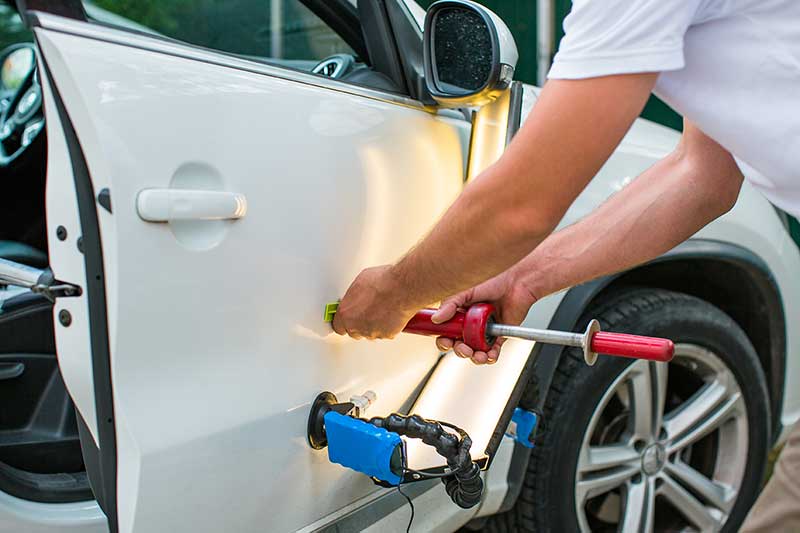





If a North Texas hailstorm left your Chevrolet covered in dings and dents, you may be wondering what your repair options look like. Paintless dent repair for hail damage is one of the most common solutions recommended after a storm for Garland, Texas drivers—but it’s not always the right fit for every situation. Here’s what you need to know before you decide. What Is Paintless Dent Repair? Paintless dent repair—often called PDR—is a technique that removes dents from a vehicle's body panels without sanding, filling, or repainting the surface. Trained technicians use specialized tools to gently massage the metal back to its original shape from behind the panel. Because no paint is disturbed during the process, paintless dent repair for hail damage can preserve your vehicle's factory finish. This is a significant advantage when it comes to maintaining your Chevy's appearance and resale value. It’s also typically faster and more cost-effective than traditional body repair methods. When Is Paintless Dent Repair a Good Option After a Hailstorm? PDR works best when the damage meets a few key conditions. The dents should be relatively shallow, meaning the metal has flexed but not stretched or creased. The paint surface must be intact with no chipping, cracking, or peeling. After a typical North Texas hailstorm, many vehicles end up with dozens of small to medium-sized dents scattered across the hood, roof, and trunk. If your Chevy falls into this category and the paint is undamaged, paintless dent repair is a smart choice to handle the hail damage. When PDR May Not Be Enough Not every hail-related dent can be repaired with the paintless method. If the hailstones were large enough to stretch or crack the metal, or if the paint has already been compromised, traditional Chevy collision repair may be the better path forward. Dents located near panel edges, body lines, or structural components can also be difficult or impossible to access with PDR tools. In those cases, conventional repair techniques, including filling and repainting, may be necessary to restore your vehicle properly. A thorough inspection by a qualified technician is the best way to determine which approach fits your specific damage. Trying to push PDR on damage that requires traditional bodywork can lead to incomplete repairs or additional problems down the road. What to Expect During the Repair Process If your Chevy is a good candidate for paintless dent repair for hail damage, the process is generally straightforward. A technician will inspect the vehicle under specialized lighting to map every dent. Then, using a combination of metal rods and body picks, they carefully work each dent out from behind the panel. Depending on the extent of the damage, the repair can often be completed in 1 to 3 days. There’s no drying time for paint or filler, so you get your vehicle back sooner. Chevy collision repair, when handled by trained professionals in Garland, Texas, can restore your vehicle's look without sacrificing the original factory finish. Visit Jupiter Chevrolet After a Hailstorm If your Chevy took a hit during a recent storm, don’t wait to have it looked at. The team at Jupiter Chevrolet is ready to help drivers throughout Garland, TX, assess hail damage and determine whether paintless dent repair for hail damage is the right solution. Stop by or visit us to get the conversation started.