


Blog / Auto News

Who Can Service a Chevy EV in DFW? Inside Jupiter Chevrolet's EV Service in Garland

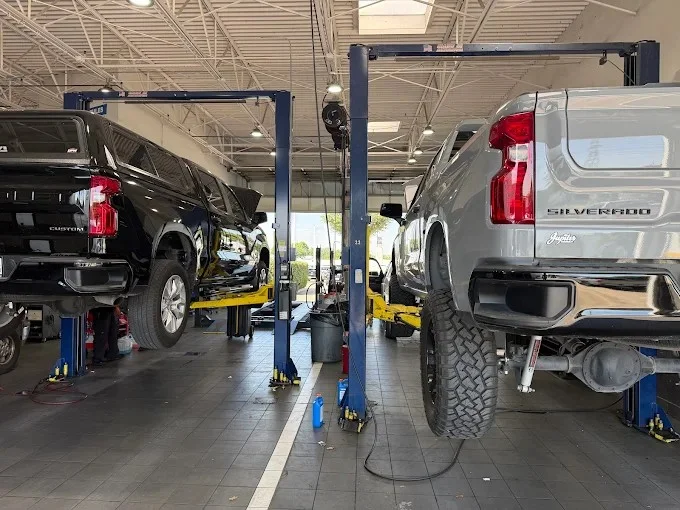
Two Chevrolet Silverado trucks on lifts in the Jupiter Chevrolet service department in Garland, Texas

TL;DR

Chevy EVs skip oil changes, spark plugs and engine belts, but tires, brakes, cabin air filters, coolant and software still need attention. High-voltage battery work belongs with EV-trained Chevrolet technicians. Jupiter Chevrolet in Garland is a GM EV-certified service facility and handles Chevy EV diagnosis and battery warranty repairs on site.

If you own an Equinox EV, Blazer EV, Silverado EV or Bolt, you've probably noticed the maintenance reminders don't look like they did on your last gas vehicle. No oil changes. No spark plugs.

But an EV still has tires, brakes, coolant, a 12-volt battery, software and a high-voltage battery system that may need service over the life of the vehicle. The question is which work can be handled like routine vehicle maintenance and which work needs EV-trained Chevrolet technicians.

Here's what a Chevy EV needs, when specialized EV service matters and how EV service works at Jupiter Chevrolet on I-635 in Garland.

What Does a Chevy EV Need for Maintenance?

A Chevy EV generally has fewer routine maintenance items than a gas vehicle. Chevrolet notes that EV owners can skip maintenance such as oil changes, spark plugs, engine belts and engine air filters. But there are still parts and systems that need regular attention.

Here's what stays on the list:

  1. Tires. Tire condition, pressure and rotation still matter on an EV. Follow the maintenance schedule for your specific Chevrolet and rotate the tires when recommended. Jupiter also checks tire tread and alignment when vehicles come through the service lane.
  2. Brakes. Regenerative braking uses the electric motor to help slow the vehicle, which can reduce use of the friction brakes. The brake system still needs to be inspected and maintained according to Chevrolet's schedule for your vehicle.
  3. Cabin air filter and wipers. These are still routine maintenance items on an EV and should be replaced as needed.
  4. Coolant and the battery thermal system. Chevy EVs use thermal-management systems to help keep the high-voltage battery within its intended operating range. Coolant inspection and service requirements depend on the vehicle and maintenance schedule.
  5. The 12-volt battery. Chevy EVs still have a low-voltage battery that supports vehicle electronics and other systems.
  6. Software. Some vehicle software updates can arrive over the air, while others may require a dealership visit, including certain recall-related updates.

Your Chevy EV's owner's manual and maintenance schedule are the best guides for the specific intervals that apply to your model and model year.

When Does Your Chevy EV Need EV-Trained Chevrolet Technicians?

Routine items like tires, wipers and cabin air filters are familiar maintenance. The distinction becomes more important when service involves the high-voltage battery, electric propulsion system or vehicle software and diagnostics.

Chevrolet specifically directs owners to EV-trained technicians at a Certified Service Chevrolet dealership for inspection, testing or replacement of the high-voltage battery.

Depending on the issue, specialized EV service can include:

  1. High-voltage battery service. Inspection, testing or replacement of the high-voltage battery requires EV training, safety procedures and the appropriate diagnostic equipment.
  2. Battery and electric propulsion warranty repairs. Warranty coverage depends on the vehicle, component and terms of the applicable Chevrolet warranty. Covered EV repairs may require service through an authorized GM EV service facility.
  3. EV system diagnostics. Charging concerns, propulsion warnings and battery-related messages may require GM diagnostic tools and vehicle-specific service information.
  4. Software and recall work. Some updates can happen over the air, while others, including certain recall-related work, may require a dealership visit.

For basic maintenance, you have more options. When the concern involves the high-voltage battery or another EV-specific system, a Chevrolet dealership with EV-trained technicians has access to the GM service information, diagnostic equipment and training for that work.

Who Works on EVs at Jupiter Chevrolet?

Chevy EVs are serviced on site at Jupiter Chevrolet in Garland. Jupiter is a GM EV-certified service facility, and its technicians are trained to work on EV systems using the specialized diagnostic equipment, tools and safety procedures that differ from traditional gas vehicles.

Jupiter's service department is led by Jason Ashcroft, Fixed Operations Director, who has been at Jupiter for more than nine years and has worked with General Motors products for more than 36 years.

For first-time EV owners, Jason says the biggest difference is that EVs generally have fewer routine maintenance items than gas vehicles. There are no engine oil changes or spark plugs, but tires, brakes, suspension, alignment, cabin air filters and cooling systems still need inspection and service. Tire condition and alignment are particularly important because of an EV's weight, torque and performance characteristics.

The questions Jupiter's service team hears most often are about battery health, driving range, charging, tires, service intervals and what happens if there is a problem with the high-voltage battery or EV system. As Jason puts it, the maintenance is different, but it doesn't have to be complicated.

If a Chevy EV is damaged in a collision, Jupiter Collision Center is on the same campus and can handle EV collision repairs in house, including battery removal and structural repair when required. The Collision Center follows manufacturer-published safety and repair procedures, including high-voltage safety protocols when a repair involves battery isolation, removal or work near high-voltage components.

What Happens When You Bring an EV to Jupiter for Service?

A Chevy EV service visit at Jupiter starts much like any other service visit, with a few checks that are especially useful on an EV.

  1. You drive over the service-lane scanner. Every vehicle that comes in for service, EVs included, passes over Jupiter's drive-over scanner as it enters the service lane. The scanner measures tread depth on each tire and captures 360-degree imagery of the vehicle. Tire, alignment and open-recall results appear on a large monitor in the service lane as you pull in.
  2. Your vehicle gets a complimentary multi-point inspection. Jupiter checks items such as tires, brakes and fluids, along with complimentary checks for alignment and open recalls. Jason Ashcroft describes the multi-point inspection as "basically, it's the vehicle's report card."
  3. The results are easy to read. The inspection uses green, yellow and red readings to show what looks good, what should be planned for and what needs attention. The same color system appears with the service-lane results, making tire wear or low tread easier to spot.
  4. Your service advisor reviews what was found. Your advisor can walk you through the inspection results, explain any recommended service and review the next steps with you before additional work begins.

How Does the Chevy EV Battery Warranty Work?

Chevrolet's EV battery and electric propulsion limited warranty covers eligible components for 8 years or 100,000 miles, whichever comes first. Coverage depends on the specific vehicle, component and warranty terms, so check the warranty information for your model and model year.

If you notice a battery or propulsion warning, charging problem or another concern with the high-voltage system, Jupiter Chevrolet can diagnose the issue on site in Garland. Jupiter is a GM EV-certified service facility, and its EV-trained technicians have the training, diagnostic equipment, tools and safety procedures required to work on EV systems.

If the diagnosis identifies a covered high-voltage battery or electric propulsion issue, Jupiter handles the warranty repair on site as well. That means owners can have the vehicle diagnosed and repaired at Jupiter rather than having the battery work sent to another facility.

A couple of things worth knowing before you ever need it:

  1. Keep your service records. Having your vehicle's maintenance and repair history available can be helpful if a warranty concern comes up.
  2. Don't ignore battery or propulsion warnings. If your Chevy EV displays a battery, charging or propulsion warning, schedule service so the issue can be diagnosed.
  3. Check your warranty booklet. Coverage details can vary by model and model year, and your warranty information spells out what applies to your specific vehicle.

How Do I Book EV Service at Jupiter Chevrolet?

Booking EV service at Jupiter works the same way as scheduling other Chevrolet service. You can schedule online or call the service department at 972-464-1093. Service hours are 7:00 AM to 7:00 PM Monday through Friday and 7:00 AM to 4:00 PM Saturday. The service department is closed Sunday.

When you schedule, mention that you're bringing in a Chevy EV and describe what you're experiencing, especially if you've seen a warning message, had a charging problem or noticed a change in vehicle performance. That gives the service team more information about the concern before you arrive.

If you can't get there during regular service hours, Jupiter also offers 24-hour service drop-off, so you can leave your vehicle and keys after the service department has closed.

If you'll need transportation while your EV is being serviced, ask about loaner vehicle availability when you schedule. Loaner vehicles are available for qualifying service visits, subject to availability.

Jupiter Chevrolet is located on I-635 in Garland and serves Chevy EV owners throughout Garland and the surrounding DFW area.

Schedule EV Service

Frequently Asked Questions

Do electric Chevys need oil changes?

No. Battery-electric Chevrolets like the Equinox EV, Blazer EV, Silverado EV and Bolt do not have a gas engine, so there is no engine oil to change. They still need maintenance and inspections for items such as tires, brakes, suspension, alignment, cabin air filters and cooling systems, which Jupiter Chevrolet services on site in Garland.

Can any mechanic work on a Chevy EV?

For routine items such as tires, wipers and cabin air filters, you have more options. Work involving the high-voltage battery or other EV-specific systems requires specialized training, diagnostic equipment, tools and safety procedures. Jupiter Chevrolet is a GM EV-certified service facility and services Chevy EVs on site in Garland.

Does Jupiter service Chevy EVs bought at other dealerships?

Yes. You do not have to buy your Chevy EV from Jupiter to have it serviced here. Jupiter Chevrolet services Chevy EVs at its GM EV-certified service facility in Garland, including eligible warranty work.

How often should a Chevy EV be serviced?

Follow the maintenance schedule and reminders for your specific Chevrolet EV, since service intervals vary by model and model year. As a starting point, Chevrolet recommends a tire rotation about every 7,500 miles. Every time your EV comes into Jupiter Chevrolet in Garland for service, it also gets a complimentary multi-point inspection with alignment and open-recall checks.

Where can I get my Chevy EV serviced near Garland, TX?

Jupiter Chevrolet on I-635 in Garland is a GM EV-certified service facility and services Chevy EVs on site, including the Equinox EV, Blazer EV, Silverado EV and Bolt. You can schedule online, call the service department at 972-464-1093 or use Jupiter's 24-hour service drop-off.

Do EVs go through tires faster than gas vehicles?

They can experience different tire wear because of factors including vehicle weight, torque, tire design and driving style. Jason Ashcroft, Jupiter Chevrolet's Fixed Operations Director, specifically notes that tire condition and alignment are important maintenance considerations on an EV. Every vehicle that enters Jupiter's service lane, including EVs, passes over a scanner that measures tread depth on each tire.

Can Jupiter Chevrolet fix a high-voltage EV battery?

Yes. Jupiter Chevrolet is a GM EV-certified service facility and can diagnose and repair high-voltage battery problems on site in Garland. Chevrolet's EV battery and electric propulsion limited warranty covers eligible components for 8 years or 100,000 miles, whichever comes first.

About the Author

Eric Fussell is the General Manager of Jupiter Chevrolet in Garland, Texas. He works with Jupiter's sales, service, parts, and collision teams to help customers understand their vehicles, their maintenance options, and the programs that come with buying and owning a Chevrolet in North Texas.

Methodology

This article was developed using information from Chevrolet's published EV maintenance, ownership and warranty resources, along with firsthand information from Jupiter Chevrolet's Fixed Operations Director, Jason Ashcroft, about how Chevy EVs are serviced at Jupiter's GM EV-certified service facility in Garland.

Jupiter-specific information in this article includes the dealership's EV service capabilities, drive-over tire scanner, multi-point inspection process, loaner vehicle availability and on-site high-voltage battery service. Chevrolet resources were used for manufacturer guidance on EV maintenance, high-voltage battery service and warranty coverage.

Vehicle maintenance schedules, warranty terms and service requirements can vary by model and model year. Owners should refer to the information provided for their specific Chevrolet EV.

Sources & Further Reading

Service Note: Maintenance schedules, service intervals and warranty coverage vary by model and model year. Refer to the owner's manual and warranty information for your specific Chevrolet EV, or ask the Jupiter Chevrolet service team.

Published: October 12, 2026 | Last updated: October 12, 2026
Posted in:

Related Posts

Chevrolet Silverado trucks lined up under the Jupiter Chevrolet sign on the lot in Garland, Texas

Is a 2026 Chevy Still a Good Buy Now That the 2027s Are Arriving?

TL;DR It depends on the model, but for most of the lineup, yes. The Tahoe, Suburban, Traverse and all-wheel-drive Equinox change very little for 2027, and there's no reported 2027 gas Blazer. The Silverado 1500 is fully redesigned and the Colorado gains 40 horsepower, so those two deserve a closer look. Qualifying 2026s at Jupiter get the same Jupiter Advantage benefits. Every fall, the same thing happens. The new model year starts showing up, and people who were ready to buy start wondering if they should wait. It's a fair question. Nobody wants to drive home in what feels like last year's model. Here's the honest answer, model by model. For Most Chevy Models, How Different Is the 2027? For most of the Chevy lineup, a 2026 is still a good buy even with the 2027s arriving. The biggest exceptions are the Silverado 1500, which gets a full redesign, and the Colorado, which gains 40 horsepower. Front-wheel-drive Equinox models also get an 8-speed automatic for 2027, and the Trax is expected to receive a styling refresh. For the Tahoe, Suburban and Traverse, the changes are more limited, while all-wheel-drive Equinox models already use the 8-speed automatic. So before deciding that a 2027 is automatically worth waiting for, look at what actually changed on the Chevrolet you're shopping. That's what we'll break down next. What Changes for 2027, Model by Model? Here's what Chevrolet and published industry reporting show for the 2027 model year, as of October 2026. What changes for 2027 Chevrolet models, and what it means if you are shopping a 2026 Model What changes for 2027 How big is the change? What does it mean if you're shopping now? Equinox Front-wheel-drive models move from a CVT to an 8-speed automatic. New color and camera-related equipment changes are also expected. Small to moderate If you want a front-wheel-drive Equinox with the 8-speed, the 2027 is worth a look. AWD models already use it. Trax Early reporting and undisguised prototypes point to refreshed front and rear styling and an updated interior. Full 2027 details have not yet been officially announced by Chevrolet. Moderate, mostly styling If having the refreshed look matters to you, waiting may make sense. Otherwise, compare the 2026 against the 2027 once Chevrolet releases the full details. Traverse Two new colors, new wheels and an interior camera. Industry reporting also points to a shortened 2027 production run ahead of a refreshed 2028. Small There isn't a major redesign for 2027. The bigger change is expected for 2028. Colorado The updated 2.7L TurboMax increases output from 310 to 350 horsepower, along with an increase in torque. Three new colors and 5G Wi-Fi capability are also reported for 2027. Moderate The extra 40 horsepower is a legitimate reason to compare the 2027 closely with a 2026, especially if performance matters to you. Tahoe and Suburban New White Sands paint, package changes and standard heated and ventilated front seats on RST models. Small If those particular changes don't matter to you, there isn't a major redesign separating the 2026 and 2027. Both are built at GM's Arlington Assembly plant here in North Texas. Blazer (gas) Industry reporting says Chevrolet will skip the 2027 model year for the gas Blazer, with a refreshed 2028 expected afterward. No 2027 gas model If you're shopping for a new gas Blazer, the 2026 is the current model rather than the outgoing version of a vehicle being replaced by a 2027. Silverado 1500 Full redesign with new V8 engines, larger standard screens and a revised trim lineup. Major This is the model where waiting for the 2027 deserves a much closer look. We'll break it down next. The pattern is pretty clear: the decision isn't simply 2026 versus 2027 across the entire Chevrolet lineup. On several models, the changes are relatively limited. On others, a specific update may matter to you. And with the Silverado 1500, the differences are substantial enough to warrant their own discussion. The Biggest 2027 Change Is the Redesigned Silverado 1500 The 2027 Silverado 1500 is a full redesign, so this is one model where waiting deserves a closer look. Chevrolet revealed the next-generation truck in June 2026 and says it is expected to reach dealerships near the end of 2026. The biggest changes include: New V8 engines. The next-generation Silverado introduces new 5.7L and 6.6L V8 engines in place of the current 5.3L and 6.2L V8s. The 2.7L TurboMax is updated, while the 3.0L Duramax diesel continues. Larger screens. Every trim gets a standard 16.3-inch center display and 12.2-inch driver display. A new trim lineup. The lineup becomes Work Truck, Custom, Custom Trail Boss, Silverado, Trail Boss, ZR2 and High Country. The familiar LT, RST and LTZ names go away. So why would you still consider a 2026 Silverado? You prefer the current V8s. If you've driven the 5.3L or 6.2L V8 and that's the powertrain you want, the 2026 gives you that option. You want one of the current trims. If you've been shopping an LT, RST or LTZ, those trim names don't continue into the redesigned lineup. You need a truck now. The 2026 is available now, while the redesigned 2027 is expected to begin reaching dealerships near the end of 2026. On the other hand, if the new V8s, larger screens or redesigned truck are what you really want, waiting for the 2027 makes sense. That's exactly why this isn't a blanket "buy the 2026" recommendation. "If price is a major concern, the 2026 is always the best choice. Unless a major body change occurred between years, the majority of the rebates and dealer discounts will be heavily weighted towards the sell down of current model years. It's traditionally where your biggest savings will be. If price is not an issue, my opinion will always favor towards a new model year." Eric Fussell, General Manager, Jupiter Chevrolet What Does a 2026 From Jupiter Chevrolet Come With? Choosing a 2026 instead of waiting for a 2027 doesn't mean giving up Jupiter's ownership benefits. Qualifying new 2026 vehicles receive the same Jupiter Advantage benefits as qualifying new 2027 vehicles. That includes: Lifetime Powertrain Warranty on qualifying new vehicles at no additional cost. To keep the warranty active, required maintenance must be completed at Jupiter Chevrolet in Garland within every 5,000-mile interval. Complimentary recall, tire and alignment checks with every service visit. Loaner vehicles during qualifying service visits, subject to availability. Collision deductible reimbursement on qualifying claims repaired at Jupiter Collision Center. Appearance protection for qualifying repairs including door dings, wheel repair, interior repair and windshield repair. You also have Jupiter Chevrolet's service department on I-635 in Garland for maintenance and repairs after the sale. See the Jupiter Advantage for complete program details, eligibility requirements, coverage and exclusions. When Does Waiting for the 2027 Actually Make Sense? Waiting makes sense when the 2027 changes something you'll actually use: the redesigned Silverado 1500, the Colorado's extra 40 horsepower, the 8-speed automatic in a front-wheel-drive Equinox or the expected Trax styling refresh. For the Tahoe, Suburban and Traverse, the 2027 changes are limited, and there's no reported 2027 gas Blazer to wait for. If none of the changes on your model matter to you, there's less reason to wait solely for the newer model year. What Happens to 2026 Inventory as the 2027s Arrive? As 2027 models begin arriving, the selection of new 2026 vehicles naturally gets smaller. Once production of a model year ends, the remaining 2026 supply is limited to vehicles that have already been built or are still in transit. For example, production of the 2027 Tahoe and Suburban was scheduled to begin at GM's Arlington Assembly plant in September 2026, while production of the 2026 gas Blazer was scheduled to end that same month. That doesn't mean a particular 2026 vehicle is about to disappear, and we won't tell you it is. It does mean that if you have a specific trim, color or option combination in mind, your 2026 selection can narrow as the model-year changeover continues. If you're ready to look, browse Jupiter Chevrolet's new inventory or schedule a test drive. If you're deciding between a 2026 and 2027, ask us to compare the specific models you're considering so you can see whether the newer model year actually gives you something worth waiting for. Browse New Inventory Frequently Asked Questions When do 2027 Chevys arrive at dealerships? 2027 Chevrolets arrive at different times depending on the model. Production of the 2027 Tahoe and Suburban was scheduled to begin at GM's Arlington Assembly plant in September 2026, while Chevrolet says the redesigned 2027 Silverado 1500 is expected to reach dealerships near the end of 2026. Ask Jupiter Chevrolet about expected timing for the specific model you're considering. Is the 2027 Silverado 1500 a redesign? Yes. The 2027 Silverado 1500 is a full redesign with new 5.7L and 6.6L V8 engines, larger standard screens and a revised trim lineup. The 2026 Silverado keeps the familiar 5.3L and 6.2L V8s, so which model year makes more sense depends partly on which powertrain, technology and trim you prefer. Is there a 2027 Chevy Blazer? Not a gas one, based on current industry reporting. Chevrolet is expected to skip the 2027 model year for the gas Blazer, with a refreshed 2028 model reported to follow. That makes the 2026 the current gas Blazer while the Blazer EV continues separately. Does a 2026 model qualify for Jupiter's Lifetime Powertrain Warranty? Yes, qualifying new 2026 vehicles purchased at Jupiter Chevrolet come with the Lifetime Powertrain Warranty at no additional cost, just like qualifying new 2027 vehicles. To keep the warranty active, required maintenance must be completed at Jupiter Chevrolet in Garland within every 5,000-mile interval. Ask the sales team to confirm that a specific vehicle qualifies, and see the written Jupiter Advantage terms for complete coverage and eligibility details. Will buying a 2026 instead of a 2027 affect resale value? It can. Model year is one of several factors that can affect a vehicle's future resale value, along with mileage, condition, equipment and market demand. The actual difference between a 2026 and 2027 will depend on the specific model and the market when you eventually sell or trade it, so we wouldn't assume a specific future value based on model year alone. Should I wait for a 2027 Chevy or buy a 2026? For most models, compare the specific changes before deciding. Waiting deserves a closer look if you want the redesigned 2027 Silverado 1500, the more powerful 2027 Colorado, the 8-speed automatic in a front-wheel-drive 2027 Equinox, or the expected styling changes to the 2027 Trax. For models with more limited changes, a 2026 may give you what you want without waiting for the newer model year. Where can I buy a new 2026 Chevy near Garland, TX? Jupiter Chevrolet is on I-635 in Garland and serves shoppers from Garland, Mesquite, Rowlett, Rockwall, East Dallas and surrounding DFW communities. Browse current new inventory online or contact Jupiter Chevrolet to confirm availability of the model, trim and color you're looking for. Qualifying new vehicles include Jupiter Advantage ownership benefits such as the Lifetime Powertrain Warranty. Is the 2027 Chevy Colorado different from the 2026? Yes. The updated 2.7L TurboMax in the 2027 Colorado increases output from 310 to 350 horsepower, along with an increase in torque. Other reported changes include new colors and 5G Wi-Fi capability. If the additional power matters to you, the 2027 is worth comparing closely with a 2026. About the Author Eric Fussell is the General Manager of Jupiter Chevrolet in Garland, Texas. He works with Jupiter's sales, service, parts, and collision teams to help customers understand their vehicles, their ownership options, and the programs that come with buying and owning a Chevrolet in North Texas. Methodology This article compares known and reported changes between 2026 and 2027 Chevrolet models using Chevrolet announcements, published reporting based on GM order guides and other automotive industry reporting available as of October 2026. Chevrolet's announcement for the next-generation Silverado 1500 was used for the major 2027 Silverado changes, while reporting based on GM order guides was used for several other model-year updates. Future-model information that Chevrolet has not formally announced is identified as reported or expected in the article. Jupiter-specific information, including the Lifetime Powertrain Warranty and other Jupiter Advantage benefits, is based on Jupiter Chevrolet's current published program information. Model-year specifications, production timing, trims and availability can change. Shoppers should confirm the equipment and features on the specific vehicle they are considering. Sources & Further Reading Chevrolet Introduces the Next-Generation 2027 Silverado 1500, Chevrolet Pressroom: for 2027 Silverado engines, screens, trims, and timing. 2028 Chevy Traverse Getting Refresh, Limited Production for 2027 Model, GM Authority: for the 2027 Traverse production run. Here's When 2027 Chevy Tahoe and Suburban Production Will Start, GM Authority: for Arlington Assembly production timing. 2027 Chevy Tahoe and Suburban RST Get These Equipment Changes, GM Authority: for 2027 Tahoe and Suburban RST equipment changes. There Won't Be a 2027 Chevy Blazer After All, GM Authority: for the gas Blazer model year gap. What's New for 2027: Chevy, GMC, Buick, Cadillac, GM-Trucks.com: for model-by-model 2027 changes. 2027 Chevrolet Equinox CVT Confirmed Dead: Replaced With 8-Speed Auto, Motor1: for the front-wheel-drive Equinox transmission change. 2027 Chevy Colorado, GMC Canyon Get Power and Torque Increases, GM Authority: for the TurboMax increase from 310 to 350 horsepower. 2027 Chevy Trax Refresh Photos, GM Authority: for the Trax refresh. The Jupiter Advantage: for the Lifetime Powertrain Warranty and ownership program. Why Buy New at Jupiter Chevrolet?: for what comes with buying new at Jupiter. Model Year Note: 2027 model information reflects Chevrolet announcements, published reporting based on GM order guides and other industry reporting available as of October 2026. Some future-model details, including information about the Trax and gas Blazer, have not been formally announced by Chevrolet and may change. Features, trims, production timing and availability can also vary by model. Jupiter Advantage eligibility, coverage, maintenance requirements, exclusions and claims are governed by the written program terms. Published: October 13, 2026 | Last updated: October 13, 2026

White Chevrolet Equinox on the lot at Jupiter Chevrolet in Garland, Texas, with the Jupiter sign behind it

Why Buy New at Jupiter Chevrolet? The Warranty, the Pricing and the Shop Behind It

TL;DR Buying a new Chevrolet at Jupiter Chevrolet in Garland, Texas includes Lifetime Powertrain Warranty eligibility on every new Chevrolet except Corvette through the Jupiter Advantage, a walkthrough of dealer-installed accessories and costs before you sign, access to Jupiter's in-house Custom Shop and sales, service, parts and collision support on the same Garland campus. Coverage stays active by completing required maintenance at Jupiter Chevrolet within every 5,000 miles, and carries eligibility requirements worth understanding before you count on it. A 2026 Silverado is a 2026 Silverado. Chevrolet builds it, and the truck sitting on a lot in Garland is the same truck sitting on a lot anywhere else in Dallas-Fort Worth. What changes from one dealership to the next is everything attached to it. What the warranty covers and what keeps it active. What appears on the price besides the price. Who handles the vehicle after you drive it off, and whether that is the same organization that sold it to you. So this is less about the Chevrolet itself and more about what comes with buying one at Jupiter: the warranty, the pricing conversation, the Custom Shop and the people who will still be here to service or repair it after the sale. What Comes With a New Chevy at Jupiter That Does Not Come With the Vehicle Itself The vehicle itself is only part of what you are buying. At Jupiter, there are a few things attached to the purchase that are worth understanding before you sign. Lifetime Powertrain Warranty coverage. Every new Chevrolet purchased from Jupiter is eligible at no additional cost through the Jupiter Advantage, except Corvette models. There are maintenance requirements to keep that coverage active, which we will get into below. A clearer look at the actual price. Dealer-installed accessories can vary from one vehicle to the next. The important part is knowing what is on the specific vehicle you are considering, what it costs and what your total number looks like before you sign. Access to the Custom Shop. Lifts, wheels, tint, bed liners and other upgrades are handled in house, with the Custom Shop on the same Garland campus. Jupiter Advantage ownership benefits. Beyond the powertrain coverage, qualifying vehicles may receive additional benefits including collision deductible reimbursement and wheel-repair protection, subject to the program terms. One address for the rest of it. Sales, service, parts, custom work and Jupiter Collision Center are all on the same Garland campus. The rest of this guide breaks down what those things mean in practice, including the requirements that come with them. Because a benefit is only useful if you understand what you are actually getting and what you have to do to keep it. The Lifetime Powertrain Warranty: What Qualifies and What Keeps It Active Every new Chevrolet purchased from Jupiter Chevrolet is eligible for the Lifetime Powertrain Warranty, with the exception of Corvette models. It comes at no additional cost as part of the Jupiter Advantage and covers major powertrain components such as the engine, transmission, transfer case where equipped and drive axles for as long as you own the vehicle, subject to the terms, conditions, maintenance requirements and exclusions in the written warranty. There is an important difference between receiving the coverage and keeping it active. Required maintenance has to be completed within every 5,000 miles, and that maintenance has to be performed at Jupiter Chevrolet in Garland. Having the same work completed at another GM dealership or an independent repair shop does not satisfy that requirement. That is worth knowing before you buy. If you plan to keep servicing the vehicle at Jupiter, the requirement fits naturally into that ownership routine. If you live farther away, move out of the area or prefer to have maintenance performed somewhere else, it is something to consider before treating the Lifetime Powertrain Warranty as part of the value of the purchase. Coverage is not limited to new vehicles. Qualifying pre-owned vehicles can receive it as well, so the Lifetime Powertrain Warranty by itself is not what separates a new vehicle from a used one at Jupiter. Know What's in the Number Before You Sign The advertised price does not always tell you everything about the specific vehicle you are looking at. Some vehicles at Jupiter may already have dealer-installed accessories such as window tint, a spray-in bed liner or other equipment added on site. Those items can affect the price of that particular vehicle, and what is installed can vary from one unit to the next. The important part is knowing what you are paying for. Before the transaction is finalized, you should be able to see what equipment is on the vehicle, what has been added by the dealership and what those items cost. If you are comparing the same model or trim at more than one dealership, compare the out-the-door numbers, not just the advertised prices. Ask what equipment is already installed on each specific vehicle and what else is included in the final amount. Two trucks with the same trim can end up at different totals because they are not necessarily equipped the same way. When we talk about pricing at Jupiter, the goal is transparency. Some vehicles are priced above the manufacturer's MSRP because they include dealer-installed products. Depending on the vehicle, those may include: Rhino spray-in bedliner. Protects the truck bed from scratches, dents, corrosion and everyday wear. XPEL window tint. Helps reduce heat and UV exposure inside the vehicle and adds privacy. Wheel locks. An added layer of theft protection for the wheels and tires. Vehicle etch. Puts a permanent identification number on designated glass surfaces as a theft deterrent and can help with recovery. LoJack security system. Theft-recovery technology designed to help locate and recover the vehicle if it is stolen. When these products are installed, a vehicle's total selling price may be above MSRP. That difference reflects actual products and equipment added to the vehicle, and you should see each one and what it costs before you sign. Certain products can be removed at your request where applicable, so ask if there is something on a vehicle you do not want. Want It Customized? Start Before You Drive It Home Buying a new truck does not necessarily mean taking it exactly as it came from the factory. Jupiter Custom Shop is on the same Garland campus, so customers interested in changing the stance, wheels, tint, bed protection or other accessories can start that conversation while they are choosing the vehicle rather than figuring it all out later. Some vehicles are already customized before they are listed for sale. For others, the Custom Shop can help customers choose upgrades based on what they want the finished vehicle to look like and how they plan to use it. That becomes especially useful when suspension, wheels, tires and steps all need to work together as part of the same build. You can select upgrades through the Custom Shop as part of your purchase. The work can be completed before delivery, during the delivery process or after you take the vehicle home, depending on what you prefer and the type of upgrade. The Custom Shop handles a wide range of upgrades, including blackout packages, wheels and tires, lift and leveling kits, XPEL window tint, Rhino spray-in bedliners, running boards, bed covers, lighting, appearance packages and other Chevrolet accessories. Because every build is different, timing depends on the upgrades you choose, parts availability and installation requirements. The team reviews your selections and gives you an expected completion timeline before the work begins. The vehicle's Lifetime Powertrain Warranty coverage and the warranties that come with individual aftermarket parts are separate. Qualifying vehicles remain subject to the Jupiter Advantage eligibility and maintenance requirements, while individual Custom Shop products may carry their own manufacturer warranty terms. Thinking about modifying the vehicle somewhere else? Certain aftermarket modifications can affect Lifetime Powertrain Warranty eligibility or coverage. That mainly applies to work on the electrical system, suspension or engine and performance components done by an outside dealership or an independent repair or modification shop. If you are considering a modification, talk with Jupiter before the work is done so the team can help you understand whether it could affect your coverage. Upgrades professionally installed through the Jupiter Custom Shop are handled with the applicable warranty requirements in mind, and the full warranty terms spell out what is covered. What Happens After You Drive Off The purchase is one day. What happens after it is the part you live with for years. Routine service at Jupiter includes a 151-point inspection developed from Chevrolet's 172-point checklist, with items the service team considered outdated or no longer useful removed. Tire rotation is included with every oil change, and alignment checks, tire tread-depth checks and open recall checks are complimentary for vehicles coming through the service department. When the vehicle needs to stay, Jupiter has a fleet of more than 50 loaner vehicles for qualifying visits, along with concierge pickup and delivery across DFW, shuttle service and an overnight drop-off option. And if the vehicle is ever in an accident, Jupiter Collision Center is on the same Garland campus with its own repair team and estimators. That is the larger advantage of having sales, service, parts, custom work and collision repair connected in one place. The people who help you buy the vehicle are part of the same organization responsible for helping you maintain, customize and repair it afterward. What to Bring and What to Expect on the Day You Buy If you are getting ready to purchase, ask the team what documents you will need to complete the transaction. If you are trading a vehicle, having the registration, both keys and any title or payoff information available can help keep the process moving. Then give yourself enough time to go through the numbers before you sign. The contract walkthrough is where you should see what is on the vehicle, what has been added, what each item costs and what your final number looks like. It is also the time to make sure you understand the Lifetime Powertrain Warranty requirements and when your first required maintenance visit will be due. You should leave knowing what you bought, what you paid for and what you need to do next. If you want to get some of the process started before you arrive, Jupiter's credit application and trade valuation tools are available online. New or Used? The Warranty Isn't the Tiebreaker One thing that does not necessarily separate new from used at Jupiter is the Lifetime Powertrain Warranty. Qualifying pre-owned vehicles can receive the coverage too. The differences are elsewhere. A new Chevrolet gives you the full factory warranty from the beginning, the ability to shop for a specific model, trim and configuration, and potentially the opportunity to plan Custom Shop upgrades as part of the purchase process. A pre-owned vehicle gives you a different set of choices based on what is currently available, how it is equipped, its mileage and its price. So if you are deciding between a new and pre-owned Silverado, Tahoe, Traverse or another Chevrolet, do not make the decision based on the words "Lifetime Powertrain Warranty" alone. Look at the specific vehicles, the coverage each one carries, how they are equipped and what the numbers look like for each. Frequently Asked Questions Does Jupiter Chevrolet include a Lifetime Powertrain Warranty on new vehicles? Yes. Every new Chevrolet purchased from Jupiter Chevrolet is eligible for the Lifetime Powertrain Warranty at no additional cost through the Jupiter Advantage, with the exception of Corvette models. Coverage includes major powertrain components such as the engine, transmission, transfer case where equipped and drive axles, subject to the terms, conditions, maintenance requirements and exclusions in the written warranty. What do I have to do to keep the Lifetime Powertrain Warranty active? Required maintenance has to be completed within every 5,000 miles and performed at Jupiter Chevrolet in Garland. Maintenance completed at another GM dealership or an independent repair shop does not satisfy that requirement. Is a new Chevy at Jupiter ever priced above MSRP? Some can be. When a vehicle includes dealer-installed products, such as a Rhino spray-in bedliner, XPEL window tint, wheel locks, vehicle etch or a LoJack security system, its total selling price may be above MSRP. That difference reflects the products added to the vehicle, and you should see what is installed and what each item costs before you sign. Certain products can be removed at your request where applicable. Can I customize a new truck before I take delivery? Yes. You can choose upgrades through the Jupiter Custom Shop as part of your purchase and have the work done before delivery, during the delivery process or after you take the vehicle home. Common choices include blackout packages, wheels and tires, lift and leveling kits, window tint, spray-in bedliners, running boards, bed covers and lighting. The team gives you an expected completion timeline before work begins. Can modifications affect my Lifetime Powertrain Warranty? They can. Work on the electrical system, suspension or engine and performance components done by an outside dealership or independent shop may affect eligibility or coverage. Talk with Jupiter before having that kind of work done, and check the full warranty terms for coverage details. What else comes with the Jupiter Advantage besides the Lifetime Powertrain Warranty? The Jupiter Advantage includes additional ownership benefits for qualifying vehicles, including collision deductible reimbursement and wheel-repair protection, subject to the program's eligibility requirements, limits and terms. Can I buy a new Chevrolet online or start the process before I come in? You can browse Jupiter Chevrolet's current new inventory online, start the credit application and get started on a trade valuation before visiting the Garland showroom. If you are looking for a particular model, trim or configuration that is not currently available, the team can also check incoming inventory. Ready to See What's Available? Browse Jupiter Chevrolet's current new inventory to see what is available now, or schedule a test drive if there is a specific vehicle you want to see in person. If you want to get a head start before you come in, you can also begin the credit application and trade valuation online. Looking for a particular model, trim or configuration? Ask the team what is incoming or whether there is another way to find the Chevrolet you are looking for. Call 972-464-1093 or start online. Browse New Inventory Schedule a Test Drive About the Author Eric Fussell is the General Manager of Jupiter Chevrolet in Garland, Texas. He works with Jupiter's sales, service, parts and collision teams to help customers understand their vehicles, their maintenance options and the programs that come with buying and owning a Chevrolet in North Texas. Sources & Further Reading The Jupiter Advantage: for Lifetime Powertrain Warranty coverage, eligibility and current program terms. How to Keep Jupiter Chevrolet's Lifetime Powertrain Warranty Valid: for the maintenance requirements that keep coverage active. New Chevrolet Inventory: for current new vehicles at the Garland store. Schedule a Test Drive: to drive a specific vehicle before you decide. Inside a Jupiter Custom Shop Build: for the suspension, wheels and accessories behind a Jupiter Custom Shop build. Chevrolet Current Offers: for manufacturer incentives, which are separate from anything Jupiter offers. Chevrolet Owner's Manuals and Vehicle Support: for model-specific maintenance schedules and factory warranty detail. Program Note: Jupiter Advantage eligibility, coverage, maintenance requirements, exclusions and claims procedures are governed by the written program terms. Vehicle equipment, dealer-installed accessories and pricing vary by individual vehicle. Confirm current program terms and vehicle-specific details before purchase. Published: October 7, 2026 | Last updated: October 7, 2026

Rows of new Chevrolet vehicles on the lot at Jupiter Chevrolet in Garland, Texas

Thinking About a Chevy EV in DFW? What Ownership Actually Looks Like

TL;DR Chevrolet's EV lineup includes the Equinox EV, Blazer EV, Silverado EV and the returning Bolt. The federal EV tax credit ended September 30, 2025, and Texas charges a $200 annual EV registration fee. For a DFW driver, the bigger questions are how an EV fits your daily mileage, whether you can charge at home, how North Texas heat affects range and where you will have it serviced. Jupiter Chevrolet sells and services Chevy EVs in Garland. Buying an EV involves a few questions that do not come up with a gas vehicle. Where will you charge it? What happens to range during a North Texas summer? What does Texas charge you to own one? And who works on it when it needs service? Those are the questions that matter after the test drive is over. This guide walks through what Chevy EV ownership actually looks like in DFW, from the current lineup and home charging to Texas fees, summer range and service, so you can decide whether an EV makes sense for the way you drive. Which Chevy EVs Can You Buy in DFW Right Now? Chevrolet's electric lineup gives DFW shoppers several different starting points, from a compact EV to a full-size electric truck. The biggest differences come down to vehicle size, range, performance and what you need the vehicle to do every day. Here is how the current lineup compares based on Chevrolet's published specifications: Chevrolet EV lineup at a glance: body style and EPA-estimated range Model Body style EPA-est. range (up to) What distinguishes it 2027 Chevrolet Bolt Compact hatchback 262 miles Smallest Chevy EV, with a native NACS charging port 2026 Chevrolet Equinox EV Compact SUV 319 miles (FWD) Two-row SUV with more than 300 miles of available range 2026 Chevrolet Blazer EV Midsize SUV 312 miles (LT/RS FWD) Larger SUV lineup that includes the SS performance model 2026 Chevrolet Silverado EV Full-size pickup 478 miles (Max Range) Longest-range Chevy EV listed here, with up to 12,500 pounds of available towing Range figures are Chevrolet/GM-published EPA estimates for the configurations noted. Actual range varies by configuration, temperature, speed, climate-control use and other driving conditions. The Bolt is Chevrolet's smallest EV and returns for the 2027 model year with a native NACS charging port. The Equinox EV and Blazer EV give buyers two different SUV options, while the Silverado EV brings electric power to a full-size pickup with available towing capability. At Jupiter, the Equinox EV and Blazer EV drive most of the conversation with first-time EV buyers. The Equinox EV tends to appeal to people who want an affordable, practical everyday vehicle. The Blazer EV draws buyers who want something larger and sportier, with a more premium feel. The Bolt is a natural fit for buyers focused on affordability, efficiency and everyday commuting. The Silverado EV is a different buyer altogether: someone who wants the capability and utility of a truck and is interested in moving to an EV. The biggest misconception we hear is that all EVs are basically the same. They are not. Range, performance, size, charging capability, equipment and intended use can vary a lot from one model to the next. So we start with how you actually use your vehicle: your daily commute, how much you drive, whether you can charge at home and what it would cost to run a charge or set up your garage for one, your passenger and cargo needs, and whether you tow or travel often. From there, we can help you figure out whether an Equinox EV, Blazer EV, Bolt or Silverado EV fits, or whether a gas vehicle simply makes more sense. We don't believe an EV is the right answer for every customer, and we don't believe that about gas vehicles either. Our job is to help you understand the differences and your financing options, then choose the vehicle that fits the way you live. What a Chevy EV Actually Costs Beyond the Sticker in Texas The purchase price is only part of the cost of owning an EV in Texas. For DFW buyers in 2026, there are three things worth factoring in before comparing an EV with a gas vehicle: the federal tax credit is gone, Texas adds an EV registration fee and charging at home may require some upfront electrical work. The federal EV tax credit ended. The IRS states that the new, used and commercial clean vehicle credits are not available for vehicles acquired after September 30, 2025. So if you come across an older article talking about a federal credit of up to $7,500 on a new EV, that information is outdated. Any current discounts or incentives on a Chevy EV would come from vehicle pricing or manufacturer and dealer programs available at the time you buy. Texas charges an additional EV registration fee. Since September 1, 2023, Texas has charged a $200 annual fee to register an electric vehicle, on top of standard registration fees. For a new EV receiving a two-year registration, the fee is $400 up front. According to the Texas Department of Motor Vehicles, the additional fee helps account for the gasoline taxes EV drivers do not pay and does not apply to hybrid vehicles. Home charging can come with an upfront cost. For drivers who want Level 2 charging at home, the setup uses a 208- to 240-volt power source and may require electrical work. How involved that installation is depends on your home's existing electrical system, available capacity and where the charger will be installed. There are also routine maintenance differences to factor into the ownership cost. A battery-electric vehicle does not need engine oil changes or spark-plug replacement, and regenerative braking can reduce use of the friction brakes. Your actual operating costs will still depend on how much you drive, electricity rates and how much of your charging happens at home versus public charging stations. Because EV pricing, incentives and payment programs can change much faster than the information in this guide, check Jupiter Chevrolet's current EV inventory and available offers when you are ready to compare actual numbers. How Charging a Chevy EV Works in North Texas For most buyers, the biggest adjustment to an EV is not how it drives. It is thinking differently about where and when you add range. Chevy EVs can charge at home, at work or at public charging stations. The right setup depends on how much you drive, whether you can charge where you live and how often you take longer trips. There are three main ways to charge: Level 1 (120 volts): Uses a standard household outlet and adds about 2 to 5 miles of range per hour. It can work for drivers who cover relatively few miles each day, but it is the slowest option. Level 2 (208 to 240 volts): Common for home and workplace charging. The U.S. Department of Transportation says typical Level 2 equipment adds about 10 to 20 miles of range per hour, although charging speed varies by the vehicle and equipment. DC fast charging: Designed primarily for faster charging away from home. Depending on the vehicle and charging station, the U.S. Department of Transportation says DC fast charging can bring a battery to about 80% in roughly 20 minutes to an hour. Public charging options for Chevy EV drivers have also expanded. Chevrolet says its customers can access more than 250,000 public chargers across the U.S. and Canada, including compatible Tesla Superchargers. The 2027 Bolt comes standard with a native NACS charging port. The 2026 Equinox EV, Blazer EV and Silverado EV can also use compatible Tesla Superchargers, but those models require a GM-approved NACS DC adapter. For a DFW driver, the practical question is not simply whether public chargers exist. It is where you expect to do most of your charging. If you can charge at home or at work, routine driving around Garland and the Metroplex may require very little public charging. Longer trips make charging speed and station availability along your route more important. If you cannot charge where you live, such as at an apartment without charging access or with street parking, EV ownership can still be possible, but you will depend more heavily on workplace and public charging. That changes both the convenience and the cost equation. How Texas Heat Affects a Chevy EV North Texas heat can reduce EV range, but the effect is easier to understand when you put an actual number behind it. In testing published in May 2026, AAA compared EV performance at different temperatures. At 95 degrees with the air conditioning set to 72 degrees, the EVs tested averaged 8.5% less driving range than they did at 75 degrees. AAA also measured a 10.4% decrease in energy efficiency under those conditions. That does not mean every Chevy EV will lose exactly 8.5% of its range on a hot DFW day. The AAA figure is an average from the vehicles and conditions in its test. Actual range will depend on the vehicle, outside temperature, highway speed, air-conditioning use, driving habits and other conditions. But it gives North Texas drivers a useful frame of reference. An 8.5% reduction on 300 miles of range would be about 25 miles, for example. The point is not that a 300-mile EV automatically becomes a 275-mile EV every August. It is that the range you see in real-world summer driving may be lower than the EPA estimate. Cold temperatures had a larger effect in the same AAA testing. At 20 degrees, the EVs tested averaged a 39% decrease in driving range. That condition is less common in DFW than sustained summer heat, but it is worth remembering during a North Texas freeze or winter road trip. Chevy EVs use active thermal management to heat or cool the battery as needed. Chevrolet also backs the EV battery and electric propulsion components with an 8-year/100,000-mile limited warranty. For day-to-day summer driving, a few habits can help you manage available range: Precondition the cabin while the vehicle is plugged in. On equipped vehicles, the myChevrolet app can be used to start climate control before you leave. Use covered parking when it is available. Starting with a cooler cabin can reduce how much cooling is needed when you get in. Give yourself some margin on longer trips. Highway speed, climate-control use and temperature can all affect how far an EV travels between charges. Follow Chevrolet's charging recommendations for your specific EV. Recommended charging settings can vary, so use the guidance in your owner's manual rather than assuming every EV should be charged the same way. Texas heat does not change the basic range equation. It just means the EPA number should be treated as an estimate, not a promise about exactly how far the vehicle will travel on a 100-degree August afternoon. Who Services a Chevy EV After You Buy It A Chevy EV does not need oil changes or some of the other routine maintenance that comes with a gas engine, but it still needs tires, brakes, cabin air filters, battery-cooling-system maintenance, software updates and regular inspections. Tire condition and alignment deserve extra attention on an EV. The weight, torque and performance characteristics of an electric vehicle make both especially important. There is also an important difference between routine maintenance and work involving the high-voltage system. Chevrolet says EV-trained dealership technicians have the training and equipment to inspect, test and service the high-voltage battery system. Chevrolet's EV battery and electric propulsion limited warranty covers eligible repairs for 8 years or 100,000 miles, whichever comes first. At Jupiter Chevrolet, Chevy EVs are serviced on site in Garland at a GM EV-certified service facility. EVs require specialized training, diagnostic equipment, tools and safety procedures that are different from traditional vehicles, and Jupiter's technicians are trained to handle them. For a closer look at the team and what EV service at Jupiter includes, see who can service a Chevy EV in DFW. The questions our service team hears most often are about battery health, driving range, charging, tires and how often the vehicle should be serviced, along with what happens if there is ever an issue with the high-voltage battery or EV system. Our answer for first-time owners is simple: the maintenance is different, but it doesn't have to be complicated. We'll help you understand what your Chevy EV needs and when it needs it, and make sure it's serviced properly. Every vehicle that comes through Jupiter Chevrolet's service department also receives a complimentary multi-point inspection. Jason Ashcroft, Jupiter Chevrolet's Fixed Operations Director, describes it simply: "basically, it's the vehicle's report card." It includes checks of items such as tires, brakes and fluids, along with complimentary checks for alignment and open recalls. That tire inspection can be particularly useful on an EV because vehicle weight, tire design, driving style and other factors can affect tire wear. Every vehicle that comes in for service, EVs included, also passes over Jupiter Chevrolet's drive-over scanner as it enters the service lane. The scanner measures the tread depth on each tire and captures 360-degree imagery of the vehicle, and the results for tires, alignment and open recalls appear on a large monitor in the service lane as you pull in. Readings follow the same green, yellow and red system as the inspection report, so uneven wear or low tread shows up before it becomes a problem. If an EV is damaged in a collision, Jupiter Collision Center can handle EV collision repairs in house, including battery removal and structural repair when required, following manufacturer-published safety and repair procedures. The Collision Center also follows manufacturer-specified high-voltage safety protocols any time a damaged EV requires battery isolation, removal or work near high-voltage components. Is a Chevy EV the Right Fit for You? The specs only tell you so much. Whether an EV makes sense in DFW depends more on how and where you actually drive. Before you choose between an EV and a gas vehicle, start with six questions: Can you charge at home or at work? Having reliable access to home or workplace charging means you can handle more of your routine charging where the vehicle already spends time. Without it, you will depend more heavily on public charging, so availability, charging speed and cost become a bigger part of the decision. If you can, also check whether your electric provider offers discounted overnight EV charging rates. How many miles do you drive on a normal day? Compare your typical daily mileage with the published range of the EV you are considering. Leave room for factors such as highway speeds, temperature, climate-control use and other conditions that can affect real-world range. How often do you take longer trips? If Austin, Houston, Oklahoma or other longer drives are part of your routine, look at charging options along the routes you actually travel. The question is not simply whether an EV can make the trip, but how charging fits into the way you prefer to travel. Do you tow? The Silverado EV offers up to 12,500 pounds of available towing capacity in the properly equipped configuration discussed earlier. But towing can reduce EV range, so consider both the weight you need to pull and how far you typically tow it. How long do you keep your vehicles? Chevrolet's EV battery and electric propulsion limited warranty runs for 8 years or 100,000 miles, whichever comes first. Consider that coverage alongside the Texas EV registration fee, any home-charging setup costs and your expected ownership period. Is this your only vehicle? An EV can be an easier decision when there is a gas vehicle in the household for long road trips or towing. If the EV will be your only vehicle, your charging access and travel habits carry more weight. There does not have to be one answer for every DFW driver. Someone with home charging and mostly local driving has a different ownership equation than someone who regularly tows long distances or depends entirely on public charging. When a customer is on the fence, we start with how they really drive. Here are some of the questions our sales team asks: What does your normal commute look like? What are the longest trips you make regularly? Do you often drive to places like Austin, Houston, San Antonio or out of state? Do you regularly carry passengers, equipment or a lot of cargo? What matters most to you: range, performance, efficiency, capability or purchase price? Would you be comfortable plugging your vehicle in at home instead of stopping for gas? Have you driven an EV before? What concerns do you have about owning an EV? Are you looking to buy, finance or lease? If the answers point to a gas vehicle, we will tell you that. We can also compare the estimated operating costs of an EV and a comparable gas model based on the miles you actually drive, show you what charging at home would look like and set up back-to-back test drives so you can decide which one fits you better. Frequently Asked Questions Is there still a federal tax credit for buying a new Chevy EV? No. According to the IRS, the federal new, used and commercial clean vehicle credits are not available for vehicles acquired after September 30, 2025. Any current savings on a new Chevy EV would come from vehicle pricing or manufacturer and dealer programs available at the time you buy. How much is the Texas EV registration fee? Texas charges an additional $200 annual registration fee for electric vehicles, on top of standard registration fees. New EVs receiving a two-year registration pay $400 up front. The fee took effect September 1, 2023, and does not apply to hybrids. Can a Chevy EV use Tesla Superchargers? Yes, at compatible Tesla Superchargers. The 2027 Chevrolet Bolt comes standard with a native NACS charging port. The 2026 Equinox EV, Blazer EV and Silverado EV can also access compatible Tesla Superchargers using a GM-approved NACS DC adapter. How long is the battery warranty on a Chevy EV? Chevrolet's EV battery and electric propulsion limited warranty covers eligible components for 8 years or 100,000 miles, whichever comes first. Warranty terms and coverage can vary, so check the warranty information for the specific Chevrolet EV you are considering. How much range does a Chevy EV lose in Texas heat? There is not one percentage that applies to every EV or every hot day. In AAA testing published in May 2026, the EVs tested averaged 8.5% less driving range at 95 degrees with the air conditioning set to 72 degrees compared with testing at 75 degrees. Actual range varies with the vehicle, temperature, speed, climate-control use and other driving conditions. Which Chevy EV has the longest range? Among the models covered in this guide, the Silverado EV has the highest GM-published EPA-estimated range, with up to 478 miles on the Max Range configuration. Among the SUVs discussed here, the front-wheel-drive Equinox EV offers up to 319 miles of GM-estimated range. Actual range varies by configuration and driving conditions. Does Jupiter Chevrolet service electric vehicles? Yes. Jupiter Chevrolet is a GM EV-certified service facility and services Chevy EVs at the dealership in Garland. Does a Chevy EV still need maintenance if it doesn't need oil changes? Yes. EVs generally have fewer routine maintenance items, with no oil changes or spark plugs, but tires, brakes, suspension, alignment, cabin air filters and cooling systems still need inspection and service. Tire condition and alignment are especially important because of an EV's weight and torque. Can any repair shop work on a Chevy EV? Routine items like tires and cabin air filters are familiar work for most shops. Anything involving the high-voltage battery or EV system takes specialized training, diagnostic equipment, tools and safety procedures, which is why Chevrolet points EV owners to EV-trained dealership technicians. Jupiter Chevrolet is a GM EV-certified service facility. Why are tire rotations and alignments so important on an EV? An EV is heavier than a comparable gas vehicle and delivers its torque instantly, and both put more demand on the tires. Keeping up with rotations and alignment checks helps the tires wear evenly. Every vehicle that comes into Jupiter's service lane, EVs included, passes over the drive-over scanner that measures tread depth on each tire and flags alignment concerns. Do EV brakes last longer because of regenerative braking? Regenerative braking uses the electric motor to slow the vehicle, which can reduce how much the friction brakes are used. The brakes still need regular inspection, and they are part of the complimentary multi-point inspection on every vehicle that comes through Jupiter's service department. What's the difference between Level 1, Level 2 and DC fast charging? Level 1 uses a standard 120-volt household outlet and adds about 2 to 5 miles of range per hour. Level 2 runs on 208 to 240 volts, is common at home and work, and typically adds about 10 to 20 miles of range per hour. DC fast charging is built for charging away from home and can bring a battery to about 80% in roughly 20 minutes to an hour, depending on the vehicle and station. Why does my EV's range change between summer and winter? Temperature affects how much energy goes to heating or cooling the cabin and the battery. In AAA testing published in May 2026, EVs averaged 8.5% less range at 95 degrees with the A/C on and 39% less at 20 degrees, compared with 75 degrees. Your actual range depends on the vehicle, speed and how you drive. Can Jupiter Chevrolet fix high-voltage battery problems? Jupiter Chevrolet is a GM EV-certified service facility, and Chevrolet says EV-trained dealership technicians have the training and equipment to inspect, test and service the high-voltage battery system. Eligible battery and electric propulsion repairs are covered by Chevrolet's 8-year/100,000-mile limited warranty. What should I do if my EV is in a collision? Have it repaired by a shop trained on EV high-voltage safety procedures. Jupiter Collision Center handles EV collision repairs in house, including battery removal and structural repair when required, following manufacturer-published safety and repair procedures. Test-Drive a Chevy EV in Garland If you are still deciding between an EV and a gas vehicle, specs can only take you so far. Driving both gives you a chance to compare how they feel and ask questions about the things that matter for your routine, from range and charging to towing and service. Browse Jupiter Chevrolet's current EV inventory, or stop by the dealership in Garland to test-drive a Chevy EV and compare your options in person. Browse EV Inventory About the Author Eric Fussell is the General Manager of Jupiter Chevrolet in Garland, Texas. He works with Jupiter's sales, service, parts and collision teams to help customers understand their vehicles, their ownership options and the programs that come with buying and owning a Chevrolet in North Texas. Sources & Further Reading Chevrolet EV Ownership and Charging: for battery warranty coverage and charging network access. IRS: Credits for New Clean Vehicles: for the end of the federal clean vehicle tax credit after September 30, 2025. TxDMV: Electric Vehicle Registration Fee: for Texas's $200 annual EV fee and $400 first registration. AAA: Temperature Impacts on EV and Hybrid Efficiency: for how hot and cold weather affect EV range. U.S. DOT: EV Charger Types and Speeds: for Level 1, Level 2 and DC fast charging speeds. Chevrolet Certified Service: EV Maintenance: for what EV maintenance involves and who should service the high-voltage battery. Jupiter Collision Center: Electric Vehicle Collision Repair: for Jupiter Collision Center's EV collision-repair capabilities, high-voltage procedures and manufacturer-based repair standards. Pricing Note: EV pricing, incentives and availability change frequently and can vary by model, trim and configuration. Range and warranty information in this guide reflects Chevrolet and GM published information available at the time of writing. Check current inventory and available offers or talk with the Jupiter Chevrolet team for the latest information. Published: October 6, 2026 | Last updated: October 6, 2026