


Blog / Auto News

Why Buy New at Jupiter Chevrolet? The Warranty, the Pricing and the Shop Behind It

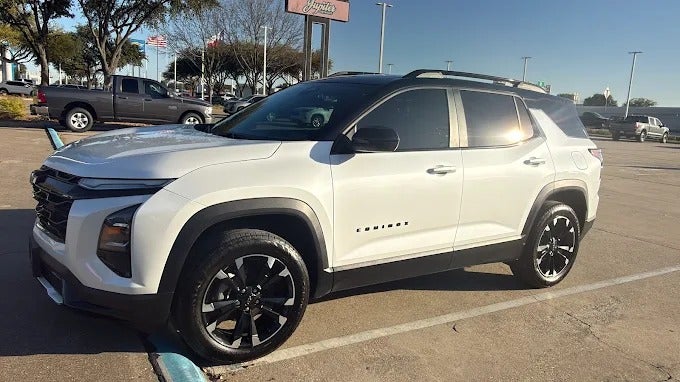
White Chevrolet Equinox on the lot at Jupiter Chevrolet in Garland, Texas, with the Jupiter sign behind it

TL;DR

Buying a new Chevrolet at Jupiter Chevrolet in Garland, Texas includes Lifetime Powertrain Warranty eligibility on every new Chevrolet except Corvette through the Jupiter Advantage, a walkthrough of dealer-installed accessories and costs before you sign, access to Jupiter's in-house Custom Shop and sales, service, parts and collision support on the same Garland campus. Coverage stays active by completing required maintenance at Jupiter Chevrolet within every 5,000 miles, and carries eligibility requirements worth understanding before you count on it.

A 2026 Silverado is a 2026 Silverado. Chevrolet builds it, and the truck sitting on a lot in Garland is the same truck sitting on a lot anywhere else in Dallas-Fort Worth.

What changes from one dealership to the next is everything attached to it. What the warranty covers and what keeps it active. What appears on the price besides the price. Who handles the vehicle after you drive it off, and whether that is the same organization that sold it to you.

So this is less about the Chevrolet itself and more about what comes with buying one at Jupiter: the warranty, the pricing conversation, the Custom Shop and the people who will still be here to service or repair it after the sale.

What Comes With a New Chevy at Jupiter That Does Not Come With the Vehicle Itself

The vehicle itself is only part of what you are buying. At Jupiter, there are a few things attached to the purchase that are worth understanding before you sign.

  • Lifetime Powertrain Warranty coverage. Every new Chevrolet purchased from Jupiter is eligible at no additional cost through the Jupiter Advantage, except Corvette models. There are maintenance requirements to keep that coverage active, which we will get into below.
  • A clearer look at the actual price. Dealer-installed accessories can vary from one vehicle to the next. The important part is knowing what is on the specific vehicle you are considering, what it costs and what your total number looks like before you sign.
  • Access to the Custom Shop. Lifts, wheels, tint, bed liners and other upgrades are handled in house, with the Custom Shop on the same Garland campus.
  • Jupiter Advantage ownership benefits. Beyond the powertrain coverage, qualifying vehicles may receive additional benefits including collision deductible reimbursement and wheel-repair protection, subject to the program terms.
  • One address for the rest of it. Sales, service, parts, custom work and Jupiter Collision Center are all on the same Garland campus.

The rest of this guide breaks down what those things mean in practice, including the requirements that come with them. Because a benefit is only useful if you understand what you are actually getting and what you have to do to keep it.

The Lifetime Powertrain Warranty: What Qualifies and What Keeps It Active

Every new Chevrolet purchased from Jupiter Chevrolet is eligible for the Lifetime Powertrain Warranty, with the exception of Corvette models. It comes at no additional cost as part of the Jupiter Advantage and covers major powertrain components such as the engine, transmission, transfer case where equipped and drive axles for as long as you own the vehicle, subject to the terms, conditions, maintenance requirements and exclusions in the written warranty.

There is an important difference between receiving the coverage and keeping it active.

Required maintenance has to be completed within every 5,000 miles, and that maintenance has to be performed at Jupiter Chevrolet in Garland. Having the same work completed at another GM dealership or an independent repair shop does not satisfy that requirement.

That is worth knowing before you buy. If you plan to keep servicing the vehicle at Jupiter, the requirement fits naturally into that ownership routine. If you live farther away, move out of the area or prefer to have maintenance performed somewhere else, it is something to consider before treating the Lifetime Powertrain Warranty as part of the value of the purchase.

Coverage is not limited to new vehicles. Qualifying pre-owned vehicles can receive it as well, so the Lifetime Powertrain Warranty by itself is not what separates a new vehicle from a used one at Jupiter.

Know What's in the Number Before You Sign

The advertised price does not always tell you everything about the specific vehicle you are looking at.

Some vehicles at Jupiter may already have dealer-installed accessories such as window tint, a spray-in bed liner or other equipment added on site. Those items can affect the price of that particular vehicle, and what is installed can vary from one unit to the next.

The important part is knowing what you are paying for. Before the transaction is finalized, you should be able to see what equipment is on the vehicle, what has been added by the dealership and what those items cost.

If you are comparing the same model or trim at more than one dealership, compare the out-the-door numbers, not just the advertised prices. Ask what equipment is already installed on each specific vehicle and what else is included in the final amount. Two trucks with the same trim can end up at different totals because they are not necessarily equipped the same way.

When we talk about pricing at Jupiter, the goal is transparency. Some vehicles are priced above the manufacturer's MSRP because they include dealer-installed products. Depending on the vehicle, those may include:

  • Rhino spray-in bedliner. Protects the truck bed from scratches, dents, corrosion and everyday wear.
  • XPEL window tint. Helps reduce heat and UV exposure inside the vehicle and adds privacy.
  • Wheel locks. An added layer of theft protection for the wheels and tires.
  • Vehicle etch. Puts a permanent identification number on designated glass surfaces as a theft deterrent and can help with recovery.
  • LoJack security system. Theft-recovery technology designed to help locate and recover the vehicle if it is stolen.

When these products are installed, a vehicle's total selling price may be above MSRP. That difference reflects actual products and equipment added to the vehicle, and you should see each one and what it costs before you sign.

Certain products can be removed at your request where applicable, so ask if there is something on a vehicle you do not want.

Want It Customized? Start Before You Drive It Home

Buying a new truck does not necessarily mean taking it exactly as it came from the factory.

Jupiter Custom Shop is on the same Garland campus, so customers interested in changing the stance, wheels, tint, bed protection or other accessories can start that conversation while they are choosing the vehicle rather than figuring it all out later.

Some vehicles are already customized before they are listed for sale. For others, the Custom Shop can help customers choose upgrades based on what they want the finished vehicle to look like and how they plan to use it. That becomes especially useful when suspension, wheels, tires and steps all need to work together as part of the same build.

You can select upgrades through the Custom Shop as part of your purchase. The work can be completed before delivery, during the delivery process or after you take the vehicle home, depending on what you prefer and the type of upgrade.

The Custom Shop handles a wide range of upgrades, including blackout packages, wheels and tires, lift and leveling kits, XPEL window tint, Rhino spray-in bedliners, running boards, bed covers, lighting, appearance packages and other Chevrolet accessories.

Because every build is different, timing depends on the upgrades you choose, parts availability and installation requirements. The team reviews your selections and gives you an expected completion timeline before the work begins.

The vehicle's Lifetime Powertrain Warranty coverage and the warranties that come with individual aftermarket parts are separate. Qualifying vehicles remain subject to the Jupiter Advantage eligibility and maintenance requirements, while individual Custom Shop products may carry their own manufacturer warranty terms.

Thinking about modifying the vehicle somewhere else? Certain aftermarket modifications can affect Lifetime Powertrain Warranty eligibility or coverage. That mainly applies to work on the electrical system, suspension or engine and performance components done by an outside dealership or an independent repair or modification shop.

If you are considering a modification, talk with Jupiter before the work is done so the team can help you understand whether it could affect your coverage. Upgrades professionally installed through the Jupiter Custom Shop are handled with the applicable warranty requirements in mind, and the full warranty terms spell out what is covered.

What Happens After You Drive Off

The purchase is one day. What happens after it is the part you live with for years.

Routine service at Jupiter includes a 151-point inspection developed from Chevrolet's 172-point checklist, with items the service team considered outdated or no longer useful removed. Tire rotation is included with every oil change, and alignment checks, tire tread-depth checks and open recall checks are complimentary for vehicles coming through the service department.

When the vehicle needs to stay, Jupiter has a fleet of more than 50 loaner vehicles for qualifying visits, along with concierge pickup and delivery across DFW, shuttle service and an overnight drop-off option.

And if the vehicle is ever in an accident, Jupiter Collision Center is on the same Garland campus with its own repair team and estimators.

That is the larger advantage of having sales, service, parts, custom work and collision repair connected in one place. The people who help you buy the vehicle are part of the same organization responsible for helping you maintain, customize and repair it afterward.

What to Bring and What to Expect on the Day You Buy

If you are getting ready to purchase, ask the team what documents you will need to complete the transaction. If you are trading a vehicle, having the registration, both keys and any title or payoff information available can help keep the process moving.

Then give yourself enough time to go through the numbers before you sign.

The contract walkthrough is where you should see what is on the vehicle, what has been added, what each item costs and what your final number looks like. It is also the time to make sure you understand the Lifetime Powertrain Warranty requirements and when your first required maintenance visit will be due.

You should leave knowing what you bought, what you paid for and what you need to do next.

If you want to get some of the process started before you arrive, Jupiter's credit application and trade valuation tools are available online.

New or Used? The Warranty Isn't the Tiebreaker

One thing that does not necessarily separate new from used at Jupiter is the Lifetime Powertrain Warranty. Qualifying pre-owned vehicles can receive the coverage too.

The differences are elsewhere.

A new Chevrolet gives you the full factory warranty from the beginning, the ability to shop for a specific model, trim and configuration, and potentially the opportunity to plan Custom Shop upgrades as part of the purchase process.

A pre-owned vehicle gives you a different set of choices based on what is currently available, how it is equipped, its mileage and its price.

So if you are deciding between a new and pre-owned Silverado, Tahoe, Traverse or another Chevrolet, do not make the decision based on the words "Lifetime Powertrain Warranty" alone. Look at the specific vehicles, the coverage each one carries, how they are equipped and what the numbers look like for each.

Frequently Asked Questions

Does Jupiter Chevrolet include a Lifetime Powertrain Warranty on new vehicles?

Yes. Every new Chevrolet purchased from Jupiter Chevrolet is eligible for the Lifetime Powertrain Warranty at no additional cost through the Jupiter Advantage, with the exception of Corvette models. Coverage includes major powertrain components such as the engine, transmission, transfer case where equipped and drive axles, subject to the terms, conditions, maintenance requirements and exclusions in the written warranty.

What do I have to do to keep the Lifetime Powertrain Warranty active?

Required maintenance has to be completed within every 5,000 miles and performed at Jupiter Chevrolet in Garland. Maintenance completed at another GM dealership or an independent repair shop does not satisfy that requirement.

Is a new Chevy at Jupiter ever priced above MSRP?

Some can be. When a vehicle includes dealer-installed products, such as a Rhino spray-in bedliner, XPEL window tint, wheel locks, vehicle etch or a LoJack security system, its total selling price may be above MSRP. That difference reflects the products added to the vehicle, and you should see what is installed and what each item costs before you sign. Certain products can be removed at your request where applicable.

Can I customize a new truck before I take delivery?

Yes. You can choose upgrades through the Jupiter Custom Shop as part of your purchase and have the work done before delivery, during the delivery process or after you take the vehicle home. Common choices include blackout packages, wheels and tires, lift and leveling kits, window tint, spray-in bedliners, running boards, bed covers and lighting. The team gives you an expected completion timeline before work begins.

Can modifications affect my Lifetime Powertrain Warranty?

They can. Work on the electrical system, suspension or engine and performance components done by an outside dealership or independent shop may affect eligibility or coverage. Talk with Jupiter before having that kind of work done, and check the full warranty terms for coverage details.

What else comes with the Jupiter Advantage besides the Lifetime Powertrain Warranty?

The Jupiter Advantage includes additional ownership benefits for qualifying vehicles, including collision deductible reimbursement and wheel-repair protection, subject to the program's eligibility requirements, limits and terms.

Can I buy a new Chevrolet online or start the process before I come in?

You can browse Jupiter Chevrolet's current new inventory online, start the credit application and get started on a trade valuation before visiting the Garland showroom. If you are looking for a particular model, trim or configuration that is not currently available, the team can also check incoming inventory.

Ready to See What's Available?

Browse Jupiter Chevrolet's current new inventory to see what is available now, or schedule a test drive if there is a specific vehicle you want to see in person.

If you want to get a head start before you come in, you can also begin the credit application and trade valuation online.

Looking for a particular model, trim or configuration? Ask the team what is incoming or whether there is another way to find the Chevrolet you are looking for. Call 972-464-1093 or start online.

Browse New InventorySchedule a Test Drive

About the Author

Eric Fussell is the General Manager of Jupiter Chevrolet in Garland, Texas. He works with Jupiter's sales, service, parts and collision teams to help customers understand their vehicles, their maintenance options and the programs that come with buying and owning a Chevrolet in North Texas.

Sources & Further Reading

Program Note: Jupiter Advantage eligibility, coverage, maintenance requirements, exclusions and claims procedures are governed by the written program terms. Vehicle equipment, dealer-installed accessories and pricing vary by individual vehicle. Confirm current program terms and vehicle-specific details before purchase.

Published: October 7, 2026 | Last updated: October 7, 2026
Posted in:

Related Posts

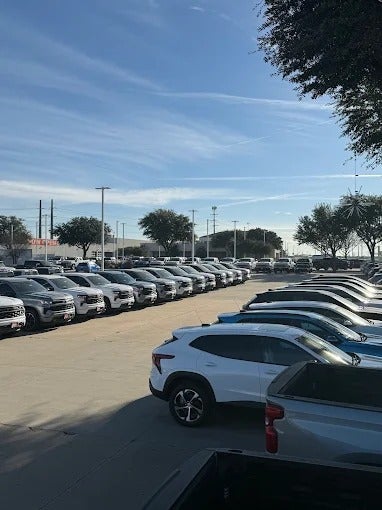
Rows of new Chevrolet vehicles on the lot at Jupiter Chevrolet in Garland, Texas

Thinking About a Chevy EV in DFW? What Ownership Actually Looks Like

TL;DR Chevrolet's EV lineup includes the Equinox EV, Blazer EV, Silverado EV and the returning Bolt. The federal EV tax credit ended September 30, 2025, and Texas charges a $200 annual EV registration fee. For a DFW driver, the bigger questions are how an EV fits your daily mileage, whether you can charge at home, how North Texas heat affects range and where you will have it serviced. Jupiter Chevrolet sells and services Chevy EVs in Garland. Buying an EV involves a few questions that do not come up with a gas vehicle. Where will you charge it? What happens to range during a North Texas summer? What does Texas charge you to own one? And who works on it when it needs service? Those are the questions that matter after the test drive is over. This guide walks through what Chevy EV ownership actually looks like in DFW, from the current lineup and home charging to Texas fees, summer range and service, so you can decide whether an EV makes sense for the way you drive. Which Chevy EVs Can You Buy in DFW Right Now? Chevrolet's electric lineup gives DFW shoppers several different starting points, from a compact EV to a full-size electric truck. The biggest differences come down to vehicle size, range, performance and what you need the vehicle to do every day. Here is how the current lineup compares based on Chevrolet's published specifications: Chevrolet EV lineup at a glance: body style and EPA-estimated range Model Body style EPA-est. range (up to) What distinguishes it 2027 Chevrolet Bolt Compact hatchback 262 miles Smallest Chevy EV, with a native NACS charging port 2026 Chevrolet Equinox EV Compact SUV 319 miles (FWD) Two-row SUV with more than 300 miles of available range 2026 Chevrolet Blazer EV Midsize SUV 312 miles (LT/RS FWD) Larger SUV lineup that includes the SS performance model 2026 Chevrolet Silverado EV Full-size pickup 478 miles (Max Range) Longest-range Chevy EV listed here, with up to 12,500 pounds of available towing Range figures are Chevrolet/GM-published EPA estimates for the configurations noted. Actual range varies by configuration, temperature, speed, climate-control use and other driving conditions. The Bolt is Chevrolet's smallest EV and returns for the 2027 model year with a native NACS charging port. The Equinox EV and Blazer EV give buyers two different SUV options, while the Silverado EV brings electric power to a full-size pickup with available towing capability. At Jupiter, the Equinox EV and Blazer EV drive most of the conversation with first-time EV buyers. The Equinox EV tends to appeal to people who want an affordable, practical everyday vehicle. The Blazer EV draws buyers who want something larger and sportier, with a more premium feel. The Bolt is a natural fit for buyers focused on affordability, efficiency and everyday commuting. The Silverado EV is a different buyer altogether: someone who wants the capability and utility of a truck and is interested in moving to an EV. The biggest misconception we hear is that all EVs are basically the same. They are not. Range, performance, size, charging capability, equipment and intended use can vary a lot from one model to the next. So we start with how you actually use your vehicle: your daily commute, how much you drive, whether you can charge at home and what it would cost to run a charge or set up your garage for one, your passenger and cargo needs, and whether you tow or travel often. From there, we can help you figure out whether an Equinox EV, Blazer EV, Bolt or Silverado EV fits, or whether a gas vehicle simply makes more sense. We don't believe an EV is the right answer for every customer, and we don't believe that about gas vehicles either. Our job is to help you understand the differences and your financing options, then choose the vehicle that fits the way you live. What a Chevy EV Actually Costs Beyond the Sticker in Texas The purchase price is only part of the cost of owning an EV in Texas. For DFW buyers in 2026, there are three things worth factoring in before comparing an EV with a gas vehicle: the federal tax credit is gone, Texas adds an EV registration fee and charging at home may require some upfront electrical work. The federal EV tax credit ended. The IRS states that the new, used and commercial clean vehicle credits are not available for vehicles acquired after September 30, 2025. So if you come across an older article talking about a federal credit of up to $7,500 on a new EV, that information is outdated. Any current discounts or incentives on a Chevy EV would come from vehicle pricing or manufacturer and dealer programs available at the time you buy. Texas charges an additional EV registration fee. Since September 1, 2023, Texas has charged a $200 annual fee to register an electric vehicle, on top of standard registration fees. For a new EV receiving a two-year registration, the fee is $400 up front. According to the Texas Department of Motor Vehicles, the additional fee helps account for the gasoline taxes EV drivers do not pay and does not apply to hybrid vehicles. Home charging can come with an upfront cost. For drivers who want Level 2 charging at home, the setup uses a 208- to 240-volt power source and may require electrical work. How involved that installation is depends on your home's existing electrical system, available capacity and where the charger will be installed. There are also routine maintenance differences to factor into the ownership cost. A battery-electric vehicle does not need engine oil changes or spark-plug replacement, and regenerative braking can reduce use of the friction brakes. Your actual operating costs will still depend on how much you drive, electricity rates and how much of your charging happens at home versus public charging stations. Because EV pricing, incentives and payment programs can change much faster than the information in this guide, check Jupiter Chevrolet's current EV inventory and available offers when you are ready to compare actual numbers. How Charging a Chevy EV Works in North Texas For most buyers, the biggest adjustment to an EV is not how it drives. It is thinking differently about where and when you add range. Chevy EVs can charge at home, at work or at public charging stations. The right setup depends on how much you drive, whether you can charge where you live and how often you take longer trips. There are three main ways to charge: Level 1 (120 volts): Uses a standard household outlet and adds about 2 to 5 miles of range per hour. It can work for drivers who cover relatively few miles each day, but it is the slowest option. Level 2 (208 to 240 volts): Common for home and workplace charging. The U.S. Department of Transportation says typical Level 2 equipment adds about 10 to 20 miles of range per hour, although charging speed varies by the vehicle and equipment. DC fast charging: Designed primarily for faster charging away from home. Depending on the vehicle and charging station, the U.S. Department of Transportation says DC fast charging can bring a battery to about 80% in roughly 20 minutes to an hour. Public charging options for Chevy EV drivers have also expanded. Chevrolet says its customers can access more than 250,000 public chargers across the U.S. and Canada, including compatible Tesla Superchargers. The 2027 Bolt comes standard with a native NACS charging port. The 2026 Equinox EV, Blazer EV and Silverado EV can also use compatible Tesla Superchargers, but those models require a GM-approved NACS DC adapter. For a DFW driver, the practical question is not simply whether public chargers exist. It is where you expect to do most of your charging. If you can charge at home or at work, routine driving around Garland and the Metroplex may require very little public charging. Longer trips make charging speed and station availability along your route more important. If you cannot charge where you live, such as at an apartment without charging access or with street parking, EV ownership can still be possible, but you will depend more heavily on workplace and public charging. That changes both the convenience and the cost equation. How Texas Heat Affects a Chevy EV North Texas heat can reduce EV range, but the effect is easier to understand when you put an actual number behind it. In testing published in May 2026, AAA compared EV performance at different temperatures. At 95 degrees with the air conditioning set to 72 degrees, the EVs tested averaged 8.5% less driving range than they did at 75 degrees. AAA also measured a 10.4% decrease in energy efficiency under those conditions. That does not mean every Chevy EV will lose exactly 8.5% of its range on a hot DFW day. The AAA figure is an average from the vehicles and conditions in its test. Actual range will depend on the vehicle, outside temperature, highway speed, air-conditioning use, driving habits and other conditions. But it gives North Texas drivers a useful frame of reference. An 8.5% reduction on 300 miles of range would be about 25 miles, for example. The point is not that a 300-mile EV automatically becomes a 275-mile EV every August. It is that the range you see in real-world summer driving may be lower than the EPA estimate. Cold temperatures had a larger effect in the same AAA testing. At 20 degrees, the EVs tested averaged a 39% decrease in driving range. That condition is less common in DFW than sustained summer heat, but it is worth remembering during a North Texas freeze or winter road trip. Chevy EVs use active thermal management to heat or cool the battery as needed. Chevrolet also backs the EV battery and electric propulsion components with an 8-year/100,000-mile limited warranty. For day-to-day summer driving, a few habits can help you manage available range: Precondition the cabin while the vehicle is plugged in. On equipped vehicles, the myChevrolet app can be used to start climate control before you leave. Use covered parking when it is available. Starting with a cooler cabin can reduce how much cooling is needed when you get in. Give yourself some margin on longer trips. Highway speed, climate-control use and temperature can all affect how far an EV travels between charges. Follow Chevrolet's charging recommendations for your specific EV. Recommended charging settings can vary, so use the guidance in your owner's manual rather than assuming every EV should be charged the same way. Texas heat does not change the basic range equation. It just means the EPA number should be treated as an estimate, not a promise about exactly how far the vehicle will travel on a 100-degree August afternoon. Who Services a Chevy EV After You Buy It A Chevy EV does not need oil changes or some of the other routine maintenance that comes with a gas engine, but it still needs tires, brakes, cabin air filters, battery-cooling-system maintenance, software updates and regular inspections. Tire condition and alignment deserve extra attention on an EV. The weight, torque and performance characteristics of an electric vehicle make both especially important. There is also an important difference between routine maintenance and work involving the high-voltage system. Chevrolet says EV-trained dealership technicians have the training and equipment to inspect, test and service the high-voltage battery system. Chevrolet's EV battery and electric propulsion limited warranty covers eligible repairs for 8 years or 100,000 miles, whichever comes first. At Jupiter Chevrolet, Chevy EVs are serviced on site in Garland at a GM EV-certified service facility. EVs require specialized training, diagnostic equipment, tools and safety procedures that are different from traditional vehicles, and Jupiter's technicians are trained to handle them. The questions our service team hears most often are about battery health, driving range, charging, tires and how often the vehicle should be serviced, along with what happens if there is ever an issue with the high-voltage battery or EV system. Our answer for first-time owners is simple: the maintenance is different, but it doesn't have to be complicated. We'll help you understand what your Chevy EV needs and when it needs it, and make sure it's serviced properly. Every vehicle that comes through Jupiter Chevrolet's service department also receives a complimentary multi-point inspection. Jason Ashcroft, Jupiter Chevrolet's Fixed Operations Director, describes it simply: "basically, it's the vehicle's report card." It includes checks of items such as tires, brakes and fluids, along with complimentary checks for alignment and open recalls. That tire inspection can be particularly useful on an EV because vehicle weight, tire design, driving style and other factors can affect tire wear. Every vehicle that comes in for service, EVs included, also passes over Jupiter Chevrolet's drive-over scanner as it enters the service lane. The scanner measures the tread depth on each tire and captures 360-degree imagery of the vehicle, and the results for tires, alignment and open recalls appear on a large monitor in the service lane as you pull in. Readings follow the same green, yellow and red system as the inspection report, so uneven wear or low tread shows up before it becomes a problem. If an EV is damaged in a collision, Jupiter Collision Center can handle EV collision repairs in house, including battery removal and structural repair when required, following manufacturer-published safety and repair procedures. The Collision Center also follows manufacturer-specified high-voltage safety protocols any time a damaged EV requires battery isolation, removal or work near high-voltage components. Is a Chevy EV the Right Fit for You? The specs only tell you so much. Whether an EV makes sense in DFW depends more on how and where you actually drive. Before you choose between an EV and a gas vehicle, start with six questions: Can you charge at home or at work? Having reliable access to home or workplace charging means you can handle more of your routine charging where the vehicle already spends time. Without it, you will depend more heavily on public charging, so availability, charging speed and cost become a bigger part of the decision. If you can, also check whether your electric provider offers discounted overnight EV charging rates. How many miles do you drive on a normal day? Compare your typical daily mileage with the published range of the EV you are considering. Leave room for factors such as highway speeds, temperature, climate-control use and other conditions that can affect real-world range. How often do you take longer trips? If Austin, Houston, Oklahoma or other longer drives are part of your routine, look at charging options along the routes you actually travel. The question is not simply whether an EV can make the trip, but how charging fits into the way you prefer to travel. Do you tow? The Silverado EV offers up to 12,500 pounds of available towing capacity in the properly equipped configuration discussed earlier. But towing can reduce EV range, so consider both the weight you need to pull and how far you typically tow it. How long do you keep your vehicles? Chevrolet's EV battery and electric propulsion limited warranty runs for 8 years or 100,000 miles, whichever comes first. Consider that coverage alongside the Texas EV registration fee, any home-charging setup costs and your expected ownership period. Is this your only vehicle? An EV can be an easier decision when there is a gas vehicle in the household for long road trips or towing. If the EV will be your only vehicle, your charging access and travel habits carry more weight. There does not have to be one answer for every DFW driver. Someone with home charging and mostly local driving has a different ownership equation than someone who regularly tows long distances or depends entirely on public charging. When a customer is on the fence, we start with how they really drive. Here are some of the questions our sales team asks: What does your normal commute look like? What are the longest trips you make regularly? Do you often drive to places like Austin, Houston, San Antonio or out of state? Do you regularly carry passengers, equipment or a lot of cargo? What matters most to you: range, performance, efficiency, capability or purchase price? Would you be comfortable plugging your vehicle in at home instead of stopping for gas? Have you driven an EV before? What concerns do you have about owning an EV? Are you looking to buy, finance or lease? If the answers point to a gas vehicle, we will tell you that. We can also compare the estimated operating costs of an EV and a comparable gas model based on the miles you actually drive, show you what charging at home would look like and set up back-to-back test drives so you can decide which one fits you better. Frequently Asked Questions Is there still a federal tax credit for buying a new Chevy EV? No. According to the IRS, the federal new, used and commercial clean vehicle credits are not available for vehicles acquired after September 30, 2025. Any current savings on a new Chevy EV would come from vehicle pricing or manufacturer and dealer programs available at the time you buy. How much is the Texas EV registration fee? Texas charges an additional $200 annual registration fee for electric vehicles, on top of standard registration fees. New EVs receiving a two-year registration pay $400 up front. The fee took effect September 1, 2023, and does not apply to hybrids. Can a Chevy EV use Tesla Superchargers? Yes, at compatible Tesla Superchargers. The 2027 Chevrolet Bolt comes standard with a native NACS charging port. The 2026 Equinox EV, Blazer EV and Silverado EV can also access compatible Tesla Superchargers using a GM-approved NACS DC adapter. How long is the battery warranty on a Chevy EV? Chevrolet's EV battery and electric propulsion limited warranty covers eligible components for 8 years or 100,000 miles, whichever comes first. Warranty terms and coverage can vary, so check the warranty information for the specific Chevrolet EV you are considering. How much range does a Chevy EV lose in Texas heat? There is not one percentage that applies to every EV or every hot day. In AAA testing published in May 2026, the EVs tested averaged 8.5% less driving range at 95 degrees with the air conditioning set to 72 degrees compared with testing at 75 degrees. Actual range varies with the vehicle, temperature, speed, climate-control use and other driving conditions. Which Chevy EV has the longest range? Among the models covered in this guide, the Silverado EV has the highest GM-published EPA-estimated range, with up to 478 miles on the Max Range configuration. Among the SUVs discussed here, the front-wheel-drive Equinox EV offers up to 319 miles of GM-estimated range. Actual range varies by configuration and driving conditions. Does Jupiter Chevrolet service electric vehicles? Yes. Jupiter Chevrolet is a GM EV-certified service facility and services Chevy EVs at the dealership in Garland. Does a Chevy EV still need maintenance if it doesn't need oil changes? Yes. EVs generally have fewer routine maintenance items, with no oil changes or spark plugs, but tires, brakes, suspension, alignment, cabin air filters and cooling systems still need inspection and service. Tire condition and alignment are especially important because of an EV's weight and torque. Can any repair shop work on a Chevy EV? Routine items like tires and cabin air filters are familiar work for most shops. Anything involving the high-voltage battery or EV system takes specialized training, diagnostic equipment, tools and safety procedures, which is why Chevrolet points EV owners to EV-trained dealership technicians. Jupiter Chevrolet is a GM EV-certified service facility. Why are tire rotations and alignments so important on an EV? An EV is heavier than a comparable gas vehicle and delivers its torque instantly, and both put more demand on the tires. Keeping up with rotations and alignment checks helps the tires wear evenly. Every vehicle that comes into Jupiter's service lane, EVs included, passes over the drive-over scanner that measures tread depth on each tire and flags alignment concerns. Do EV brakes last longer because of regenerative braking? Regenerative braking uses the electric motor to slow the vehicle, which can reduce how much the friction brakes are used. The brakes still need regular inspection, and they are part of the complimentary multi-point inspection on every vehicle that comes through Jupiter's service department. What's the difference between Level 1, Level 2 and DC fast charging? Level 1 uses a standard 120-volt household outlet and adds about 2 to 5 miles of range per hour. Level 2 runs on 208 to 240 volts, is common at home and work, and typically adds about 10 to 20 miles of range per hour. DC fast charging is built for charging away from home and can bring a battery to about 80% in roughly 20 minutes to an hour, depending on the vehicle and station. Why does my EV's range change between summer and winter? Temperature affects how much energy goes to heating or cooling the cabin and the battery. In AAA testing published in May 2026, EVs averaged 8.5% less range at 95 degrees with the A/C on and 39% less at 20 degrees, compared with 75 degrees. Your actual range depends on the vehicle, speed and how you drive. Can Jupiter Chevrolet fix high-voltage battery problems? Jupiter Chevrolet is a GM EV-certified service facility, and Chevrolet says EV-trained dealership technicians have the training and equipment to inspect, test and service the high-voltage battery system. Eligible battery and electric propulsion repairs are covered by Chevrolet's 8-year/100,000-mile limited warranty. What should I do if my EV is in a collision? Have it repaired by a shop trained on EV high-voltage safety procedures. Jupiter Collision Center handles EV collision repairs in house, including battery removal and structural repair when required, following manufacturer-published safety and repair procedures. Test-Drive a Chevy EV in Garland If you are still deciding between an EV and a gas vehicle, specs can only take you so far. Driving both gives you a chance to compare how they feel and ask questions about the things that matter for your routine, from range and charging to towing and service. Browse Jupiter Chevrolet's current EV inventory, or stop by the dealership in Garland to test-drive a Chevy EV and compare your options in person. Browse EV Inventory About the Author Eric Fussell is the General Manager of Jupiter Chevrolet in Garland, Texas. He works with Jupiter's sales, service, parts and collision teams to help customers understand their vehicles, their ownership options and the programs that come with buying and owning a Chevrolet in North Texas. Sources & Further Reading Chevrolet EV Ownership and Charging: for battery warranty coverage and charging network access. IRS: Credits for New Clean Vehicles: for the end of the federal clean vehicle tax credit after September 30, 2025. TxDMV: Electric Vehicle Registration Fee: for Texas's $200 annual EV fee and $400 first registration. AAA: Temperature Impacts on EV and Hybrid Efficiency: for how hot and cold weather affect EV range. U.S. DOT: EV Charger Types and Speeds: for Level 1, Level 2 and DC fast charging speeds. Chevrolet Certified Service: EV Maintenance: for what EV maintenance involves and who should service the high-voltage battery. Jupiter Collision Center: Electric Vehicle Collision Repair: for Jupiter Collision Center's EV collision-repair capabilities, high-voltage procedures and manufacturer-based repair standards. Pricing Note: EV pricing, incentives and availability change frequently and can vary by model, trim and configuration. Range and warranty information in this guide reflects Chevrolet and GM published information available at the time of writing. Check current inventory and available offers or talk with the Jupiter Chevrolet team for the latest information. Published: October 6, 2026 | Last updated: October 6, 2026

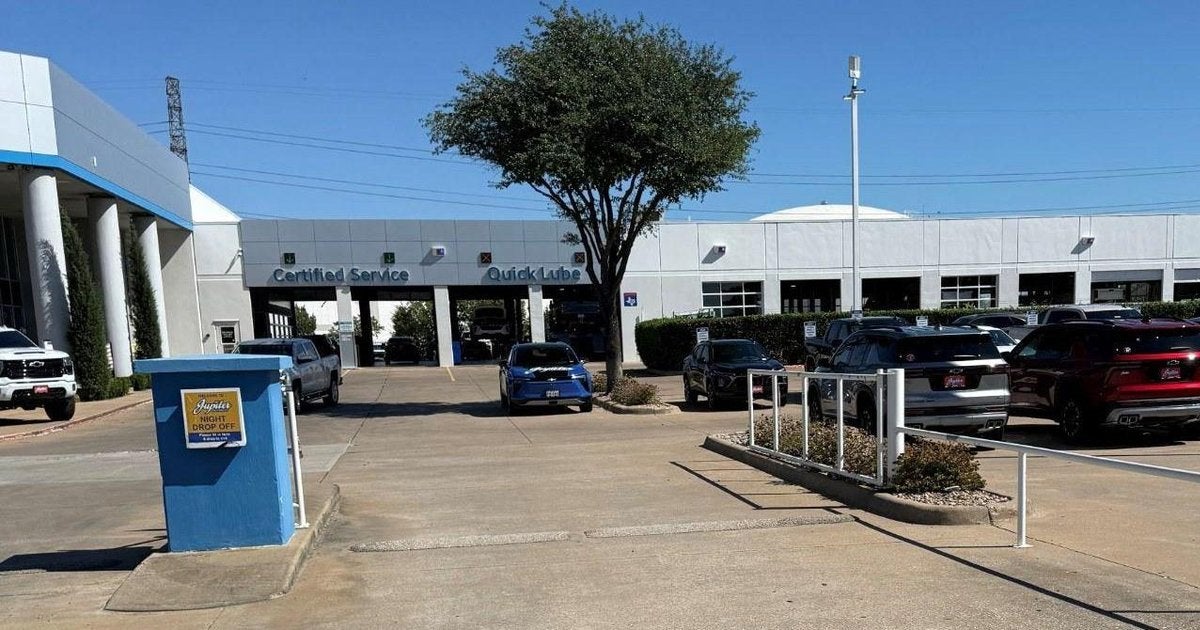
Night drop-off box at the entrance to Jupiter Chevrolet in Garland, TX, with the Certified Service building behind it

24-Hour Service Drop-Off at Jupiter Chevrolet in Garland: How It Works

TL;DR Jupiter Chevrolet in Garland has a 24-hour drop box, available every day including Sundays and holidays. Park on the right-hand side of the entryway in the designated overnight area, fill out an After Hours Key Drop Envelope, seal your keys inside and drop it in the box. The service team starts bringing overnight vehicles in around 5:00 AM, and a service advisor calls after 8:00 AM to go over the plan. An appointment is not required but is strongly recommended. If you need a loaner, drop off during service hours instead, because the loaner paperwork has to be done in person. Service departments keep daytime hours. Most people work them. That is the whole problem with getting a vehicle serviced. Sometimes the inconvenient part is not the maintenance itself. It is getting the vehicle to the dealership while the service department is open. Jupiter Chevrolet's 24-hour drop-off gives you another option. Schedule your service, leave your vehicle and keys at the dealership the night before, and the service team will bring it in when they arrive the next morning. If you have never used an overnight drop box before, though, there are some reasonable questions: Where do you leave the vehicle? What happens to the keys? When does the vehicle get checked in? And when will you hear from an advisor? Here is how it works. What 24-Hour Drop-Off Means at Jupiter Chevrolet Jupiter Chevrolet's drop box is available 24 hours a day, 7 days a week, including Sundays and holidays. There is a designated overnight area where you can leave your vehicle, with a drop box directly out front for your keys. The important distinction is that 24-hour drop-off changes when you can leave your vehicle, not when the service work is performed. Team members arriving in the morning begin bringing overnight vehicles in around 5:00 AM. From there, each vehicle is checked in and moved into the service process for the day. For customers who cannot make a daytime drop-off work, that means the vehicle can already be at Jupiter when the service day begins. During regular service hours, the better move is to pull through the Service Drive and check in with a service advisor in person. That way the advisor can go over your concerns with you and start the check-in on the spot. The drop box is there for the times you cannot do that. Should You Schedule an Appointment Before a 24-Hour Drop-Off? Scheduling an appointment and using 24-hour drop-off can work together. You can have your service planned ahead of time and still leave your vehicle at Jupiter the night before rather than making the trip the following morning. An appointment is not required to use the drop box, but Jupiter strongly recommends one. When the service team knows what is coming, they can plan technician time, line up parts and give you a better idea of turnaround before your vehicle ever arrives. Jason Ashcroft, Jupiter Chevrolet's Fixed Operations Director, says the team helps customers whether they arrive with an appointment, drive in with a question or need service performed. No appointment? You are still welcome to use the overnight drop-off. Your vehicle goes through the same full morning check-in and inspection as everyone else's. How to Use 24-Hour Drop-Off, Step by Step Here is how Jupiter Chevrolet's 24-hour drop-off works from the moment you pull in. Schedule your service if you can. It is not required, but it helps the team plan for your vehicle before it arrives. Schedule online or call 972-464-1093. Park in the designated overnight area. After you enter the dealership, park along the right-hand side of the entryway and look for the Night Drop-Off signage near the entrance. Make sure you are not blocking the main entry gate or traffic, leave room for other vehicles to get in and out, and lock your vehicle. Grab an After Hours Key Drop Envelope. You will find them at the drop box. Fill in your name, phone number, email, vehicle year, make, model, mileage and license plate, and check whether your vehicle has a wheel lock. Nothing needs to be done online first. Tell the team what you need. Check the services you want from the list on the envelope, or write in what is going on. Be specific about symptoms rather than diagnoses. "Pulls right under braking" is more useful than "needs brakes." Mention anything the technician should know, like a warning light that comes and goes or a noise that only happens cold, and note when you would like to pick the vehicle up. If you already have an appointment, add any extra concerns here. Choose how you want to approve repairs, then sign. The envelope asks for your repair authorization preference, including the option to get a call with an estimate before any repair. Sign at the bottom. Work will not be performed on an unsigned envelope. Seal your keys inside and drop it in the box. Put your key and remote in the envelope, seal it and drop it in the overnight drop box. Watch for a call from your service advisor. It usually comes after 8:00 AM the next morning. What Happens the Next Morning When the service team arrives in the morning, overnight vehicles are brought in from the drop-off area and begin moving through the service process for the day. Before anything moves, the team matches each set of keys to the right vehicle. They check the information on your envelope against the vehicle and confirm the key or fob actually operates it, so the right keys, vehicle and service request stay together. From there, your vehicle gets the same check-in as a daytime visit. It is driven through Jupiter's alignment and tire tread reader, gets an OBD diagnostic code scan and goes through the complimentary multi-point vehicle inspection, where the technician checks items like the tires, brakes and fluid levels. The team also checks for open recalls. The goal is the same thorough inspection and level of service for every customer, no matter when the vehicle was dropped off. When Will You Hear From a Service Advisor? Once your vehicle has been brought in and checked in for the day, the next step is hearing from the service team. Service advisors call overnight drop-off customers first thing in the morning, typically after 8:00 AM. The team tries not to call too early. Contact is by phone unless you have asked to hear from them by text. On that first call, your advisor confirms your concerns and any extra requests, walks you through the plan for your vehicle and sets clear expectations for turnaround time. If parts availability or anything else might cause a delay, you will hear about it as early as possible. What If the Technician Finds Something Else? Dropping your vehicle off after hours means you are not standing at the service counter when the team begins looking at it the next morning. So what happens if the technician finds something beyond the service or concern you originally brought it in for? Jupiter's multi-point inspection uses a green, yellow and red system to help customers understand what the technician finds. Green means the item is in good condition. Yellow means it does not necessarily need attention right now, but Jupiter documents it and can inspect it again at a future visit. Red means the item needs more immediate attention, whether for safety or the vehicle's long-term health. Finding something during the inspection does not necessarily mean it has to be repaired that day. Jason Ashcroft says the service team starts with safety concerns, then discusses recommendations related to future maintenance and the vehicle's long-term health. If the technician does find something, expect a phone call first unless you asked for text. Jupiter prefers a live conversation so your advisor can explain what was found, go over the recommended repair and the price, and answer your questions on the spot. When it helps, you will also get photos or live video of the findings by text or email. No additional customer-pay work is done without your authorization. Once you have reviewed the findings and pricing, you approve the work through your service advisor. Need a Loaner? Drop Off During Service Hours Instead If you will need another vehicle while yours is at Jupiter, the 24-hour drop box is not the way to go. Jupiter maintains a fleet of loaner vehicles and also offers shuttle service and concierge pickup and delivery. For loaners, Jupiter customers are prioritized first, and customers with scheduled appointments are prioritized ahead of walk-ins. Loaners cannot be picked up after hours. Before you drive off in a Jupiter loaner, you sign an agreement, show your driver's license and proof of insurance and do a walk-around of the loaner with the team. All of that happens in person, so Jupiter does not leave loaner vehicles out for after-hours pickup. If you need a loaner, plan to drop off your vehicle and pick up the loaner during Service Department hours. Request and confirm the loaner when you schedule your appointment, because availability can be limited. Before You Leave Your Vehicle For an after-hours drop-off, the most important thing is making sure the service team has what it needs to identify your vehicle, understand why it is there and access anything necessary to complete the requested service. Leave the wheel-lock key in the vehicle if you are coming in for brake service, an oil change and tire rotation, tire service or suspension work. Take your valuables with you. Remove personal items and anything you will need before your vehicle is ready. Leave enough fuel for a road test if the repair or diagnosis needs one. If the team has to add fuel to properly test the vehicle, that cost may be added to your repair order, or submitted to GM when the repair is covered under warranty. Frequently Asked Questions Does Jupiter Chevrolet in Garland have 24-hour service drop-off? Yes. Jupiter Chevrolet's drop box is available 24 hours a day, 7 days a week, including Sundays and holidays. Park in the designated overnight area on the right-hand side of the entryway, fill out an After Hours Key Drop Envelope and drop your keys in the box. The service team starts bringing overnight vehicles in around 5:00 AM. Do I need an appointment to use the 24-hour drop box? No. You can use the drop box without an appointment, and your vehicle gets the same morning check-in and inspection. Jupiter still strongly recommends scheduling ahead so the team can plan for diagnosis, parts and turnaround time. Where do I leave my vehicle and keys after hours? After you enter the dealership, park along the right-hand side of the entryway in the designated overnight area. Look for the Night Drop-Off signage near the entrance. Your keys go in a sealed After Hours Key Drop Envelope in the drop box directly out front. Do I have to fill anything out online first? No. Everything goes on the After Hours Key Drop Envelope at the drop box: your contact and vehicle information, the service you need, when you would like to pick up and how you want to approve repairs. If you already have an appointment, add any extra concerns there too. What happens to my vehicle the next morning? Team members start bringing overnight vehicles in around 5:00 AM. Each vehicle is matched to its keys, then driven through the alignment and tire tread reader, scanned for diagnostic codes, put through the multi-point inspection and checked for recalls. It is the same process as a daytime drop-off. What happens if Jupiter finds something else during the inspection? Jupiter's multi-point inspection uses a green, yellow and red system. Green means the item is in good condition. Yellow means it does not necessarily need attention right now, but Jupiter documents it so it can be checked again at a future visit. Red identifies something that needs more immediate attention because of safety or the vehicle's long-term health. Finding something during the inspection does not necessarily mean it has to be repaired that day. Jason says the team begins with safety concerns, then discusses recommendations related to future maintenance and the vehicle's long-term health. When an item can wait, documenting it allows the customer to plan ahead for the parts, labor and appointment needed later. When will I hear from a service advisor after an overnight drop-off? Usually first thing in the morning, after 8:00 AM. Your service advisor calls unless you asked for text, confirms what you need and sets expectations for turnaround time. Can I get a loaner if I drop my car off after hours? Not with an after-hours drop-off. The loaner agreement, your driver's license and proof of insurance all have to be handled in person, so Jupiter does not leave loaners out for after-hours pickup. If you need a loaner, drop off your vehicle during service hours and request the loaner when you schedule, since availability can be limited. Is my car safe if I leave it there overnight? Jupiter Chevrolet has 24-hour camera surveillance and lighting throughout the property, and its surveillance is in direct communication with the Garland Police Department. Lock your vehicle and take your valuables with you before you leave it. Can I pick up my car after the service department closes? Yes, as long as the work has been paid for and your vehicle has been authorized for release. After the service department closes, you can pick it up through the Sales Department, which is open until 9:00 PM. Jupiter does recommend picking up during service hours when you can, so your advisor can walk you through the inspection results, the work done and anything recommended for later. Drop It Off Tonight If getting to the dealership during service hours is what keeps pushing your maintenance or repair to another day, Jupiter Chevrolet's after-hours drop-off gives you another option. Schedule your service online if you can, fill out your envelope and leave your vehicle at Jupiter the night before. If you need a loaner, come in during service hours instead. Service hours are 7:00 AM to 7:00 PM Monday through Friday and 7:00 AM to 4:00 PM Saturday. The service department is closed Sunday, but the drop box is not. Call 972-464-1093 or schedule your service online. Schedule Service About the Author Eric Fussell is the General Manager of Jupiter Chevrolet in Garland, Texas. He works with Jupiter's sales, service, parts and collision teams to help customers understand their vehicles, their maintenance options and the programs that come with buying and owning a Chevrolet in North Texas. Sources & Further Reading Jupiter Chevrolet Service — for current service information, scheduling and specials. Loaner Vehicles at Jupiter Chevrolet — for current information about Jupiter Chevrolet's loaner vehicle program. The Jupiter Advantage — for loaners, shuttles, concierge pickup and the other ownership benefits that come with buying at Jupiter Chevrolet. What to Expect at Your First Service Appointment at Jupiter Chevrolet in Garland — for what happens on a normal daytime visit. Process Note: Drop-off procedures, service hours and loaner availability can change. Call the Jupiter Chevrolet service department at 972-464-1093 to confirm current details before your visit. Service recommendations and maintenance schedules vary by model and model year; refer to your Chevrolet owner's manual for guidance specific to your vehicle. Published: October 5, 2026 | Last updated: October 5, 2026

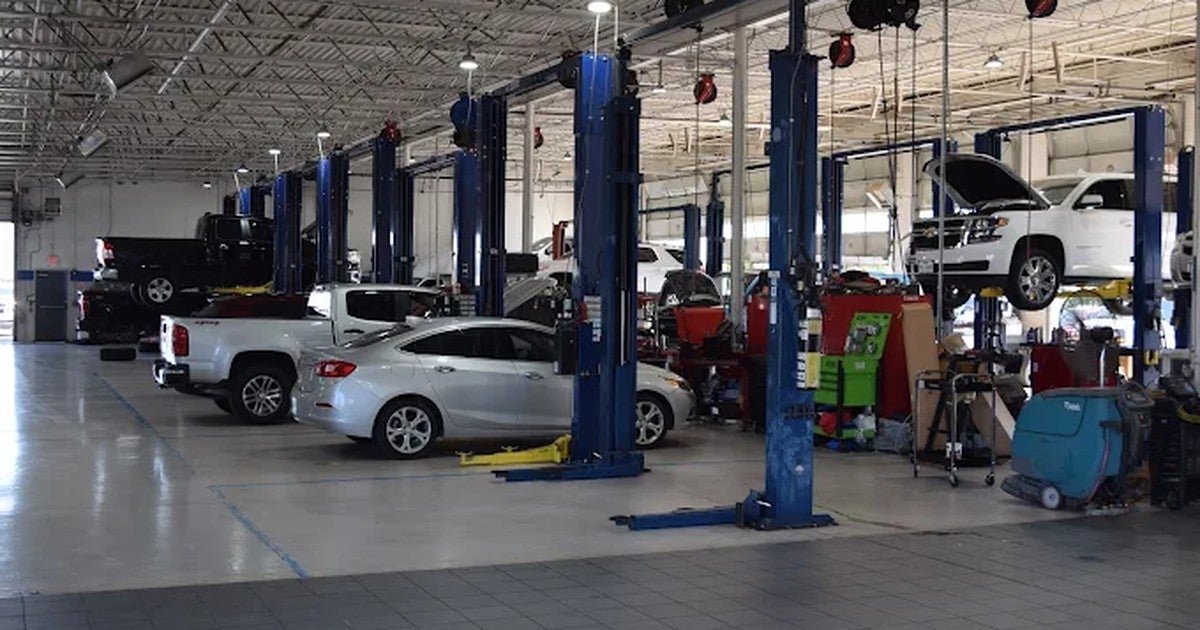
Chevrolet vehicles on lifts in the Jupiter Chevrolet service department in Garland, TX

What's the Right Oil for Your Chevy? Synthetic vs. Conventional, Explained

TL;DR The right oil for your Chevrolet depends on the engine, model year, required oil specification, and viscosity grade. Many newer Chevrolet engines require full synthetic oil that meets a specific GM dexos specification, while some vehicles may have different requirements. Check your owner's manual for the exact specification and viscosity your engine requires, or bring it to Jupiter Chevrolet in Garland and we will look it up for you. Ask five people whether your Chevy needs synthetic oil and you may get five different answers. The problem is that there is not one answer that applies to every Chevrolet. The right oil depends on the engine under the hood, the model year, the oil specification GM requires, and the correct viscosity grade. One Chevy may require a full synthetic dexos-approved oil while another may have different requirements. So the better question is not simply, “Is synthetic oil better than conventional?” It is, “What oil was my engine designed to use?” Here is how to find that answer, what specifications like dexos actually mean, and why using the correct oil and filter matters for your engine. What's Actually Different Between Synthetic and Conventional Oil Conventional and synthetic motor oils are formulated differently, and those differences affect how they perform as temperatures, engine loads, and operating conditions change. Conventional oil uses conventional base oils combined with additives that help control wear, deposits, oxidation, and other conditions inside the engine. Full synthetic oil uses more highly engineered base oils and additive packages designed to maintain performance across a wider range of operating conditions. Synthetic oils generally provide better resistance to oxidation and high-temperature breakdown while also maintaining flow at low temperatures. But that does not mean every Chevy should automatically get synthetic oil simply because synthetic is considered the higher-performing option. What matters is the oil specification your particular engine was designed around. If GM requires a certain dexos specification, viscosity grade, or full synthetic oil for your engine, that requirement should determine what goes into it. So when you are choosing oil for a Chevrolet, the question is less about which type of oil is “better” overall and more about which oil meets the requirements GM established for your specific engine. Why GM's dexos Oil Specification Matters When you look at the oil requirement for a newer Chevrolet, you may see more than a viscosity such as 0W-20 or 5W-30. You may also see a GM dexos specification. The dexos specification is General Motors' standard for engine oil. Oils that carry the applicable dexos approval have to meet GM's performance requirements for areas such as wear protection, deposit control, oxidation, and performance under the operating conditions the oil may encounter inside the engine. That distinction matters because viscosity and oil specification are not the same thing. Two bottles can both say 0W-20 on the front and still not necessarily meet the same manufacturer requirements. For many newer Chevrolet gasoline engines, the owner's manual calls for full synthetic oil that meets the applicable GM dexos specification. Modern turbocharged engines are one reason oil performance has become increasingly important. Conditions inside these engines can place significant demands on the oil, and modern oil specifications include tests designed to address issues such as deposits and low-speed pre-ignition, or LSPI. But there is not one dexos requirement that applies to every Chevrolet engine and model year. The specification and viscosity listed for your particular engine are what matter. So if your owner's manual calls for a specific dexos-approved oil, look for oil that meets that requirement rather than choosing a bottle based only on the viscosity printed on the front. Does Your Chevy Need Synthetic or Can It Run Conventional? The answer depends on your specific engine and model year. Some Chevrolet engines require full synthetic oil that meets a particular GM dexos specification, while other applications may have different requirements. The most reliable place to find the answer is your Chevrolet owner's manual. It will tell you the oil specification and viscosity grade required for your engine. You may also find the recommended viscosity on the oil fill cap under the hood. Those are two separate things worth checking. Oil specification tells you the performance standard the oil needs to meet, such as an applicable GM dexos specification. Viscosity is the SAE grade you see on the bottle, such as 0W-20 or 5W-30. It describes how the oil flows at different temperatures. Using the correct viscosity does not automatically mean you have the correct oil, and choosing a dexos-approved oil does not mean you can substitute one viscosity for another. The oil needs to meet the requirements GM specifies for your particular engine. That is why there is not a reliable one-size-fits-all answer based simply on whether your Chevy has a four-cylinder, V6, V8, turbocharged, or naturally aspirated engine. Check the requirement for the engine that is actually in your vehicle rather than relying on a general rule for the model name. For qualifying vehicles covered by Jupiter Chevrolet's Lifetime Powertrain Warranty, using the correct fluids is only part of it. Required maintenance must be completed within 5,000-mile intervals, and it must be performed at Jupiter Chevrolet for coverage to stay active. Full details are in the Jupiter Advantage program terms. What Happens If You Use the Wrong Oil Using the wrong oil does not necessarily mean your engine will fail immediately. The bigger concern is that an oil with the wrong viscosity or one that does not meet the required GM specification may not provide the protection the engine was designed around. That can matter under conditions where the oil is being asked to do more than simply lubricate moving parts. Modern engine oils also help control deposits, protect against wear and oxidation, and meet performance requirements specific to newer engine designs. Turbocharged engines are one example. Low-speed pre-ignition, or LSPI, is an abnormal combustion event that can occur in some turbocharged, direct-injected gasoline engines under certain operating conditions. Modern oil specifications include testing and performance requirements intended to reduce that risk. In severe cases, repeated LSPI events can damage engine components. Viscosity matters too. Oil that is too thick or too thin for the application may not flow and perform the way GM intended across the engine's operating conditions, particularly during startup and as engine temperatures change. That is why the safest approach is simple: use the viscosity and oil specification listed for your exact Chevrolet engine rather than substituting an oil because it seems close enough. Why the Oil Filter Matters Too The oil itself is only part of an oil change. The filter matters too. As engine oil circulates, the oil filter helps capture contaminants before the oil continues moving through the engine. Like the oil itself, the filter needs to be the correct application for the specific engine rather than simply a filter that physically fits. That is especially important on modern engines where oil is doing several jobs at once, including lubricating internal components, helping control heat, and supplying oil to components that depend on consistent lubrication. At Jupiter Chevrolet, the oil and filter are matched to the specific engine being serviced rather than defaulting to one oil across every Chevrolet that comes through the door. The takeaway is simple: using the correct oil matters, but so does pairing it with the correct filter for the engine. Both are part of servicing the vehicle according to its requirements. How to Check Exactly What Oil Your Chevy Requires The best place to confirm the oil your Chevrolet requires is the owner's manual for your specific model year and engine. Look for both the required oil specification and the correct SAE viscosity grade, such as 0W-20 or 5W-30. The oil fill cap under the hood may also give you a quick reference for the recommended viscosity, but the owner's manual provides the more complete requirements for your particular vehicle. If you do not know which engine your Chevy has, the VIN can be used to identify the exact vehicle configuration. That matters because two Chevrolets with the same model name can have different engines with different oil requirements. A Silverado is a good example. Asking “What oil does a Silverado take?” may not have one answer across every engine and model year. Asking “What oil does my Silverado take?” is the better question. If you are having the oil changed somewhere other than a Chevrolet dealership, ask what oil will be used before the service begins. Confirm the viscosity and whether the oil meets the GM specification listed in your owner's manual rather than assuming that any oil with the right viscosity is interchangeable. And if your vehicle is covered by the Lifetime Powertrain Warranty, see the note above about where that maintenance has to be performed. At Jupiter Chevrolet in Garland, you do not have to work any of this out yourself. Our service team can use your vehicle information to identify the engine and confirm the correct oil specification, viscosity, capacity, and filter for that application before the oil change is performed. Getting Your Oil Changed at Jupiter Chevrolet in Garland An oil change at Jupiter Chevrolet starts by identifying what your specific engine actually requires, then matching the oil specification, viscosity, capacity, and filter to that vehicle. Every oil change also includes a tire rotation and our 151-point inspection, and every vehicle that comes through the service drive gets a complimentary tire tread-depth check, alignment check, and recall check regardless of what it came in for. A scheduled oil change typically takes about 45 minutes to an hour, and there is an overnight drop-off box if you cannot make it during service hours. For the full rundown of what is covered during the visit, see What Is Included in a Jupiter Chevrolet Oil Change Service. Frequently Asked Questions Where should I take my Chevy for an oil change in Garland? Jupiter Chevrolet's service department is on I-635 in Garland, Texas, and our team looks up what your specific engine requires before touching anything. Every oil change includes a tire rotation and our 151-point inspection, plus a complimentary tire tread-depth check, alignment check, and recall check. Do I really need the expensive synthetic oil, or is that just an upsell? If your engine requires full synthetic oil, using synthetic is not an optional upgrade. Many newer Chevy engines are designed to use oil that meets a specific GM specification, and choosing a cheaper oil that does not meet those requirements may mean the engine is not getting the protection it was designed for. Your owner's manual will tell you what your engine requires, or Jupiter Chevrolet can look it up from your vehicle information. What is dexos, and do I actually have to use it? It is General Motors' own standard for engine oil. An oil with dexos approval has passed GM's tests for things like wear protection and keeping the inside of the engine clean. Whether you have to use it depends on your engine. If your owner's manual calls for a dexos oil, then yes, that is what should go in it. If you are not sure, the service team at Jupiter Chevrolet can check for you. Can I go back to the cheaper oil to save money? Only if the cheaper oil actually meets what GM requires for your engine. If your manual calls for full synthetic that meets a dexos standard, conventional oil is not a substitute just because the numbers on the bottle match. The savings are not worth what an engine repair costs. How do I find out what oil my Chevy takes if I do not know what engine I have? Your VIN tells you. Two Chevys with the same name on the back can have completely different engines that take different oil, so the model name alone is not enough. Bring the vehicle to Jupiter Chevrolet in Garland and we can pull the exact engine, oil specification, viscosity, capacity, and filter from your vehicle information. Is 0W-20 the same thing as synthetic? No, and this trips up a lot of people. 0W-20 describes how thick or thin the oil is at different temperatures. It says nothing about whether the oil meets GM's standard. Two bottles can both say 0W-20 and only one of them may be right for your Chevy. You need both the right number and the right specification. The store is out of 0W-20. Can I just grab 5W-30 instead? Do not swap viscosity grades on your own. Those numbers describe how the oil flows at different temperatures, and the first one is about cold starts, so a thicker oil may not move the way your engine needs it to when you first turn the key. Some manuals do list a different viscosity for certain temperature ranges, so check yours or call Jupiter Chevrolet's service department in Garland before you put anything else in it. Does Jupiter Chevrolet change the filter too, or just the oil? The filter is part of it. And it is not just any filter that screws on. The filter has to be the correct one for your specific engine, the same way the oil does, because it is what catches the contaminants before the oil circulates back through. Is there somewhere off 635 that can do the oil, the filter, and an inspection all in one stop? Yes. Jupiter Chevrolet is on I-635 in Garland, and all of it happens in the same visit. The oil and filter are matched to your engine, tire rotation is included, and the 151-point inspection runs on the vehicle while it is there. You also get a complimentary tire tread-depth check, alignment check, and recall check on the same stop without having to ask for them. How long does an oil change take at Jupiter Chevrolet? About 45 minutes to an hour for a scheduled appointment. That includes the tire rotation and the 151-point inspection, not just the oil. Can I get a same-day oil change at Jupiter, or do I need an appointment? Scheduling ahead is the surest way to get in and out in the 45-minute to one-hour window. Call the Jupiter Chevrolet service department in Garland to check what is open today. Can I drop my car off at Jupiter after hours? Yes. Jupiter Chevrolet has an overnight drop-off box, so if you cannot get there during service hours you can leave the vehicle and we will take care of it the next business day. Contact the service department for current drop-off instructions. Do I have to get my oil changed at Jupiter to keep my lifetime warranty? For qualifying vehicles covered by Jupiter Chevrolet's Lifetime Powertrain Warranty, yes. Required maintenance has to be completed within 5,000-mile intervals and performed at Jupiter Chevrolet for the coverage to stay active. It is worth knowing this before you take the car somewhere else for a quick oil change. Check the current Jupiter Advantage terms for the full requirements. Does Jupiter Chevrolet put the same oil in every Chevy? No. The oil specification, viscosity, capacity, and filter are matched to whatever engine is actually in your vehicle. Using one default oil across every Chevrolet that comes in is exactly the thing this post is warning about. Not Sure What Oil Your Chevy Needs? You do not have to figure it out before scheduling service. Bring your Chevrolet to Jupiter Chevrolet on I-635 in Garland and our service team can identify the oil requirements for your specific vehicle before the oil change begins. A scheduled appointment typically takes about 45 minutes to an hour and includes a tire rotation and the 151-point inspection, plus a complimentary tire tread-depth check, alignment check, and recall check. Schedule service at Jupiter Chevrolet. About the Author Eric Fussell is the General Manager of Jupiter Chevrolet in Garland, TX. He oversees dealership operations across sales, service, and the customer experience. Sources & Further Reading dexos Licensed Brands, General Motors — General Motors' own dexos specification site, including which oil brands carry current dexos licensing. Chevrolet Owner's Manuals and Vehicle Support — for engine-specific oil specifications, viscosity requirements, capacities, and maintenance guidance. Chevrolet Engine Oil Maintenance and Oil Selection — for Chevrolet guidance on selecting the correct oil grade, the Oil Life System, oil-and-filter changes, and Certified Service oil options. What Is Included in a Jupiter Chevrolet Oil Change Service — for the full breakdown of what is covered during an oil change visit at Jupiter Chevrolet. Your Chevy Maintenance Schedule by Mileage — for what your Chevrolet needs at 30k, 60k, and 100k miles. How to Keep Jupiter Chevrolet's Lifetime Powertrain Warranty Valid — for the maintenance requirements that keep powertrain coverage active. The Jupiter Advantage — for the Lifetime Powertrain Warranty terms, the complimentary service checks, and other ownership benefits. Service Note: Oil specifications, viscosity grades, capacities, filters, and maintenance intervals can vary by engine, model year, and vehicle configuration. Refer to your Chevrolet owner's manual for the requirements specific to your vehicle. For qualifying vehicles covered by Jupiter Chevrolet's Lifetime Powertrain Warranty, required maintenance must also be completed within 5,000-mile intervals and performed at Jupiter Chevrolet to maintain coverage. Published: September 28, 2026 | Last updated: September 28, 2026