



TL;DR
Tires lose roughly 1 to 2 PSI for every 10 degrees F the temperature drops, so the first North Texas cold front can trip the light on a tire that was already running a little low. A solid light means at least one tire is low. A light that flashes, then stays on, means the monitoring system has a fault. Check all four tires cold against your door-jamb placard. Jupiter Chevrolet in Garland checks tires free with every service visit.
A front blows through overnight, and by morning the yellow tire symbol is on before you leave the driveway. By lunch on I-635, it may be off again.
Usually that's physics. Sometimes it's a nail or a failing sensor, so it's worth five minutes to find out.
Why Does Cold Weather Set Off the Tire Pressure Light?
As the temperature drops, the air inside the tire contracts and tire pressure falls. Tire makers' rule of thumb is roughly 1 to 2 PSI for every 10 degrees F. Tires set on a 95-degree afternoon can read several PSI lower when the first real front drops the morning low into the 50s.
That drop alone doesn't mean you have a leak. It means a tire that was already a little low can cross the line overnight.
The federal standard for tire pressure monitoring systems (FMVSS No. 138) requires the warning to come on no later than when a tire is 25% or more below the vehicle's recommended cold pressure. That's the minimum the system has to meet, not a number to aim for. The number that matters to you is the cold pressure on your driver's door-jamb placard.
Solid vs Flashing: What Is Your Chevy's TPMS Light Telling You?
How the light behaves at startup tells you which problem you have.
| What you see | What it means |
|---|---|
| Comes on and stays solid | At least one tire is low |
| Flashes for a while, then stays solid | The TPMS has a fault and may not warn you about low pressure |
A flashing light means the monitor itself needs repair. Until it's fixed, check pressures by hand with a gauge.
What Should You Do When the Tire Pressure Light Comes On?
- Check it cold. Use a gauge on all four tires before driving, or after the car has sat three hours.
- Use the number on your door, not the tire. The driver's door-jamb placard lists Chevrolet's recommended pressure. The sidewall number is the tire's maximum.
- Fill to the placard. Add air in short bursts, rechecking as you go.
- Recheck the next cold morning. If every tire holds and the light stays off, the front was the cause.
When Is It Not Just the Weather?
If the light returns after a fill, look further.
- A slow leak. One tire that keeps reading lower than the rest often has a nail or a leaking valve stem.
- A damaged tire or wheel. A pothole can cut a sidewall or bend a wheel enough to seep air.
- A sensor fault. A flashing light needs a diagnosis, not more air.
What Does Jupiter's Free Tire Check Include?
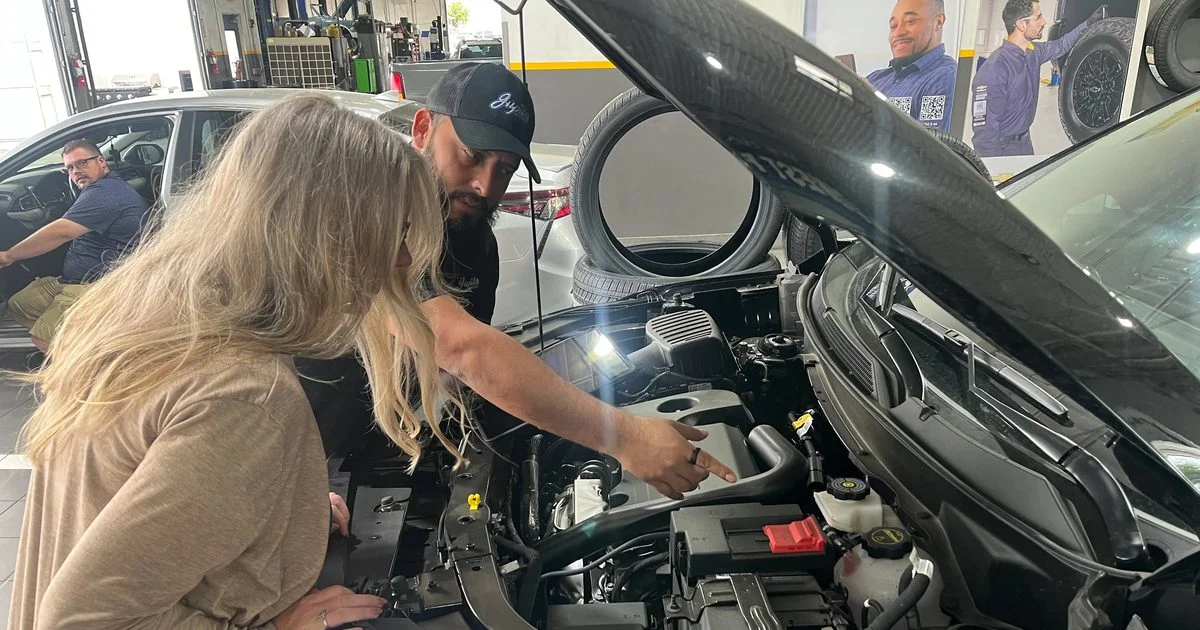
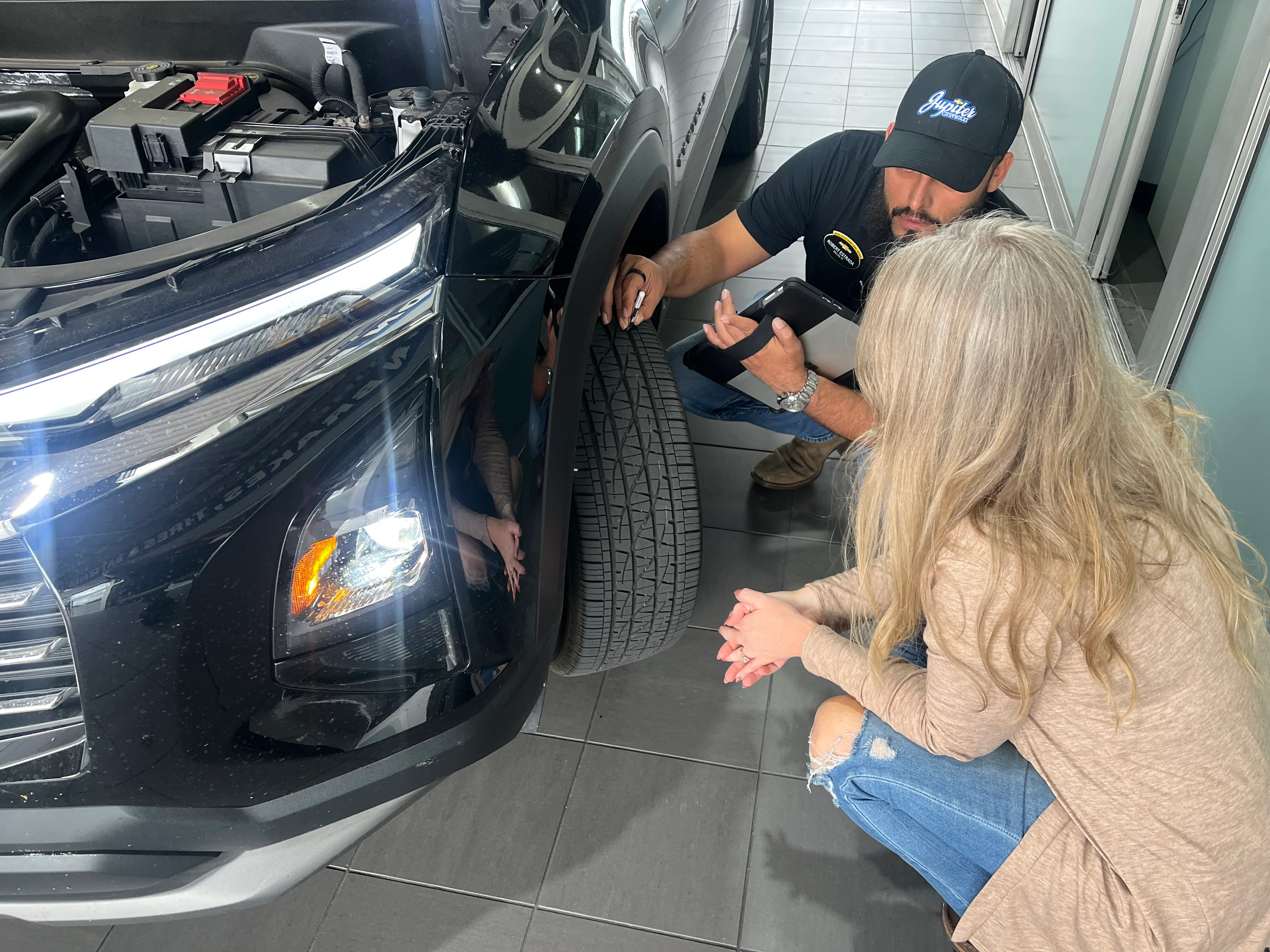
Every vehicle entering Jupiter Chevrolet's Garland service drive rolls over our drive-over tread reader, which measures the tread depth on each tire. The results show up right away on a big screen in the service lane:
"As customers drive over the Hunter machine, they see their vehicle up on the big screen. Next to it is a live alignment check, passed or failed, along with the tread depth reading for all four tires and any open recalls. An advisor also goes over the results with them at check-in."
Eric Fussell, General Manager, Jupiter Chevrolet
It's part of the free recall, tire, and alignment check with every service visit, and tire rotation comes with every oil change. If a tire needs more than air, here's what's included in a tire service at Jupiter, and new tires come with our 30-Day Price Match on Select Tires.
Light still on after a fill and a cold recheck? Bring it to Jupiter Chevrolet on I-635 in Garland.
Schedule Service at Jupiter Chevrolet in Garland, or call 972-464-1093.
Frequently Asked Questions
Why is my tire pressure light on when it's cold?
Cold air lowers tire pressure, roughly 1 to 2 PSI for every 10 degrees F. The first North Texas cold front can push a tire that was already a little low far enough to turn the light on. Check all four tires cold and fill them to your door-jamb placard. If the light comes back, Jupiter Chevrolet in Garland can check for a leak.
How much does tire pressure drop in cold weather?
Tire makers' rule of thumb is about 1 to 2 PSI for every 10 degrees F the temperature falls, so a 40-degree swing from a hot afternoon to a cold morning can take several PSI out of each tire. The actual change varies by tire, so check with a gauge and fill to the cold pressure on your door-jamb placard.
Where do I find the right tire pressure for my Chevy?
It's on the tire and loading information placard on the driver's door jamb and in your owner's manual. Use that number, not the maximum molded into the tire's sidewall, and set it cold. Jupiter Chevrolet includes a free tire check with every service visit.
Will the tire pressure light go off on its own?
Sometimes, but the tire is still low. As driving or afternoon sun warms the tires, the light can go off, then return the next cold morning. Fill all four to the door-jamb placard. If it keeps coming back, have Jupiter Chevrolet in Garland check for a slow leak or sensor problem.
What does a flashing tire pressure light mean?
A light that flashes at startup, then stays solid, means the tire pressure monitoring system has a fault and may not warn you if a tire goes low. Check pressures with a gauge until it's fixed. NHTSA advises a dealer inspection; Jupiter Chevrolet's Garland service team can diagnose it.
Where can I get my tire pressure light checked near Garland, TX?
Jupiter Chevrolet on I-635 in Garland includes a free recall, tire, and alignment check with every service visit. Every vehicle rolls over a drive-over tread reader that measures the tread on each tire, with results on a big screen in the service lane. Tire rotation comes with every oil change. Call 972-464-1093.
Tire pressure specifications and warning-light behavior vary by model and model year. Always follow your owner's manual and the tire and loading information placard on your vehicle. Jupiter Advantage eligibility and coverage are governed by the written program terms.
About the Author
Eric Fussell is the General Manager of Jupiter Chevrolet in Garland, Texas. He works with Jupiter's sales, service, parts, and collision teams to help customers understand their vehicles, their ownership options, and the programs that come with buying and owning a Chevrolet in North Texas.
Methodology
This guide uses tire and TPMS guidance from the National Highway Traffic Safety Administration, the federal TPMS standard (FMVSS No. 138) and tire-maker guidance on temperature and inflation pressure, current as of October 2026. The 1-to-2-PSI-per-10-degree figure is a rule of thumb, not a measurement for every tire. Jupiter service details come from Jupiter Chevrolet General Manager Eric Fussell (June and October 2026).
Sources & Further Reading
- Tires, National Highway Traffic Safety Administration — placard location, check tires cold, sidewall number is not the target, TPMS malfunction light and dealer inspection.
- 49 CFR 571.138, FMVSS No. 138 Tire Pressure Monitoring Systems, Cornell LII — 25% below recommended cold pressure warning threshold; malfunction light flashes then stays on.
- Tire Pressure Monitoring System (TPMS), Firestone Complete Auto Care — tires lose or gain 1 to 2 PSI per 10 degrees F.
- Tire Pressure in Cold Weather, Cooper Tire — 1 to 2 PSI per 10 degree drop; a cold-weather TPMS light does not necessarily mean a leak.
- Tire Pressure, Continental Tire — check inflation pressure when tires are cold.
- The Jupiter Advantage, Jupiter Chevrolet — free recall, tire, and alignment check with every service visit.
- New Tires, Jupiter Chevrolet — 30-Day Price Match on Select Tires.
- Schedule Service, Jupiter Chevrolet — book a service visit in Garland.
Published: November 9, 2026 | Last updated: November 9, 2026